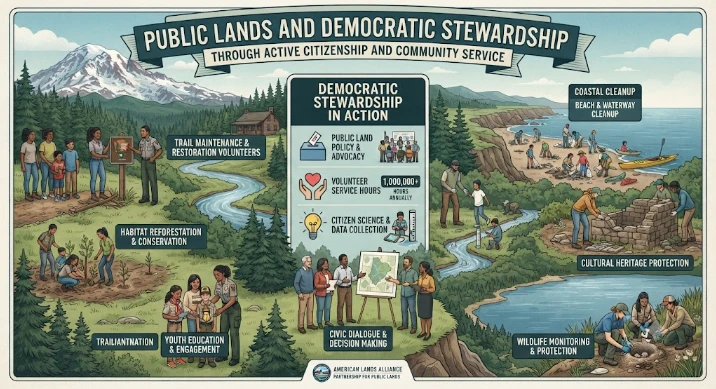
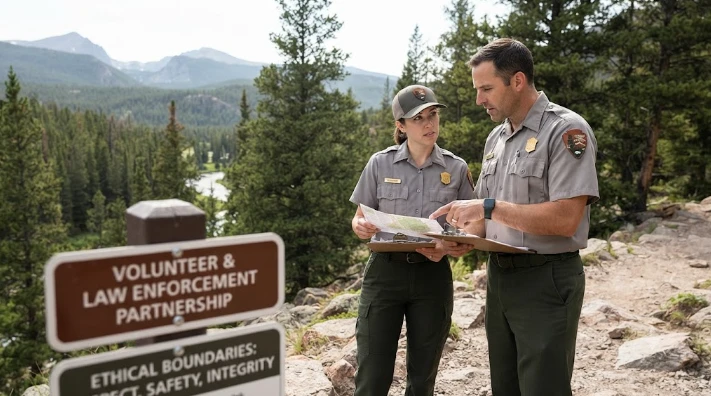
This article frames public lands as democratic goods that require both lawful public management and active civic stewardship. Parks, forests, refuges, monuments, conservation areas, and local open spaces provide ecological, cultural, recreational, scientific, spiritual, and economic value, but decisions about access, risk, cost, and protection are shared across generations. Democratic stewardship includes participation in planning, environmental review, public comment, volunteer service, community science, cultural preservation, and responsible visitor behavior. The article emphasizes accessibility, historical exclusion, Indigenous sovereignty, co-stewardship, youth participation, environmental justice, and transparent treatment of competing interests such as conservation, tourism, grazing, energy, hunting, and local revenue. Climate change adds uncertainty through wildfire, drought, erosion, invasive species, and habitat shifts, requiring adaptive management and clear communication. Volunteer labor can extend capacity but cannot substitute for adequate public funding. Accountability should cover habitat, access, maintenance, cultural protection, consultation quality, and distribution of benefits. The article concludes that common ownership gains democratic meaning when citizens participate, serve, monitor, question, and care for shared landscapes.
Public lands are more than scenic property! They provide ecosystem, water, cultural memory, recreation, livelihoods, scientific values and places of spiritual values. Access to, risk to, cost of and responsibility for such lands is distributed across generations in decision making. The first step in democratic stewardship is for citizens to have a grasp of the need for public power and civic involvement in common landscapes.
There are a number of federal, state, tribal and local public land management systems in the United States. There are variations in the laws and missions of the national parks, forests, wildlife refuges, conservation areas, monuments and municipal open spaces. This institutional variety provides opportunities, but can be confusing to public participation. Clear information of who is making a decision and what the legal standards are for the decision is required.
Stewardship is the responsibly for protecting and using. It involves ecological restoration, visitor education, cultural preservation, monitoring, maintaining and involvement in management decisions. The idea repudiates the narrow-minded notion of citizenship that ends with tax payment and purchase of an entrance ticket. When people give attention, knowledge, restraint, and service to common assets, then they are healthy.
In order to have democratic stewardship, public decision making must be lawful. There are formal avenues for participation, such as land plans, environmental reviews, permit processes and public comment periods. These procedures are only meaningful if the agencies respond to substantive concerns, provide evidence and alternatives. There's no value in having a lot of comments—that doesn't necessarily mean that the influence was fair or informed.
Access is an issue of democracy. Entering public land can be influenced by distance, transport, cost, physical and language barriers as well as safety and unfamiliarity. Many of these constraints faced by frequent outdoor users are likely to be different for urban families and low-income communities. Several opportunities exist to broaden public connection, such as transit partnerships, accessible trails, multilingual information, community programs and fee support.
Historical-exclusion must be directly acknowledged. Indigenous peoples were forced off many places which were subsequently protected by the public. Segregation, violence and discriminatory rules or cultural erasure have been experienced by black communities, immigrants or other communities in outdoor recreation. Stewardship can never be both a legitimate and an untouched place without political history.
Tribal nations have rights to ancestral landscapes and have long-standing relationships with them. Consultation should NOT be a late call for comment! Changing the way land is managed through co-stewardship arrangements, protecting sacred places, cultural fire, language revitalization, and through Indigenous knowledge. This cooperation must involve an attitude of respect for sovereignty, data sensitivity and a community control of cultural information.
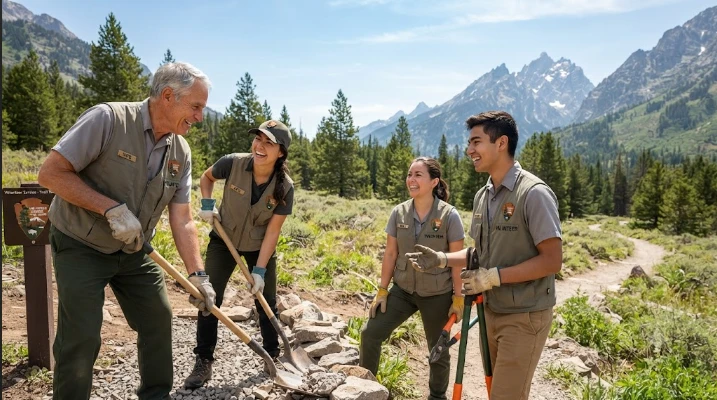
Volunteer Service provides an accessible way of participating. Visible contributions include trail work, removing invasive species, restoring habitats, providing archive support, collecting litter, and citizen science. Service days can be ways of introducing new audiences to the public land institutions. Long-term programmes, however, will have a greater impact for deep learning and better relationships than will single events planned primarily for publicity.
The early 90's saw the first recycling of national attention for stewardship on National Public Lands Day. There are projects throughout parks, forests, refuges, and in the local area to engage volunteers in restoration and maintenance projects. There is more to the value than completed tasks. Learners come to understand the challenges public access faces in the realms of labour, planning and ecology.
Community science is the linkage of observation and civic responsibility. Water quality, wildlife, phenology, air pollution, or visitor impacts can all be recorded by the residents. Scientific quality is assured by data protocols, training, and calibration, as well as through professional review. Participants should be provided with results, and be able to understand the impact of information on managing.
There should be pathways to stewardship that are accessible to young people which are not reliant on family outdoor traditions. Environmental learning can be integrated with work and service opportunities in schools, youth corps, internships and youth service. Compensation is relevant since the opportunities that are open to students who do not need income are different from those that are paid. There are opportunities for civic service and conservation, planning, interpretation, science, and public administration to be linked together in career pathways.
Local agencies and local organizations often connect agencies and communities. There are a variety of expertises that are represented by land trusts, historical societies, outdoor clubs, disability advocates, neighborhood groups and environmental justice groups. No group should be given an advantage over any other group when designing the partnership. Communities with concentrated environmental burdens and limited recreational investment opportunities need to be part of the Outreach.
Conflict is a part of stewardship decisions. Policy can be driven in a variety of directions, including conservation, grazing, energy development, tourism, hunting, cultural uses and recreation and local revenue generation. A democratic process doesn't require people to ignore a mismatch between all interests. It must involve clear evidence, equitable involvement, legal structures and consideration of costs and benefits.
Conflict can become more acute when there are scientific uncertainties. Managers have to make decisions on a range of issues with only partial knowledge of the problems of species decline, wildfire, erosion, visitors, etc. and cause impacts on climate. Limited action, monitoring and revision are allowed due to adaptive management. Public communication needs to differentiate between what has been established and what is a judgment and uncertainty.
The physical basis of stewardship is being impacted by climate change. The following factors pose threats to the old management assumptions: fire seasons, drought, flooding, coastal erosion, heat, invasive species, and changing habitats. Projects and community observation by volunteers can provide assistance to adaptation, but professionals maintain safety and science accountability. But lack of public funding cannot be offset with civic participation.
Funding continues to be a decision of the people. Poor conservation and access are the result of deferred maintenance, staffing shortages, outmoded facilities and lack of monitoring. However, volunteer labour can be a solution to extend capacity but should not be a regular state of affairs. Legalities, visitors' needs, ecological risk and equity of access are a factor in budgets.
There are advantages and disadvantages to private partnerships as they bring resources and raise issues of influence. Projects, education, and facilities can be funded through donations, concessions, and nonprofit fundraising, and can be sponsored. Agreements should be made public, protected from conflict and be independent of management. Public lands should not be branded spaces that reflect the donor's preference.
Visitors' behaviour is a daily aspect of stewardship. Civic behaviours include staying on the designated routes, maintaining a distance from wildlife, following fire rules, minimizing waste and safeguarding cultural objects. It is usually better to give a clear explanation rather than just giving the order to act responsibly, as impacts are more likely to be understood. It is important to keep enforcing if the damage occurs again or in a serious way.
Digital tools can enhance map availability, messaging, permits, historical resources, and public meetings. They can also set up exclusions if there are certain reservations that have to have high-speed internet, accounts that have to be specific or repeat fees. The impact digital systems have on both the gainers and the losers should be evaluated. All routes (phone, face-to-face and assisted) maintain public access.
There has to be an evident way to be held accountable. Consultation quality, unresolved risks, maintenance, visitor distribution, unresolved risks, visitor distribution, unresolved risks, resolved risks, and maintenance are all reported outcomes for agencies and partners. For agencies and partners, outcomes reported include habitat, visitor distribution, maintenance, cultural protection, volunteer retention, consultation quality, and unresolved risks. Disaggregated data can provide information on whether investments go to underserved areas or not. Qualitative evidence can help to determine if communities are respected and can make a difference.
Land stewardship can be related to democratic institutions in Civic education. Interpretive programs can help to communicate the significance of a place, the laws that direct management, how budgets are determined, and how the community can be involved. This sort of details makes an excursion greater than just gazing at scenery. It illustrates the public authority and public responsibility as a single.
Stewardship's longest time horizon is intergenerational responsibility. All of these decisions taken by those who protected land, recorded history, set up institutions, and paid for access have a direct impact on current citizens. Future citizens don't have the opportunity to influence decisions that are being made now. Practical methods to represent interests not expressed are ecological limits, cultural continuity, and long-term maintenance.
However, cooperation is required across boundaries as the watersheds, wildlife, smoke, and visitors do not recognize administrative boundaries. Shared maps, communication protocols, and monitoring must be developed for agencies, tribes, counties or landowners, and nonprofit groups. Planning can help minimize duplication and retain each partner's statutory mandate.
The public should be subject to public inspection in relation to commercial activity. The public perception of common land is impacted by the quality of the concessions, labor practices, pricing, waste, and use of resources. Private operators' performance reported to the contract, and an accessible complaint procedure provide citizens with the possibility to assess the private operators' performance in relation to the public purpose. Profitability is not a measure of success.
Public lands as a democratic good are only as good as the access, governance and responsibility that goes with common ownership. Active citizenship involves comments on, watching of, service to, respect for and examination of public agencies. Whereas community service makes the abstract ownership of objects into a practical care. Stewardship is achieved when people take care of landscapes and engage with landscape histories, inequalities and conflicts.
CITE THIS ARTICLE
Das, B. C. (2025). Public Lands and Democratic Stewardship Through Active Citizenship and Community Service. https://www.bikashchandra.com/article/4b58823c-95af-5704-94a9-adecae7ca094
B. C. Das, “Public Lands and Democratic Stewardship Through Active Citizenship and Community Service,” 2025. [Online]. Available: https://www.bikashchandra.com/article/4b58823c-95af-5704-94a9-adecae7ca094
Das, B. C. (2025) ‘Public Lands and Democratic Stewardship Through Active Citizenship and Community Service’. Available at: https://www.bikashchandra.com/article/4b58823c-95af-5704-94a9-adecae7ca094
Das, Bikash Chandra. “Public Lands and Democratic Stewardship Through Active Citizenship and Community Service.” 2025, https://www.bikashchandra.com/article/4b58823c-95af-5704-94a9-adecae7ca094.
Bikash Chandra Das. “Public Lands and Democratic Stewardship Through Active Citizenship and Community Service.” (2025). https://www.bikashchandra.com/article/4b58823c-95af-5704-94a9-adecae7ca094.
Das BC. Public Lands and Democratic Stewardship Through Active Citizenship and Community Service. 2025. https://www.bikashchandra.com/article/4b58823c-95af-5704-94a9-adecae7ca094
@misc{article_4b58823c95af570494a9adecae7ca094,
  title = {Public Lands and Democratic Stewardship Through Active Citizenship and Community Service},
  author = {Bikash Chandra Das},
  year = {2025},
  url = {https://www.bikashchandra.com/article/4b58823c-95af-5704-94a9-adecae7ca094},
}
TY  - GEN
AU  - Bikash Chandra Das
TI  - Public Lands and Democratic Stewardship Through Active Citizenship and Community Service
PY  - 2025-03-26
UR  - https://www.bikashchandra.com/article/4b58823c-95af-5704-94a9-adecae7ca094
ER  -
This article explores why people volunteer in America’s national parks and how program design influences whether service remains meaningful. Volunteer motivations often overlap and include personal values, learning, social connection, career development, confidence, purpose, and attachment to place. The article uses motivational frameworks to show that volunteers are more likely to remain engaged when they experience autonomy, growing competence, respectful relationships, and a clear connection
Probation and parole are presented as essential community-based alternatives to incarceration that combine supervision, accountability, and reintegration. Probation generally allows eligible offenders to remain in the community instead of serving a prison sentence, while parole provides conditional release after part of a custodial sentence has been completed. The article explains that both approaches can preserve employment, family ties, education, and housing, all of which reduce the risk of r
This article defines the ethical boundaries that protect volunteers who support visitor safety and law-enforcement-related functions in national parks. Although volunteers can assist with information, observation, traffic support, administrative work, backcountry roves, and reporting hazards, they must not exercise powers such as arrest, detention, search, citation, evidence handling, use of force, or other commissioned enforcement duties. The article emphasizes clear position descriptions, accu