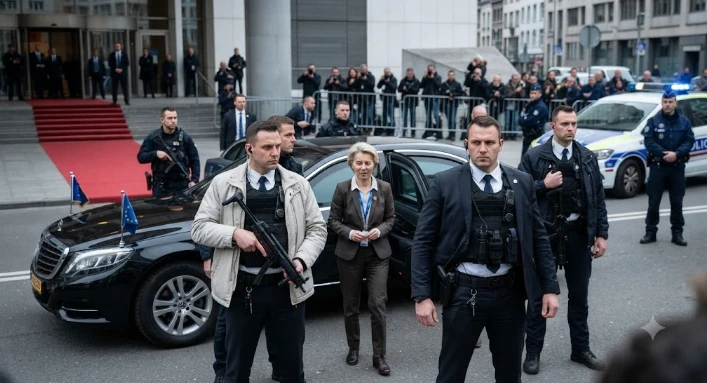
This article examines why armed security forces are essential to diplomatic protection, particularly when diplomats and embassies operate in unstable or high-risk environments. It explains that protection extends beyond guarding buildings and personnel to include intelligence collection, threat assessment, crisis response, secure transportation, and evacuation planning. Armed units may protect diplomatic facilities, accompany officials during travel, monitor political and security developments, and respond rapidly to terrorism, kidnapping, civil unrest, or other emergencies. The article also highlights the importance of coordination with local police, intelligence agencies, military units, and international partners. A central theme is the need to balance strong protection with respect for the sovereignty, laws, and sensitivities of the host country. Security personnel therefore require not only tactical capability but also diplomatic awareness and cultural sensitivity. Overall, the article presents diplomatic security as a coordinated national-security function that supports the safe operation of international relations in increasingly volatile environments.
Having armed security entities is important in the management of protection of the diplomats, families of diplomats and foreign embassies especially in unstable or hostile environments. The diplomats have a hard job in the complicated world of international relations since they have the responsibility of advancing the interests of their countries and they are the ones that enable collaboration among nations. They however tend to work in unstable areas where their security and safety are highly compromised. The presence of armed security forces, which include military, paramilitary and special protection forces are vital when it comes to delivering the security that is necessary so that the diplomats can effective and safely perform their activities. This does not only involve protecting people and property but also the collection of intelligence, crisis management, and crisis response in the conflict risk regions or high-risk regions.
Diplomatic protection is a complex question to be considered as a complex of the unity of national security with the international law and diplomatic relations. Although the diplomatic immunity is provided in the international law through Vienna Convention on Diplomatic Relations (1961) that is in charge of the diplomatic missions and personnel against prosecution and arrest, the host country has the duty of providing safety and security of diplomatic missions and personnel. Where the host country fails or is not willing to offer such protection, military guard units of the home country of the diplomat are placed to protect their representatives.
Physical protection of diplomats and the staff at an embassy is one of the main duties of armed security agencies when it comes to diplomatic protection. Another major target of attack, such as terrorism, vandalism and armed assault, is usually the embassies and consulates especially in areas where political instability is rampant. To this, the armed security forces are placed at such missions to have a secure perimeter and to actively patrol the area to prevent possible threats. Such forces are conditioned to evaluate and act in different threats, starting with minor cases of criminality to greater threats of terrorism. They collaborate with the local police and intelligence to detect in the course of emergent security threats, and take action.
Besides diplomatic facility protection, armed security troops provide diplomats with security in their official activities. Diplomats are vulnerable to attacks whether it is during meetings with the local authorities, representing them in the public or even as they travel in the host nation. Bodyguards are given the responsibility of protecting diplomats who are accompanied by armed security personnel, including specially trained bodyguards, to protect the diplomat as he or she goes about his or her duty. This is a security measure that is not very visible but very conspicuous and acts as a warning to the potential attackers.
In addition to the physical security, armed security forces are crucial in intelligence collection and evaluation of threats. The diplomatic missions work on the territory of the foreign countries, frequently including the countries with the complicated political, social, and security situation. In such cases security of diplomats cannot be limited to mere physical presence of security officers; it should also be possible to foresee any possible threats by collecting and analysing the intelligence. Local political processes, criminal acts and any instability that might endanger the lives of the diplomats are monitored by armed security forces in cooperation with the intelligence agencies.
Indicatively, in the event of a political upheaval, armed security personnel are charged with the responsibility of determining the state of affairs and availing real-time intelligence to people in the embassy. They assist in determining possible source of violence or unrest and recommend the diplomats on travel restrictions, evacuation plans and emergency response plans. This active manner makes sure that diplomats will be able to make the necessary steps to prevent the threat, which include changing their schedules or hiding in safe places.
In very risky areas, especially in war-torn countries, the mandate of the armed security forces is broadened into the management and response to crises. Diplomats working in such regions are usually at the risk of kidnappings, terrorist attacks and violent demonstrations. Under these circumstances armed security forces also come in as a rapid response team, which is ready to take on a defensive action in such case. During kidnappings or hostage situations, trained armed security forces are made to perform certain intricate rescue missions, which may involve the cooperation of other military/law enforcement forces. Their decisive and fast actions play a pivotal role in saving lives of diplomats and bring them back home safe.
Armed security services are also mandated in ensuring the safe evacuation of diplomatic officers in instances of extreme danger like civil war, natural catastrophes or popular violence of a large scale. On such cases, the safety of the diplomatic personnel is of utmost importance and the military is trained to implement the evacuation strategies accurately. This can include military transportation, secure communication system and also liaising with the local authorities so that the evacuation exercise can be done efficiently and safely. These operations demand much coordination between military, diplomatic services and local security services of the home country to carry out a smooth and secure withdrawal out of the high-risk area.
Armed security forces are not required to offer diplomatic protection to individuals and personnel only but also to provide protection to diplomatic convoys and transport routes. Diplomats must travel internationally in most sections of the world to represent their countries at international conferences, meetings, and even at the negotiation stage. Such trips usually expose diplomats to places of high risk where they are exposed to ambush attacks, road blocks or targeted attacks. Security troops are deployed with the responsibility of providing security on diplomatic vehicles, which is supposed to have proper defensive mechanisms, including armored cars, armed escorts and so on. They are supposed to secure diplomats in transit and also deal with any possible threats such as hostile meetings or ambushes.
Besides offering physical security, armed security forces in diplomatic protection also contribute greatly on ensuring integrity of diplomatic relations. Their behavior may be very significant in the perception of the host country by the home country. The introduction of armed security forces should be done with the delicacy and consideration to local practices, laws and sensibilities. Excessive force, over militarization of security processes may result in strain with the host nation, and it may be viewed as an encroachment on national sovereignty. Consequently, the armed security personnel are educated not only in the tactical operations but also diplomacy, cultural understanding and the essence of ensuring the good relations with the host country. This is because their presence can never be a reason to further political and diplomatic wars but instead promote the security of the diplomats without compromising local sovereignty.
Among the most crucial issues in the work of armed security forces in the diplomatic protection is the balancing process between the protection of diplomats and the sovereignty of the host nation. Although the home nation has a responsibility to guard its diplomats, the host nation has a responsibility of securing the safety and security of all foreign representatives in its territory. The deployment of armed security personnel of the home country of the diplomat should then be well-planned with the authorities of the host country to prevent tensions. The diplomatic protection should be done in such a way that it does not violate the laws or other practices of the host country as well as the security requirements of the diplomatic mission are addressed.
International cooperation is also a key aspect in the protection of the diplomats. In areas where security issues are beyond the borders of a particular country, there might be cooperation of the armed security forces of different countries in offering security. The cooperation of international security forces to provide the security of diplomats in conflict areas can be in the form of multinational peacekeeping missions, joint military force, and joint intelligence operations. In these situations, the mission of the armed security forces is not considered to be one-country only but rather to the wider international collaboration in order to maintain the security on the global level.
Armed security force cannot be overemphasized in the diplomatic protection. In a world that is increasingly becoming volatile, where tensions between political powers, terrorism, and war are very rampant, security of diplomats is very critical in the operation of international diplomacies. The security forces equipped with arms offer expertise, training and operational facilities that are needed to ensure that diplomats are capable of performing their duties even in the most volatile and harsh settings. Their labor contributes to the greater aims of international relations, which are peace, dialogue, and work between the countries and the guarantee of the safety of diplomats and their capabilities to carry out their duties without being afraid of their personal safety. Armed security forces in diplomatic protection will only go on increasing as the security issues in the world transform to demand different strategies, tools and partnerships to allow international diplomacy to be achieved.
CITE THIS ARTICLE
Das, B. C. (2026). The Role of Armed Security Forces in Diplomatic Protection. https://www.bikashchandra.com/article/5142eaf9-4f64-554f-ac92-2ba076dedd6e
B. C. Das, “The Role of Armed Security Forces in Diplomatic Protection,” 2026. [Online]. Available: https://www.bikashchandra.com/article/5142eaf9-4f64-554f-ac92-2ba076dedd6e
Das, B. C. (2026) ‘The Role of Armed Security Forces in Diplomatic Protection’. Available at: https://www.bikashchandra.com/article/5142eaf9-4f64-554f-ac92-2ba076dedd6e
Das, Bikash Chandra. “The Role of Armed Security Forces in Diplomatic Protection.” 2026, https://www.bikashchandra.com/article/5142eaf9-4f64-554f-ac92-2ba076dedd6e.
Bikash Chandra Das. “The Role of Armed Security Forces in Diplomatic Protection.” (2026). https://www.bikashchandra.com/article/5142eaf9-4f64-554f-ac92-2ba076dedd6e.
Das BC. The Role of Armed Security Forces in Diplomatic Protection. 2026. https://www.bikashchandra.com/article/5142eaf9-4f64-554f-ac92-2ba076dedd6e
@misc{article_5142eaf94f64554fac922ba076dedd6e,
  title = {The Role of Armed Security Forces in Diplomatic Protection},
  author = {Bikash Chandra Das},
  year = {2026},
  url = {https://www.bikashchandra.com/article/5142eaf9-4f64-554f-ac92-2ba076dedd6e},
}
TY  - GEN
AU  - Bikash Chandra Das
TI  - The Role of Armed Security Forces in Diplomatic Protection
PY  - 2026-05-11
UR  - https://www.bikashchandra.com/article/5142eaf9-4f64-554f-ac92-2ba076dedd6e
ER  -
This article explores why people volunteer in America’s national parks and how program design influences whether service remains meaningful. Volunteer motivations often overlap and include personal values, learning, social connection, career development, confidence, purpose, and attachment to place. The article uses motivational frameworks to show that volunteers are more likely to remain engaged when they experience autonomy, growing competence, respectful relationships, and a clear connection
Probation and parole are presented as essential community-based alternatives to incarceration that combine supervision, accountability, and reintegration. Probation generally allows eligible offenders to remain in the community instead of serving a prison sentence, while parole provides conditional release after part of a custodial sentence has been completed. The article explains that both approaches can preserve employment, family ties, education, and housing, all of which reduce the risk of r
This article defines the ethical boundaries that protect volunteers who support visitor safety and law-enforcement-related functions in national parks. Although volunteers can assist with information, observation, traffic support, administrative work, backcountry roves, and reporting hazards, they must not exercise powers such as arrest, detention, search, citation, evidence handling, use of force, or other commissioned enforcement duties. The article emphasizes clear position descriptions, accu