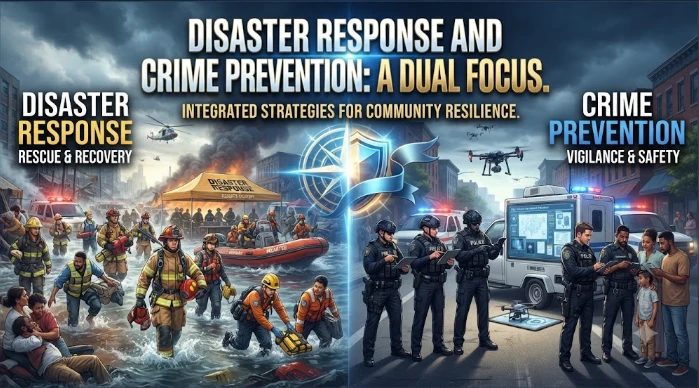
This article examines the connection between disaster response and crime prevention, arguing that public safety risks often increase when disasters disrupt normal social and institutional systems. Using Bangladesh’s exposure to floods, cyclones, displacement, and infrastructure damage as the main context, the post explains how disasters can create opportunities for looting, theft, fraud, trafficking, domestic violence, drug abuse, and other forms of exploitation. Law enforcement is therefore presented as an essential part of disaster management, not only for maintaining order but also for protecting shelters, aid distribution points, evacuated areas, and vulnerable groups. The article emphasizes community policing, cooperation with humanitarian organizations, and stronger relationships with local residents during recovery. It also highlights the use of surveillance, drones, tracking systems, and crime data to identify high-risk areas and improve response. Beyond immediate security, the post argues that long-term prevention requires economic assistance, social services, employment support, and protection for women, children, and displaced people. Integrated planning is presented as essential for resilient recovery.
Both natural and manmade disasters pose challenges that have never been encountered anywhere in the society, governments, and the communities. They are able to destroy the lives of millions creating havoc and havoc on them. At these moments, the emergency response agencies, the law enforcer, and the disaster management teams are at the scene of recovery efforts. Nevertheless, there is another problem that is not frequently taken into consideration during disasters: possible rise in crime. It is also at this point that crime prevention is as crucial as it is immediately following a disaster as the criminal acts can frequently be highly active when the social status quo is interfered with.
In this post, we discuss the dual nature of the disaster response and crime prevention, and we will focus on the fact that two spheres are seemingly different, but they are intertwined and they need a coherent strategy. We will examine how disaster response can unintentionally foster the risks of crime and how police departments can avert crime during disaster recovery. The emphasis will be on the real-life examples and practical strategies which can be implemented in Bangladesh and in general.
Natural occurrences, particularly when they are large scale such as earthquakes, floods or cyclones, have the ability to shake the socio economic ground. During the mess that ensues in the aftermath of a disaster, there is a general displacement of people, lack of resources, and destruction or damages of the infrastructures. This may provide crime opportunities since desperate people or criminal groups take advantage of the vulnerability of the affected population. Although the law and order may be broken in the immediate aftermath of a disaster, it may be easy to commit theft, loot, human trafficking, or even organized crime by criminals.
To illustrate, when natural calamities such as cyclones or floods hit Bangladesh, the destruction of infrastructure and houses will provide the basis on which crimes such as looting, theft and fraud thrive. Criminals may find loopholes in displaced populations and steal evacuated zones or use survivors to exploit the circumstances. Also, social disorder usually results in domestic abuse, child trafficking, and drug abuse. These issues are heightened in Bangladesh where citizens fear the lack of security even in the ordinary conditions, which are increased in the times of calamity.
This poses a two-fold challenge to the disaster response teams not only are they expected to be fast and efficient in their response to offer an immediate relief and to ensure recovery but they also have to address the issue of the emergence of crime during the confusion of disaster recovery. The multi-faceted nature of the crime prevention strategy combined with disaster management approach is required to guarantee the safety of the people during such times.
The response towards the disaster is very complex, and it is necessary to have a high level of coordination of different agencies, including governmental organizations, non-governmental organizations, and local authorities. Law enforcement has to be a major component in the disaster response system, not just in the immediate aftermath of the incident but also with regard to the possibility of crime in the disaster recovery process.
Ensuring that there is security in the most vulnerable parts is one of the important methods that the law enforcement can use in preventing crime in a disaster recovery. Zones that are at high risk like refugee camps and shelters and areas where vital resources are allocated should be highly monitored. When natural calamities such as floods, cyclones hit an area in Bangladesh, it is common to find that people readily take the aid and can begin to exploit it by the criminals. Criminal activities should not undermine the relief efforts because police forces should collaborate with humanitarian organizations to establish a safe environment, which would ensure supplies and money are not stolen and interfere with the provision of relief.
The other significant measure is to enhance police patrols and monitoring in the disaster-afflicted regions. Besides regular police work, the police officers should be trained to use certain circumstances that occur during the disaster including mass evacuation, damage assessment, and crowd control. Law enforcement can facilitate the prevention of crimes such as looting and fraud in addition to preserving order in a chaotic situation by making sure that officers have the knowledge and the tools they need to control such events.
Although law enforcement agencies are very essential during the response, the community is also significant in ensuring that crime prevention forms part of the recovery process. During disaster recovery, community policing, which focuses on establishing a good relationship between the community and law enforcement, would be important in crime prevention.
Communities that experienced the impact of a disaster normally have low faith in the authorities, and their dedication to the authorities may be weak. The community policing also creates the spirit of teamwork and shared responsibility between the police and the community that is imperative in crises. Individual officers can be strengthened in their efforts to combat crime and disaster response challenges by working with the community and fostering a more robust relationship through the establishment of trust, collaboration, and fostering cooperation.
Community policing in Bangladesh can be applied to realize vulnerable personalities and families who might be at a higher risk of exploitation or abuse. In cooperation with the local leaders, law enforcement officers can contribute to spreading information on the ways to remain safe when recovering the consequences of the disaster, report suspicious behavior, and receive assistance. Such a community based partnership with the law enforcement will help to ensure that criminal elements do not get established as communities are enabled to play an active role in securing their fellow communities.
Although urgent security solutions are necessary in deterring crime during the process of responding to a disaster, there is also the need to focus on the factors that trigger criminal activities. The vulnerability to social and economic factors that is increased by a disaster is the root cause of the increased risk of crime in most instances. Indicatively, displacement and loss of income may contribute to desperation and committing crimes, including stealing, committing fraud, or even violent crimes.
In order to contain such risks, disaster response strategies should incorporate more long term crime prevention strategies that respond to social and economic needs of the impacted populations. This may entail providing them with economic assistance, job training opportunities and even access to social amenities on the part of those displaced or had their livelihoods destroyed. Poverty, which is already a serious problem in most societies in Bangladesh, can be addressed by supporting the people who have fallen victim to the calamity hence preventing the tendency of the people involved to resort to crime due to desperation.
Moreover, it is also necessary to make sure that vulnerable populations like women, children, and the elderly are safeguarded in case of a disaster recovery. These are the groups that usually become more vulnerable to exploitation and maltreatment during a post-disaster period. The law enforcement and the disaster response teams should collaborate to make sure that the shelters are secure and that the victims of abuse or trafficking are assisted. The field of criminology is significant in determining such vulnerable populations and coming up with strategies to ensure that they are not harmed.
Technology may be significant in the disaster response as well as preventing crime in the contemporary world. The overall effect of applying technology to disaster management operation can enhance the responsiveness of the operation and can also offer new resources that can be used in crime prevention after the disaster.
Surveillance cameras, drones, and real-time tracking systems can be used as an example, as they can aid in keeping an eye on the high-risk zones and identifying criminal activity during the disaster recovery. Such technologies can be used in Bangladesh, where the occurrence of disasters, floods, and cyclones are common occurrences, to enable law enforcement agencies to assess the damages, where immediate action is necessary, and tracking both people and goods.
Also, there are data-driven solutions that could be used to understand the pattern of crimes and what areas may become the crime habitat. The analysis of the information on the previous disasters will help law enforcement to see trends in criminal activity and prevent actions in the most at-risk areas. Such proactive way of doing things assists in establishing a safe environment among the people affected and makes sure that resources are spent effectively.
There are tendencies that disaster response involves the coordination of law enforcement agencies, humanitarian organizations and NGOs. These entities should be collaborative when it comes to ensuring that crime prevention efforts are incorporated in the general recovery process. The humanitarian organizations are usually at the forefront of disaster response; therefore, it is possible that the humanitarian organization assists the law enforcement in noting the potential security threats and collaborate to offer secure and safe conditions to the vulnerable populations.
NGOs play an important role in assisting vulnerable communities in Bangladesh, where the instability can be caused by both natural disasters and social unrest. The law enforcement agencies must closely collaborate with these organizations to avoid exploitation, to make sure that there is fairness in the distribution of aid, and to secure the rights of displaced individuals. Disaster recovery would be more efficient both in the short and long-term by establishing efficient cooperation between law enforcement agencies and humanitarian organizations.
Two areas that should be addressed in a balanced and integrated fashion are disaster response and crime prevention. Although a disaster recovery is undertaken to offer the affected people immediate relief and normalcy, the likelihood of crime that may be committed in the aftermath of any disaster also needs to be addressed by the law enforcement agencies. With the assistance of communities, humanitarian organizations, technology, the law enforcing agencies are in a position to make the lives of the people who have suffered due to the calamities a better place to be, by making sure the communities do not suffer their recovery efforts due to criminal activities.
Disaster response and crime prevention in Bangladesh must have a dual emphasis where the vulnerability to natural disasters is high. Disaster recovery plans should include crime prevention strategies to ensure that the risk of criminal behavior is reduced, the vulnerable population is supported, and the society is made more resilient by the law enforcement. With the world struggling to overcome the challenges of both natural and man-made disasters, the incorporation of crime prevention in disaster response endeavors will still be a convenient measure in the protection of the communities and recovery in the long run.
CITE THIS ARTICLE
Das, B. C. (2026). Disaster Response and Crime Prevention: A Dual Focus. https://www.bikashchandra.com/article/59a10a81-3a2d-5cef-bb70-9553c8c6a80e
B. C. Das, “Disaster Response and Crime Prevention: A Dual Focus,” 2026. [Online]. Available: https://www.bikashchandra.com/article/59a10a81-3a2d-5cef-bb70-9553c8c6a80e
Das, B. C. (2026) ‘Disaster Response and Crime Prevention: A Dual Focus’. Available at: https://www.bikashchandra.com/article/59a10a81-3a2d-5cef-bb70-9553c8c6a80e
Das, Bikash Chandra. “Disaster Response and Crime Prevention: A Dual Focus.” 2026, https://www.bikashchandra.com/article/59a10a81-3a2d-5cef-bb70-9553c8c6a80e.
Bikash Chandra Das. “Disaster Response and Crime Prevention: A Dual Focus.” (2026). https://www.bikashchandra.com/article/59a10a81-3a2d-5cef-bb70-9553c8c6a80e.
Das BC. Disaster Response and Crime Prevention: A Dual Focus. 2026. https://www.bikashchandra.com/article/59a10a81-3a2d-5cef-bb70-9553c8c6a80e
@misc{article_59a10a813a2d5cefbb709553c8c6a80e,
  title = {Disaster Response and Crime Prevention: A Dual Focus},
  author = {Bikash Chandra Das},
  year = {2026},
  url = {https://www.bikashchandra.com/article/59a10a81-3a2d-5cef-bb70-9553c8c6a80e},
}
TY  - GEN
AU  - Bikash Chandra Das
TI  - Disaster Response and Crime Prevention: A Dual Focus
PY  - 2026-03-27
UR  - https://www.bikashchandra.com/article/59a10a81-3a2d-5cef-bb70-9553c8c6a80e
ER  -
This article explores why people volunteer in America’s national parks and how program design influences whether service remains meaningful. Volunteer motivations often overlap and include personal values, learning, social connection, career development, confidence, purpose, and attachment to place. The article uses motivational frameworks to show that volunteers are more likely to remain engaged when they experience autonomy, growing competence, respectful relationships, and a clear connection
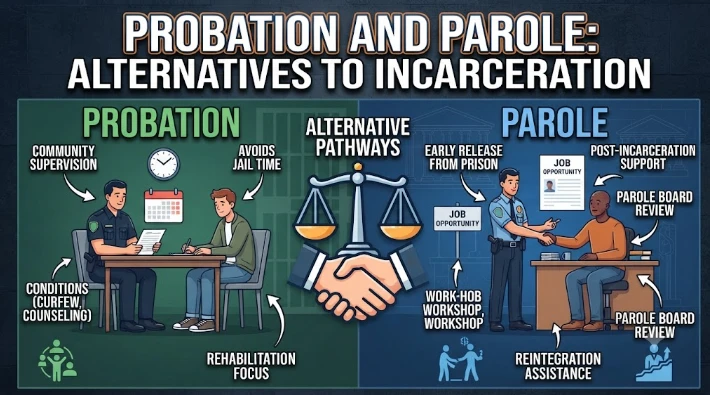
Probation and parole are presented as essential community-based alternatives to incarceration that combine supervision, accountability, and reintegration. Probation generally allows eligible offenders to remain in the community instead of serving a prison sentence, while parole provides conditional release after part of a custodial sentence has been completed. The article explains that both approaches can preserve employment, family ties, education, and housing, all of which reduce the risk of r
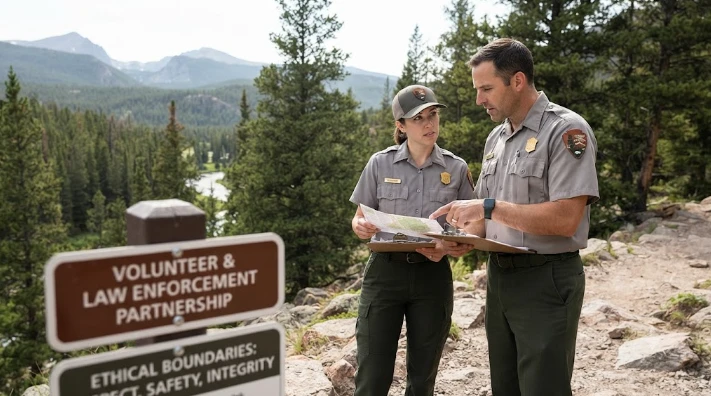
This article defines the ethical boundaries that protect volunteers who support visitor safety and law-enforcement-related functions in national parks. Although volunteers can assist with information, observation, traffic support, administrative work, backcountry roves, and reporting hazards, they must not exercise powers such as arrest, detention, search, citation, evidence handling, use of force, or other commissioned enforcement duties. The article emphasizes clear position descriptions, accu