This article explores how technology is changing modern crime prevention and expanding the tools available to law enforcement agencies. In the Bangladesh context, it discusses surveillance cameras, facial recognition, predictive analytics, cybersecurity systems, digital forensics, mobile reporting applications, emergency notifications, and drones. CCTV and real-time monitoring are presented as useful for deterring crime, collecting evidence, and improving response, while data-driven policing can help identify crime hotspots and direct limited resources toward higher-risk areas. The article also recognizes cybercrime as a growing threat and describes specialized cyber units, encryption, intrusion detection, and digital evidence analysis as increasingly important. Mobile technology can connect citizens directly with police, while drones can assist with surveillance, crowd monitoring, traffic observation, and difficult-to-reach locations. Despite these benefits, the post raises concerns about privacy, unequal access to technology, potential misuse of surveillance, and the need for clear regulation. Continuous officer training and technological investment are presented as essential for keeping crime-prevention strategies effective and responsible.
In the modern busy life, technology takes the center stage in almost all the activities of our life such as the way we socialize to the way we conduct our businesses and even the way we keep safe. Crime prevention has been one of the greatest uses of technology. With the level of sophistication in crime, the role of technology in preventing, detecting, and responding to crime has never been as critical as it is now.
The use of technology in enforcing laws and crime prevention methods is a critical concept in Bangladesh where the level of crime in the cities is on the increase. In the area of surveillance systems to digital forensics, technology provides the law enforcement agencies with new means and means of combating crime effectively and efficiently. The present blog post will discuss the diverse aspects of how technology has changed crime prevention, such as real-time surveillance or data-driven policing, and draw attention to how the technology is going to impact the future of making people secure.
One of the most influential weapons in crime prevention nowadays is the surveillance technology. CCTV cameras are installed in strategic locations within cities around the world such as in Bangladesh in public areas, transport networks and high crime prone areas. These cameras act as a preventive measure to any would-be criminals, and they enable the police to keep an eye on the public areas at any given time.
CCTV in Dhaka and other large Bangladesh cities have been used to assist in crime prevention. As an example, to curb crimes like theft, pick pocketing, and drug dealing, the government has set up cameras in strategic locations like busy market places, transport terminals and roads to check on the traffic movement. The real-time surveillance is not only useful in deterrence of crime but also in capturing evidence of crime committed, which is easier to enable the law enforcement to identify the suspects and solve cases more effectively.
In addition, the contemporary surveillance technology is superior to the conventional CCTV. It is now becoming possible to incorporate facial recognition software and artificial intelligence (AI) into surveillance systems to make them more accurate in identifying suspects. These technologies have the capability to scan thousands of faces in real time and compare them with known databases and automatically indicate potential threats. This has resulted in quicker reaction to crimes particularly in busy social areas. The implementation of facial recognition technology in Bangladesh is still young, but there is a high possibility that it can be implemented as a crime prevention tool.
Data-driven policing is the other significant technological change in crime prevention. Predictive analytics is also an excellent crime prevention tool with such a large amount of data that law enforcement agencies produce each and every day. Through the patterns of criminal activity, law enforcement is able to forecast any and when criminal activity is likely to happen and this enables them to be more efficient with their resources and deal with the threats that could present before they happen.
Data-driven policing is in its infancy in Bangladesh but there are instances of how it can be applicable to improve crime prevention activities. To illustrate, the law enforcement can determine the localities with the highest possibility of crime by examining historical crime statistics, creating what is known as hotspots. By increasing patrols or other intervention in these locations, police are able to avert crimes prior to their occurrence.
In addition, predictive technology of policing, including the algorithmic analysis of past crimes, may assist in predicting areas that face the greatest risk of specific crimes. With the use of this strategy, the law enforcers can ensure they divert their efforts towards high-risk areas or periods which can result in committing crimes. As much as predictive analytics is associated with issues of privacy and possible discrimination, it is a promising technology to enhance the efficiency and effectiveness of crime prevention approaches in Bangladesh.
The criminals have advanced with the development of technology. One of the most rapidly increasing threats to national security and personal security in the world is cybercrime and Bangladesh is no exception. Due to the growing use of the internet and online platforms, hacking, identity theft, online fraud, and cyberbullying are becoming a major issue. Technology is crucial in the fight against this menace that is on the continue.
The technologies used in cybersecurity are crucial in safeguarding the individuals and organizations against online threats. In Bangladesh, law enforcement institutions have started allocating funds towards dedicated cybersecurity departments to fight crimes on the internet. These departments employ modern technologies, including firewalls, encryption, and intrusion detection systems, to ensure unprotected information is not accessed by cybercriminals. Further, the digital evidence is being used to track the cyber footprint of the criminals with the aid of cyber forensics equipment that are assisting the police to resolve cases that are associated with digital evidence.
In a more macro context, the world is spending on police cybersolutions that are intelligent to address the issue of cybercrime. These are monitoring online activity tools, tools to identify suspicious activity online, and tools to track down cybercriminals. Indicatively, AI-based algorithms can be used to search social media, dark web markets, and other online environments to determine possible threats and report them to law enforcement. With the digital world still developing, the role of the technologies related to cybersecurity and the prevention of digital crimes will turn out to be even more significant in the human and national security.
Mobile technology has transformed living and working lifestyle and has also become an important part of the present-day crime prevention techniques. Mobile phone usage and applications in Bangladesh have created new opportunities in crime reporting, provision of information, and ensuring the safety of the population. Mobile technology has been adopted by law enforcement agencies to reach out to the people and simplify the process of crime prevention.
Crime-reporting applications are one of the best applications of mobile technology in crime prevention. The apps enable citizens to report crimes or suspicious activities or tips without necessarily visiting a police station. Some applications that allow citizens to report about traffic offenses, crimes, and other safety-related issues directly to the police are already present in Bangladesh. The apps also have features such as location tracking that can be used in responding to any emergency that may occur promptly and in the most efficient way.
In addition to this, mobile phones are being utilized to send direct messages to the people in cases of crisis or emergencies. Mobile notification in case of disaster e.g. flood, earthquakes or civil disturbance can be issued to alert citizens about possible dangers. This speedy communication enables the law enforcement agencies and emergency services to respond better to save and keep the citizens safe and updated.
The use of drones is another innovative technology which is transforming prevention of crime. Increasingly, law enforcement agencies worldwide are employing Drones to conduct aerial surveillance, crowd monitoring, and provide tactical support during operations that involve high risk. Drones can be used in Bangladesh to boost the capacity of law enforcers in policing large groups of people, in the streets, or regions that cannot be easily reached using ground mode of transport.
High-resolution cameras, thermal imaging, and other sensors can be installed in drones that can give real-time monitoring in different settings. As an example, drones may be used to check traffic movement, identify criminal acts, including smuggling or drug trafficking, and search-and-rescuing. Drones are especially applicable in the environments with restricted accessibility or in case of disaster when the conventional surveillance systems might not be effective. Although drones used in the law enforcement industry may pose privacy issues, their potential in the advancement of crime control and safety to the populace is enormous.
In as far as technology has had many benefits in crime prevention, it has had a number of challenges. The possibility of abuse is one of the primary issues of concern, especially with regard to such surveillance tools as facial recognition and data gathering. The privacy laws are still developing in Bangladesh and the use of such technologies needs clear regulations to make sure that the right of the citizens is not infringed.
The other problem is the problem of digital divides especially in developing nations such as Bangladesh. The latest technology is not accessible to all citizens and this could affect the effectiveness of some of the crime prevention strategies. Also, criminals tend to actively use the newest technology and police should constantly improve their methods and equipment to be on top.
Last but not least, law enforcement officers need to be trained on how to utilize the advanced technologies to their benefit. With the growing technical focus on crime, it is essential to ensure that the law enforcement agencies invest in educating their officers to operate the digital tools, data analysis, and cybersecurity methods. This involves an unceasing investment in training-programmes and technology improvements such that to ascertain that the police officers are equipped to cope with contemporary crimes.
Technology is a vital part of crime prevention in the contemporary society as it provides law enforcers with new equipment to help them prevent, detect, and respond to crime. Surveillance cameras and predictive policing, cyber security and mobile applications have replaced the way crimes are deterred and the ability to guarantee the safety of people. In Bangladesh, the adoption of these technological developments is essential towards enhancing crime prevention processes and enhancing national security.
Nevertheless, as much as technology has many advantages, there are also some challenges that are involved in technological use, which include privacy, inequality of access, and training that is a continuous process. Technology is dynamic, and the strategies and tools applied by police have to keep up to keep in touch with criminals and ensure that communities remain safe. Bangladesh can make the society safer and more secure to its citizens by further incorporating technology in its crime prevention efforts.
CITE THIS ARTICLE
Das, B. C. (2026). The Role of Technology in Modern Crime Prevention. https://www.bikashchandra.com/article/8a7d31fe-1e67-5f06-a8f4-4a0b8cee5433
B. C. Das, “The Role of Technology in Modern Crime Prevention,” 2026. [Online]. Available: https://www.bikashchandra.com/article/8a7d31fe-1e67-5f06-a8f4-4a0b8cee5433
Das, B. C. (2026) ‘The Role of Technology in Modern Crime Prevention’. Available at: https://www.bikashchandra.com/article/8a7d31fe-1e67-5f06-a8f4-4a0b8cee5433
Das, Bikash Chandra. “The Role of Technology in Modern Crime Prevention.” 2026, https://www.bikashchandra.com/article/8a7d31fe-1e67-5f06-a8f4-4a0b8cee5433.
Bikash Chandra Das. “The Role of Technology in Modern Crime Prevention.” (2026). https://www.bikashchandra.com/article/8a7d31fe-1e67-5f06-a8f4-4a0b8cee5433.
Das BC. The Role of Technology in Modern Crime Prevention. 2026. https://www.bikashchandra.com/article/8a7d31fe-1e67-5f06-a8f4-4a0b8cee5433
@misc{article_8a7d31fe1e675f06a8f44a0b8cee5433,
  title = {The Role of Technology in Modern Crime Prevention},
  author = {Bikash Chandra Das},
  year = {2026},
  url = {https://www.bikashchandra.com/article/8a7d31fe-1e67-5f06-a8f4-4a0b8cee5433},
}
TY  - GEN
AU  - Bikash Chandra Das
TI  - The Role of Technology in Modern Crime Prevention
PY  - 2026-04-06
UR  - https://www.bikashchandra.com/article/8a7d31fe-1e67-5f06-a8f4-4a0b8cee5433
ER  -
This article explores why people volunteer in America’s national parks and how program design influences whether service remains meaningful. Volunteer motivations often overlap and include personal values, learning, social connection, career development, confidence, purpose, and attachment to place. The article uses motivational frameworks to show that volunteers are more likely to remain engaged when they experience autonomy, growing competence, respectful relationships, and a clear connection
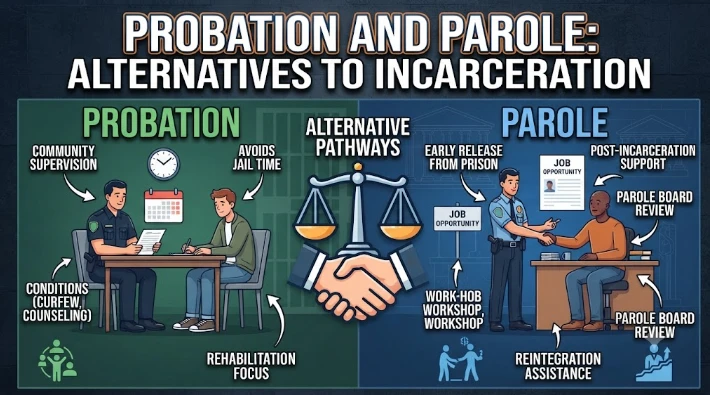
Probation and parole are presented as essential community-based alternatives to incarceration that combine supervision, accountability, and reintegration. Probation generally allows eligible offenders to remain in the community instead of serving a prison sentence, while parole provides conditional release after part of a custodial sentence has been completed. The article explains that both approaches can preserve employment, family ties, education, and housing, all of which reduce the risk of r
This article defines the ethical boundaries that protect volunteers who support visitor safety and law-enforcement-related functions in national parks. Although volunteers can assist with information, observation, traffic support, administrative work, backcountry roves, and reporting hazards, they must not exercise powers such as arrest, detention, search, citation, evidence handling, use of force, or other commissioned enforcement duties. The article emphasizes clear position descriptions, accu