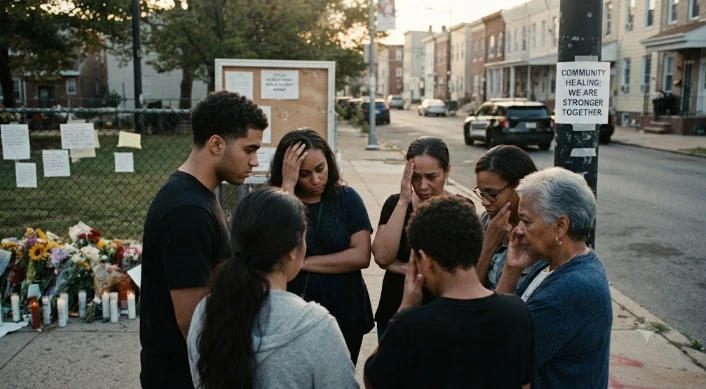
This article explores the psychological and social consequences of crime on individuals, families, and communities in Bangladesh. It explains that crime affects more than direct victims because repeated exposure to violence, theft, insecurity, or disorder can weaken an entire community’s sense of safety. Fear, anxiety, stress, hypervigilance, mistrust, and social withdrawal are described as common consequences, particularly in high-crime neighborhoods. The post also discusses how crime can reduce community cohesion, discourage economic activity, weaken trust in law enforcement and public institutions, and contribute to feelings of helplessness. Direct victims may experience long-term trauma, depression, post-traumatic stress, substance abuse, or difficulty rebuilding relationships, while witnesses and residents can experience vicarious trauma. Children and adolescents are presented as especially vulnerable when they grow up around violence and instability. The article argues that effective responses require trauma-informed mental-health services, community engagement, social support, stronger crime prevention, and policies addressing poverty, unemployment, inequality, and limited access to education. Building resilient communities is presented as essential for recovery.
Crime is a deep and usually long lasting psychological effect on people, families and even communities as a whole. The psychological cost of crime is emerging as a problem in Bangladesh, a country where urbanization, socio-economic disparities, and political instability overlap. These impacts of crime are not only limited to the immediate victims, but also to the community at large, which includes the feeling of security of the people, their trust in organizations and institutions, and their mental health. With the changing nature of crime in Bangladesh, there is need to analyze the psychology impact of crime on societies and the extended social and cultural consequences.
Crime is not merely a direct contravention of the law and is also a contravention to the social fabric, which holds the communities together. In case of a crime, either a violent crime such as robbery and assault or a non-violent crime such as vandalism and cyber-crime, it breaks the feeling of safety and stability that individuals depend on in their daily existence. In a highly populated urban center such as Dhaka and Chattogram in Bangladesh, crime can extend its tentacles in such a way that whole neighborhoods are not spared even though the victims are immediate.
The psychological impacts of crime in a community start with a feeling of loss of security. Once a community gets to be full of crime, people begin to feel insecure even at home. Such undermining of safety may create increased levels of anxiety, fear and stress. Individuals can be subjected to paranoia about their personal safety and that of their loved ones and are always in a state of anxiety. This may result in a heightened alertness, where individuals are too alert of their localities at the detriment of their psychological and emotional well-being.
Terror and panic will tend to spill over to the families and neighbors of the direct victims of crime. Psychological effect of crime in some places such as Bangladesh where close-knit communities are prevalent may extend to whole neighborhoods. The residents can develop a lack of trust towards each other and this can result in a disintegration of community cohesion. It can make people more secluded, refusing to interact with people and go to the places of interest because of the possibility of facing danger. In the long run, this group fear can disenfranchise the social structure of the community and make people more difficult to collaborate, maintain, or participate in civic actions.
The economic connection of this fear also exists. Businesses in those areas where there is a high level of crime might find it hard to survive because of their low customer traffic, vandalism, or theft. Employees can refuse to report to work during specific times and because of this reduced output and economic stagnation results. In low-income populations within Bangladesh, this may further increase the current socio-economic differences and place people and families in the cycle of poverty and fear.
The loss of trust is also another psychological impact of crime in societies. When law enforcement is weak or corrupt, individuals might lose confidence in the justice system in communities, which have weak law enforcement. In Bangladesh where the issue of corruption in institutions is a major problem, most people believe that they cannot trust the police to guard them or bring the perpetrators of the crime to justice. Criminals are not punished or allowed to pass freely and when such occurs, it creates a sense of hopelessness and powerlessness in the community as they believe that the criminal justice system is ineffective or unjust. This demoralizes the agency of people, and their power to bring change in their respective neighborhoods.
The mistrust in institutions may not be limited to the police but also other areas of society such as the government, healthcare facilities and even schools. In case individuals are not satisfied with the fact that their needs and concerns are being addressed, they might turn off the opportunity to be involved in the life of the community or become civil participants. It is a dissociation that has further increased the psychological effect of the crime which causes even more fragmentation and mistrust.
Psychological impacts of crime are also realized in the conduct of people in a community. Crime victims may exhibit various emotional and psychological health issues such as post-traumatic stress disorder (PTSD), depression, nervousness and drug abuse. Such problems may even continue even after the crime has taken place and the victims cannot restructure their life. Being poorly developed and stigmatized in Bangladesh, the mental health services might be something that many victims of crime will never be able to receive in order to heal.
As an example, in most instances survivors of violent crime such as assault, robbery, or sexual violence will develop lasting trauma. The fear and helplessness experienced in committing the crime may remain in them and will determine their capability to trust other people or feel secure in their respective homes. Victims can have nightmares, flashbacks and emotional numbness, which can disrupt their normal functioning in the real life. Without proper psychological care, such people might find it difficult to heal and rejoin the societies, which leads to the further undermining of social cohesion.
Equally, vicarious trauma may also be experienced by people who observe crime or reside in a high-crime neighborhood. Although they might not be victims directly, violent acts may cause a great psychological effect upon observing or receiving news concerning the violence. Such individuals can also attain high degrees of anxiety, depression or paranoia. In the long-term, such a steady level of fear and stress may cause chronic mental disorders, such as depression, insomnia, and substance abuse.
Young people in communities may also be exposed to the psychological effects of crime. Adolescents and children raised in the society where crime is common risk becoming emotionally and behaviorally disturbed. This is due to the fact that constant exposure to violence, trauma, and fear may cause various psychological problems, such as aggression, anxiety, and school-related problems. These youths can grow up being unable to identify themselves with their communities and the entire society thus can interfere with their results in education and their future.
In Bangladesh, child protection and mental health services are usually wanting, children who observing or being affected by crime may fail to get the services they require to manage the experiences. This may cause a cycle of trauma through the generations where the generations to come have higher chances of committing a crime or end up having some mental health problems due to their upbringing.
Psychological effects of crime too have been so intertwined with the other social problems in the society such as poverty, unemployment and inequality. In Bangladesh, people might resort to crime in order to survive due to economic opportunities even in most communities, where there are limited opportunities. Socio-economic strains experienced by members of the marginalized communities may lead to frustration, hopelessness, and anger which in their turn may predispose people to crime. This is a cycle of vices, crime causes psychological damage which pushes more crime and instability in the society.
The psychological effect of crime in societies is an issue that must be dealt with in a multi-faceted manner. Enhancing mental health services to crime victims and communities that have suffered crime is one of the most imperative actions. Mental health care in Bangladesh is highly stigmatized, underfunded, and therefore calls on increased investment in mental health care. Victims of crime should be given trauma-informed therapy and counseling to assist them in the processing of their experiences and recovery of their lives.
In addition, it is important to create stronger, crime resistant communities that are not easily affected by crime and its psychological outcomes. This is possible by community engagement programs to engage local leaders, schools and non-governmental organizations in an effort to ensure social cohesion, create awareness on mental health, and support individuals and affected families of crime. Activities like making communities active in crime prevention and providing safe spaces to engage in dialogue and support can be useful in reducing psychological burden of crime and enhancing resilience among the communities.
Moreover, it is imperative to ensure that the causes of crime are mitigated by dealing with poverty, inequality, and illiteracy since these are the main contributors to crime and its psychological impact in the future. Investing in social programs offering people economic opportunities, enhancing access to education as well as social differences would enable Bangladesh to minimize the risk of crime and shape a healthier, more resilient community.
To sum up, the psychological effects of crime on Bangladesh communities are immense and extensive. Since the safety and trust are lost and victims and observers also have to face some mental health issues, the consequences of crime go much further than the immediate consequences of a criminal act. The way out of these impacts is to place a priority on mental health support, community involvement, and social reform alongside the systemic problems that perpetuate crime. With the help of making the world a safer and more inclusive place, Bangladesh will have a chance to diminish the psychological impact of crime on the societies and create a more robust and resilient future of its population.
CITE THIS ARTICLE
Das, B. C. (2026). The Psychological Impact of Crime on Communities. https://www.bikashchandra.com/article/e91bc0a2-691f-5aea-8bdb-8a2b3a9588b1
B. C. Das, “The Psychological Impact of Crime on Communities,” 2026. [Online]. Available: https://www.bikashchandra.com/article/e91bc0a2-691f-5aea-8bdb-8a2b3a9588b1
Das, B. C. (2026) ‘The Psychological Impact of Crime on Communities’. Available at: https://www.bikashchandra.com/article/e91bc0a2-691f-5aea-8bdb-8a2b3a9588b1
Das, Bikash Chandra. “The Psychological Impact of Crime on Communities.” 2026, https://www.bikashchandra.com/article/e91bc0a2-691f-5aea-8bdb-8a2b3a9588b1.
Bikash Chandra Das. “The Psychological Impact of Crime on Communities.” (2026). https://www.bikashchandra.com/article/e91bc0a2-691f-5aea-8bdb-8a2b3a9588b1.
Das BC. The Psychological Impact of Crime on Communities. 2026. https://www.bikashchandra.com/article/e91bc0a2-691f-5aea-8bdb-8a2b3a9588b1
@misc{article_e91bc0a2691f5aea8bdb8a2b3a9588b1,
  title = {The Psychological Impact of Crime on Communities},
  author = {Bikash Chandra Das},
  year = {2026},
  url = {https://www.bikashchandra.com/article/e91bc0a2-691f-5aea-8bdb-8a2b3a9588b1},
}
TY  - GEN
AU  - Bikash Chandra Das
TI  - The Psychological Impact of Crime on Communities
PY  - 2026-05-01
UR  - https://www.bikashchandra.com/article/e91bc0a2-691f-5aea-8bdb-8a2b3a9588b1
ER  -
This article explores why people volunteer in America’s national parks and how program design influences whether service remains meaningful. Volunteer motivations often overlap and include personal values, learning, social connection, career development, confidence, purpose, and attachment to place. The article uses motivational frameworks to show that volunteers are more likely to remain engaged when they experience autonomy, growing competence, respectful relationships, and a clear connection
Probation and parole are presented as essential community-based alternatives to incarceration that combine supervision, accountability, and reintegration. Probation generally allows eligible offenders to remain in the community instead of serving a prison sentence, while parole provides conditional release after part of a custodial sentence has been completed. The article explains that both approaches can preserve employment, family ties, education, and housing, all of which reduce the risk of r
This article defines the ethical boundaries that protect volunteers who support visitor safety and law-enforcement-related functions in national parks. Although volunteers can assist with information, observation, traffic support, administrative work, backcountry roves, and reporting hazards, they must not exercise powers such as arrest, detention, search, citation, evidence handling, use of force, or other commissioned enforcement duties. The article emphasizes clear position descriptions, accu