This article examines how law enforcement can contribute to preventing extremism through a broad strategy that extends beyond arrests and enforcement. It identifies social exclusion, poverty, political instability, weak governance, limited opportunities, and feelings of marginalization as conditions that can make individuals more vulnerable to radicalization. The post emphasizes early identification through intelligence gathering while warning that surveillance must remain lawful, proportionate, and respectful of privacy. It also discusses the role of social media in spreading extremist propaganda and recruiting followers, making cooperation with technology companies increasingly important. Community engagement is presented as one of the strongest preventive tools, particularly when police work with schools, religious leaders, NGOs, social workers, and local communities to promote tolerance, critical thinking, education, and social inclusion. Rehabilitation and reintegration are also discussed for individuals seeking to leave extremist groups. The article concludes that sustainable prevention requires coordinated action across law enforcement, civil society, education, social services, and international partners while maintaining human rights and public trust.
The extremism whether it is in the religious, political or ideological form of radicalization or not is one of the most burning issues in most societies including Bangladesh today. Being the nation with a long history of political conflicts, absence of economic equality, and disturbance in social life, Bangladesh is not a country which is too safe to be exposed to the risk of extremism. Nevertheless, the problem of elimination of extremism is not only a military conflict situation but also needs a comprehensive strategy which combines law enforcement, community relations, social integration and even respect to human rights. In this regard, it is important to know how law enforcement could be instrumental in curbing extremism.
The initial move towards dealing with extremism is to comprehend the causes of the same. Extremism in Bangladesh as in most of the world is a product of multiplicity of causes; socio-economic marginalization, political instability and social isolation are among such causes. Extremist ideologies tend to be developed in the areas where people feel disrepresented, oppressed, or not a part of the mainstream political, economic, or social activity. As an example, young people in poor communities will believe that they do not have many chances to succeed or enhance their lives, so they are likely to be susceptible to radicalism that offers to empower and transform them. Equally, political instabilities, corruption, and poor governance have also provided the avenue through which extremist organizations can use grievances to get more followers.
Law enforcement is not sufficient in dealing with these root causes. Nevertheless, in a situation where the law enforcement agencies are in concert with larger movements that focus on the community building, education, and fixing systems, the agencies can significantly contribute to the prevention of extremism. The difficulty would be striking the balance between ensuring the safety of the people on the one hand and protecting the freedoms and human rights of the individuals on the other side, particularly in a democratic state such as Bangladesh.
Intelligence collection and early warning signs identification is one of the most important factors in the role of law enforcement in the prevention of extremism. The law enforcers should also invest in strong intelligence networks that are capable of detecting the activities of groups and individuals who may be susceptible to radicalization. When the extremists are identified early enough the authorities can intervene before the extremism becomes rooted and provide a chance of rehabilitation, counseling, and education. An example can be the presence of indications that a person is starting to indulge in radical views over the internet or by associating with a group of extremists, the police may team up with social workers, psychologists, and community representatives to offer the necessary intervention.
Nonetheless, the intelligence collection should be both ethically and cautiously done. In most nations such as Bangladesh, the distinction between surveillance of suspicious behaviors and violation of the rights to privacy is quite thin. Laws authorizing comprehensive surveillance abilities to law enforcement agencies like the Digital Security Act are usually denounced as potentially being employed to suppress political opposition or censor opponents to the government. As such, the law enforcement agencies are expected to work with the legal framework that does not infringe on the fundamental rights and guarantees the safety of the population. There should be checks and balances to ensure that power is not abused and operations should be open to ensure that the people have their trust.
In addition to the intelligence collection, other frontiers where the police can be effective is in countering the propagandas by extremists particularly in social media and the internet. The internet has turned out to be a potent method through which the extremist groups disseminate their messages, recruit new members and plan violent activities. The social media has been used to spread extremist information and engage people into radical movements in Bangladesh. The police departments should also work with the technological firms to track and combat extremist contents such that they are not distributed freely.
Nevertheless, the fight against online extremism should be made without violating the freedom of speech and expression. The boundary between what is considered rightful free expression and extremist hate speech is usually thin, and excessive censorship is capable of silencing legitimate speech, especially in states where democratic institutions are weak. Hence, law enforcement agencies should collaborate with civil society groups, scholars, and tech firms to make sure that the fight against extremist content promotion does not entail the restriction of the freedom of speech or the elimination of political dissent.
Along with internet surveillance, police need to do some active community outreach and education as well. The extremist ideologies tend to flourish in such a setting that people are either out of touch with the mainstream society or they do not trust the authorities. Stronger ties with communities would allow the law enforcement agencies to establish a feeling of security and belonging which would allow avoiding the charm of extremist ideas. This is achievable by engaging in community policing activities, where the police officers collaborate with the leaders and organizations of the community to counter the local issues, foster social integration, and offer some level of support to the vulnerable people.
Education is one of the most crucial factors in community engagement. Preaching tolerance and appreciation of diversity, as well as, exposing the youth to the risks of extremism, would go a long way in averting radicalization. The youth are especially susceptible to extremist ideologies in Bangladesh and law enforcement agencies should work with the educational institutions as well as religious organizations and NGOs to develop courses that would instruct resilience against extremist propaganda. Critical thinking and media literacy can also be encouraged through such programs as the youth will be able to identify and disregard negative ideologies.
Moreover, police forces can also play a major role in rehabilitating persons who have been engaged in extremist activities. Although in some instances they might be warranted to enforce punitive systems, it is equally important to offer possibilities of re-integrating and rehabilitating those who wish to drop out of the extremist groups. The strategy does not only concentrate on punishment; it gives a chance to reform, reintegrate into the society and tackle the roots of radicalization. Former extremists can be re-introduced to their communities and live a productive life through rehabilitation programs which provide counseling, vocational training and education.
The global cooperation is also critical in the war against extremism. The extremist networks are usually transnational in nature and this necessitates collaboration of the law enforcement agencies in different parts of the world. International collaboration through the help of international organizations like INTERPOL and United Nations can help to increase intelligence sharing and ensure that extremists involved carry out their crimes to justice irrespective of their location. What is more, it is possible to empower the law enforcement of Bangladesh through international assistance and give them access to training and resources, as well as knowledge in dealing with extremism.
When it comes to Bangladesh, where the issue of extremism has been on the rise over the last several years, mostly in the instances of religious radicalization and political violence, the government and other law enforcement agencies need to follow a holistic approach in fighting the issue of extremism. Such a strategy must be a collaborative strategy involving the various sectors such as law enforcement, education, social services and the private sector all with an ever-focus on supporting the principles of human rights and the rule of law. The police should be perceived as stakeholders in countering extremism rather than as the law enforcers, but as agents of social transformation and empowering the community.
To sum up, law enforcement as a means of preventing extremism has to be a delicate balance between intelligence collection, interaction with the community, education, and human rights. Although the role of law enforcement is vital, it would not work alone. The multi-faceted coordinated approach, involving civil society, community leaders, educational institutions and International partners, is the only way to counter-attack the extremism. Like most other nations, Bangladesh has to keep developing its approaches to law enforcement, keeping up with the dynamic nature of the extremist environment, but it should stay devoted to the upholding of human rights and the fostering of social unity.
CITE THIS ARTICLE
Das, B. C. (2026). Preventing Extremism Through Law Enforcement: What We Can Learn. https://www.bikashchandra.com/article/a40efe79-f1c6-52ef-b9c5-fa6cad0ae80b
B. C. Das, “Preventing Extremism Through Law Enforcement: What We Can Learn,” 2026. [Online]. Available: https://www.bikashchandra.com/article/a40efe79-f1c6-52ef-b9c5-fa6cad0ae80b
Das, B. C. (2026) ‘Preventing Extremism Through Law Enforcement: What We Can Learn’. Available at: https://www.bikashchandra.com/article/a40efe79-f1c6-52ef-b9c5-fa6cad0ae80b
Das, Bikash Chandra. “Preventing Extremism Through Law Enforcement: What We Can Learn.” 2026, https://www.bikashchandra.com/article/a40efe79-f1c6-52ef-b9c5-fa6cad0ae80b.
Bikash Chandra Das. “Preventing Extremism Through Law Enforcement: What We Can Learn.” (2026). https://www.bikashchandra.com/article/a40efe79-f1c6-52ef-b9c5-fa6cad0ae80b.
Das BC. Preventing Extremism Through Law Enforcement: What We Can Learn. 2026. https://www.bikashchandra.com/article/a40efe79-f1c6-52ef-b9c5-fa6cad0ae80b
@misc{article_a40efe79f1c652efb9c5fa6cad0ae80b,
  title = {Preventing Extremism Through Law Enforcement: What We Can Learn},
  author = {Bikash Chandra Das},
  year = {2026},
  url = {https://www.bikashchandra.com/article/a40efe79-f1c6-52ef-b9c5-fa6cad0ae80b},
}
TY  - GEN
AU  - Bikash Chandra Das
TI  - Preventing Extremism Through Law Enforcement: What We Can Learn
PY  - 2026-04-26
UR  - https://www.bikashchandra.com/article/a40efe79-f1c6-52ef-b9c5-fa6cad0ae80b
ER  -
This article explores why people volunteer in America’s national parks and how program design influences whether service remains meaningful. Volunteer motivations often overlap and include personal values, learning, social connection, career development, confidence, purpose, and attachment to place. The article uses motivational frameworks to show that volunteers are more likely to remain engaged when they experience autonomy, growing competence, respectful relationships, and a clear connection
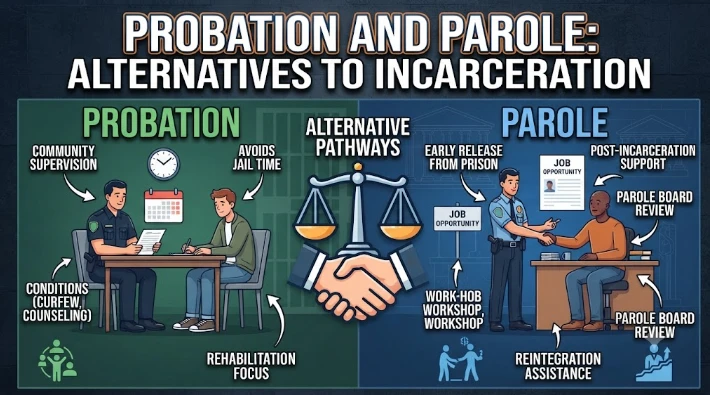
Probation and parole are presented as essential community-based alternatives to incarceration that combine supervision, accountability, and reintegration. Probation generally allows eligible offenders to remain in the community instead of serving a prison sentence, while parole provides conditional release after part of a custodial sentence has been completed. The article explains that both approaches can preserve employment, family ties, education, and housing, all of which reduce the risk of r
This article defines the ethical boundaries that protect volunteers who support visitor safety and law-enforcement-related functions in national parks. Although volunteers can assist with information, observation, traffic support, administrative work, backcountry roves, and reporting hazards, they must not exercise powers such as arrest, detention, search, citation, evidence handling, use of force, or other commissioned enforcement duties. The article emphasizes clear position descriptions, accu