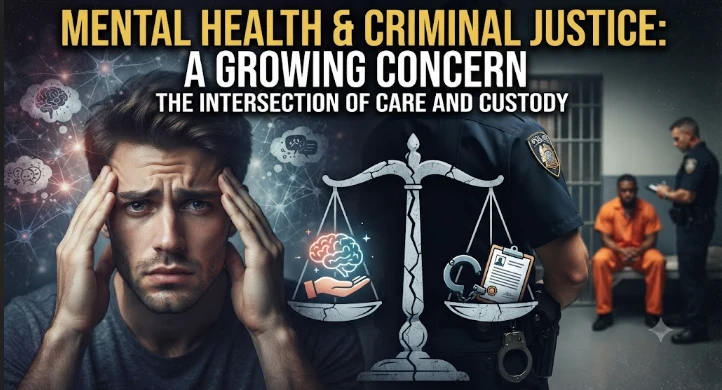
Mental health has become a central criminal justice concern because many people with psychiatric conditions enter police, court, and correctional systems without receiving appropriate clinical care. The article explains that prisons often function as de facto mental health institutions despite being designed primarily for custody rather than treatment. Mental illness frequently overlaps with substance-use disorders, homelessness, trauma, and social marginalization, creating complex pathways into offending and repeated justice contact. It also challenges the misconception that people with mental illness are inherently violent, noting that they are often highly vulnerable to victimization. The article highlights Crisis Intervention Team training, police and clinician co-response models, mental health courts, pre-arrest diversion, trauma-informed correctional care, peer support, telehealth, and continuity of treatment after release. These approaches aim to reduce unnecessary arrest, improve treatment engagement, and lower recidivism. The central argument is that justice systems should combine legal accountability with clinical intervention, ensuring that treatable mental health needs are addressed through appropriate care rather than routine criminalization.
In the first half of , the intersection of mental health and criminal justice system has become one of the most pressing and complicated issues of the societies worldwide. Over the decades, the jails and prisons in most countries operate as de facto psychiatric units, but they were not built to be used as treatment and rehabilitation and curing units. Instead, they have served mainly as a form of containment, but have dealt with symptoms of mental illness instead of attending to the causes. The outcomes have been devastating: mentally ill persons are disproportionately represented in the prison system, citizens are not more secure, recidivism rates are high, and the taxes of the population are already exhausted. The and early numbers paint the striking image of systemic failure and the need to transition to clinical intervention, community-based diversion, and trauma-informed practices that will lead to a decrease in incarceration and the subsequent increase in individual and societal outcomes.
Mental illness among inmates is a phenomenal occurrence. Within the specialized analysis in , close to fifty percent of all the imprisoned persons are currently residing with a provisional mental health issue. In forty three countries, the prevalence of major depression is estimated to be 12.8 percent of prisoners with psychotic disorders being about 4.1 percent. The depression rates increase to 16.7 percent in low- and middle-income countries and testify to the systematic failures of healthcare as well as the combined impacts of poverty, social marginalization, and insufficient community resources. These numbers highlight a pronounced overrepresentation of people with serious mental illness in the justice system; in most jurisdictions, people with such conditions as schizophrenia or bipolar disorder are three to twelve times more apt to be incarcerated than be offered suitable care within a community setting. This is further complicated by the high prevalence of co-occurring conditions: more than two-thirds of these persons have an issue with substance use disorders. Dual diagnoses produce complicated clinical and criminological presentations which cannot be properly handled by traditional incarceration and unless they receive extensive treatment, such individuals have much higher chances of recidivism, leading to endless cycles of criminal justice participation and rejection.
Criminal justice and mental health interact even before the time of incarceration. Officers of the police are often the initial contact point of a person with a psychiatric crisis. Conventional policing where the focus is command, control and quick fix may have the unintended effect of exacerbating these encounters leading to avoidable arrest or injury. In response to this threat, police departments in and have been migrating towards Crisis Intervention Team (CIT) training and co-responding with licensed mental health professionals, who respond to behavioral health calls. The goals of these programs include de-escalating crisis, stabilizing the person and giving a warm hand-off to clinical or community-based services, instead of falling on the default of arrest. Providing solutions to the immediate psychological needs of persons in crisis, such programs lower the risk of arrest, inhibit escalation and provide channels to treatment that were previously inaccessible in the old law enforcement systems.
The second issue that is critical to consider in the context of mental health in the criminal justice system is a so-called victimization paradox. In direct opposition to widespread myths, mental illness has a lot more to do with predisposition to crime than with the ability to commit violence. The National Institutes of Health and the National Center of Biotechnology Information published research in 2025, which confirms that patients with mental health conditions are much higher risk of violent crime, exploitation, and social marginalization compared to perpetrators. A large section of individuals getting into the justice system is because of crimes of survival (like petty theft, trespassing, or disorderly conduct) which are usually attributed to homelessness, unresolved trauma, or unavailable mental-health care. This fact points to the necessity of the justice system that acknowledges sophisticated social and clinical determinants of behavior, and treats and protects rather than punishes.
Diversion programs in criminal justice have become the panacea to overcome such challenges. These programs are meant to seek people with mental health needs on the arrest or pre-trial level and divert them into a treatment program instead of the correctional system. An example of such courts is the mental health courts in which mental treatment is required as a prerequisite to probation. Assessments conducted in and suggest that enrolment in these courts leads to lower rates of reoffending of about forty-three percent than in case of conventional court processing. Pre-arrest diversion programs enable police to refer persons to treatment programs or crisis centers rather than book them, which has been demonstrated to cut down intake of jails in regard to behavioral health calls by up to thirty percent.
Both the recidivism rate and the satisfaction rates of the victims and stakeholders in the community have improved because diversion programs focused on restorative justice that incorporate clinical support and mediation not only reduced recidivism by approximately a third but also maximized the satisfaction of victims and community stakeholders. The success of such programs is closely related to retention; the rates of rearrest are reduced to a minimum of 3.7 percent during the first 12 months of treatment when victims are kept busy in the treatment program and provided with regular justice navigation.
Even in those cases when people have to be put into prison, there is the focus on the trauma-informed treatment. Jails and prisons are starting to adopt new interventions that target the psychologically and physiologically caused trauma. Somatic and movement-based therapies, such as grounding and breathwork, assist inmates to regulate their nervous systems and react to stress. Models of continuous care (frequently backed by the use of telehealth and digital platforms) can guarantee that mental health care can be available even after the short duration of therapy sessions. Peer support networks, where trained inmates offer crisis support to their colleagues, do not only decrease the stigma, but a shared responsibility, and empathy culture is developed. These strategies recognize the concrete experiences of people who are involved in justice and are more focused on rehabilitating and treating rather than containing.
Integrating mental health into criminal justice systemically is not just a moral necessity, but also a practical imperative of ensuring safety of the people and managing resources. The incarceration of untreated mentally ill people frequently results in an increase in the number of disciplinary episodes, longer sentences, and recidivism, which cause a burden on the institutional and community resources. In contrast, the practices of diversion, early intervention, co-response policing, and trauma-informed care have been demonstrated to decrease the number of jails, improve treatment compliance and reintegration rates. They do not simply treat the symptoms within the prison walls and handle victims as they would be confined in a prison cell but treat the underlying causes of criminal behavior, such as untreated mental illness, substance dependence, and social vulnerability.
The problems however are serious. Even the most promising interventions may not be supported by resource constraints, shortage of staff, and some discrepancies in implementing all the policies. The success of integrating mental health professionals into the law enforcement, courts and correctional facilities, takes a long term investment, inter-agency team work and training, to make fidelity to evidence-based practices successful. Mental illness stigma is still affecting decision-making on all levels of the justice system, policing and prosecution included to sentencing and parole. The breakthrough of these obstacles requires system reforms, such as investments, legislation, and communication to the population to empower that mental health factors are entirely integrated into criminal justice operations.
In perspective, the paradigm shift is the beginning of a consideration that mental illness should not be criminalized. Mental health diagnosis should not dictate the path that an individual follows in the justice system, but rather should be used to inform the delivery of the right clinical services combined with community-based services. The policies that impose legal responsibility and therapeutic intervention have the highest levels of potential to decrease the reoffending behavior, safeguard the community, and ensure social justice. The systems that are effective combine the crisis responses in place, the diversion programs, the trauma-informed practices of incarceration, and the continuity of care after release in order to establish a holistic approach where mental health is viewed as the core element of justice and not a peripheral necessity.
To sum up, it is important to note that mental health in the criminal justice system is no longer a fringe concern, it is a central issue that affects the consequences of individuals, families, and communities. The statistics of and help understand that only punitive interventions do not cater to the complexity of psychiatric morbidity in correctional populations and instead, can contribute to the emergence of social harms. Justice systems can change their paradigm of criminalizing mental illness to one of treating it clinically and compassionately by investing in diversion programs, training in crisis intervention, clinical and compassionate trauma-informed practices and in continuous care. It is not only a human right issue but also a strategic one of ensuring that persons with mental health receive timely, adequate, and lasting support in a way that will lessen recidivism, improve the safety of the people, and develop a humane and effective justice system. By , the objective should be to establish the avenues that will consider mental illness as something that can be treated and people can receive care instead of being restricted, to make sure that the justice system becomes the means of restoration and healing instead of being the force of keeping people in place.
CITE THIS ARTICLE
Das, B. C. (2025). Mental Health and Criminal Justice: A Growing Concern. https://www.bikashchandra.com/article/b6eadbc7-6181-5b99-8b9e-15149dc7e72e
B. C. Das, “Mental Health and Criminal Justice: A Growing Concern,” 2025. [Online]. Available: https://www.bikashchandra.com/article/b6eadbc7-6181-5b99-8b9e-15149dc7e72e
Das, B. C. (2025) ‘Mental Health and Criminal Justice: A Growing Concern’. Available at: https://www.bikashchandra.com/article/b6eadbc7-6181-5b99-8b9e-15149dc7e72e
Das, Bikash Chandra. “Mental Health and Criminal Justice: A Growing Concern.” 2025, https://www.bikashchandra.com/article/b6eadbc7-6181-5b99-8b9e-15149dc7e72e.
Bikash Chandra Das. “Mental Health and Criminal Justice: A Growing Concern.” (2025). https://www.bikashchandra.com/article/b6eadbc7-6181-5b99-8b9e-15149dc7e72e.
Das BC. Mental Health and Criminal Justice: A Growing Concern. 2025. https://www.bikashchandra.com/article/b6eadbc7-6181-5b99-8b9e-15149dc7e72e
@misc{article_b6eadbc761815b998b9e15149dc7e72e,
  title = {Mental Health and Criminal Justice: A Growing Concern},
  author = {Bikash Chandra Das},
  year = {2025},
  url = {https://www.bikashchandra.com/article/b6eadbc7-6181-5b99-8b9e-15149dc7e72e},
}
TY  - GEN
AU  - Bikash Chandra Das
TI  - Mental Health and Criminal Justice: A Growing Concern
PY  - 2025-08-06
UR  - https://www.bikashchandra.com/article/b6eadbc7-6181-5b99-8b9e-15149dc7e72e
ER  -
This article explores why people volunteer in America’s national parks and how program design influences whether service remains meaningful. Volunteer motivations often overlap and include personal values, learning, social connection, career development, confidence, purpose, and attachment to place. The article uses motivational frameworks to show that volunteers are more likely to remain engaged when they experience autonomy, growing competence, respectful relationships, and a clear connection
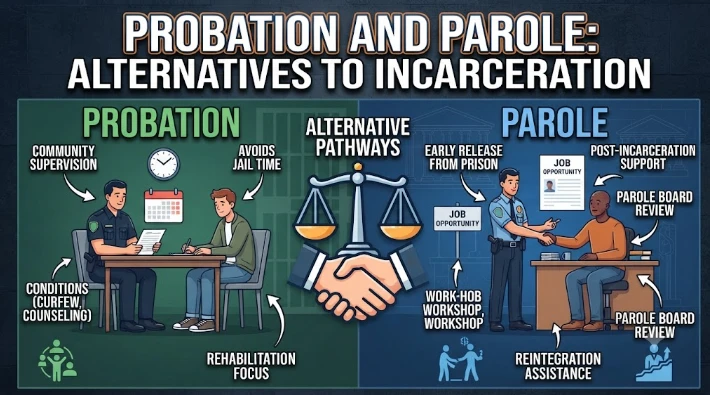
Probation and parole are presented as essential community-based alternatives to incarceration that combine supervision, accountability, and reintegration. Probation generally allows eligible offenders to remain in the community instead of serving a prison sentence, while parole provides conditional release after part of a custodial sentence has been completed. The article explains that both approaches can preserve employment, family ties, education, and housing, all of which reduce the risk of r
This article defines the ethical boundaries that protect volunteers who support visitor safety and law-enforcement-related functions in national parks. Although volunteers can assist with information, observation, traffic support, administrative work, backcountry roves, and reporting hazards, they must not exercise powers such as arrest, detention, search, citation, evidence handling, use of force, or other commissioned enforcement duties. The article emphasizes clear position descriptions, accu