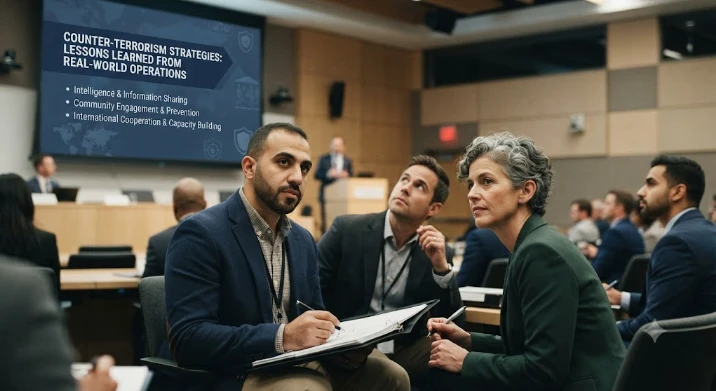
This article reviews practical lessons from counter-terrorism operations and applies them to Bangladesh’s security environment. It argues that effective counter-terrorism requires more than force, emphasizing intelligence sharing, inter-agency coordination, community engagement, cybersecurity, human-rights protection, and international cooperation. The post describes timely intelligence exchange among police, military, specialized units, and international partners as essential for identifying terrorist networks and disrupting planned attacks. It also stresses that radicalization cannot be addressed only through arrests or military action; education, employment opportunities, social inclusion, religious dialogue, and local trust are presented as important preventive tools. The article highlights the expanding use of digital platforms by extremist groups for propaganda, recruitment, and coordination, making cyber monitoring and technological capacity increasingly important. At the same time, it warns that excessive counter-terrorism measures, arbitrary detention, or rights violations can create resentment and undermine long-term security. The article concludes that Bangladesh needs a flexible, coordinated, lawful, and internationally connected strategy capable of adapting to changing terrorist threats.
The role of counter-terrorism approaches in the global security is an urgent issue especially at a time when terrorism gangs are changing their shape and dimensions. It is necessary to be able to adapt, learn on previous experiences, and use a blend of preventive and reactive actions to fight terrorism. Counter-terrorism activities need a multi-faceted approach, whether it is military activities or intelligence-sharing networks. Nonetheless, with the dynamic character of terrorism, the lessons obtained in the course of the real-life operations are priceless in the context of adjusting strategies and making them more effective.
Terrorism in Bangladesh is a problem that has taken centre stage in the national security issues in the recent times. Although the country has not experienced any significant terrorist attack compared with other countries in the region, it has not been immune to the universal surge of extremism with the ISIS and Al-Qaeda group expressing interest in recruiting in the country. Consequently, it is vital to investigate the lessons of counter-terrorism activities in the world and nationally in order to enhance the security system of Bangladesh and add to the world peace.
Intelligence sharing and inter-agency coordination is one of the greatest lessons acquired during real-world counter-terrorist operations. Intelligence collected through the multiple sources has been a central element in thwarting attacks in most successful counter-terrorist efforts. As an example, international cooperation among intelligence services e.g. CIA, MI6, and local services has aided in foiling many terrorist attacks in various regions across the globe.
Intelligence sharing in Bangladesh among the police, the army, and the local intelligence agencies has been critical in preventing the possibility of attacks. Through making sure that information is distributed among agencies and even other countries with whom it has counterparts, Bangladesh has been able to thwart terrorist operations and make proactive moves. Exchange of information among agencies like the Rapid Action Battalion (RAB), the Detective Branch (DB) with international bodies like Interpol has helped to improve efficiency of operations. Such coordination makes it possible to disrupt terrorist cells in time and stop the massive attacks.
Intelligence sharing is however associated with challenges. Bangladesh, as in most other nations, has a threat of misinformation, bureaucracy and agency mistrust. To avoid stumbling in the process, it is important to ensure that the intelligence can be acted upon and in time. When dealing with real-life operations, one lesson is that an integrated system of intelligence sharing should be developed, which will instill confidence, openness, and cooperation among several entities, including foreign partners.
The other important lesson that has been learned during counter-terrorism activities across the world is the necessity of the community in counter-radicalization. The counter-terrorism strategies practiced by the traditional methods are commonly based on military or law enforcement practices, yet the success in the long-term achievements of such activities rests on the anger of the radicalization of susceptible individuals. Terrorist groups flourish by attracting disaffiliated people who have been sidelined by the society. The cycle of radicalization can be broken by interfering with the causes of the problem, which include impoverishment, illiteracy, and social marginalization before it culminates into violence.
Extremism in some regions has increased in Bangladesh as it has been the case in many countries. The police and community leaders in the local areas have come to realize the need to communicate with the at-risk populations and establish trust to avert radicalization. Bangladesh can use the lessons learned during its own operations in such countries as the United Kingdom and Denmark where community policing and grinding-level counter-radicalization efforts were a key to success. Education, job opportunities and social integration programs have the potential to prevent the lure of extremist ideology.
There are different local initiatives that are already in operation in Bangladesh. The government has partnered with civil society groups to facilitate the interfaith dialogue, tolerance and involving youth in practices that offer alternative to violent extremism. The government has gone further to urge religious leaders to rise up against radicalism and inculcate tolerance in their societies. Nevertheless, it has a lot to be done. Community engagement should remain a key component of the counter-terrorism strategy of the government, to guarantee the long-term peace and stability.
As technology has contributed to the emergence, terrorists have become more effective in their use of the internet and social media to propagate their ideology, recruit both new members and in planning attacks. The fact that terrorists can now operate in the cyberspace, which is often beyond national borders, has complicated the process of terrorists being tracked and stopped by the mainstream law enforcers. Among the lessons of recent counter-terrorist activities, it should be noted that cybersecurity is rapidly gaining significance in fighting terrorism.
Cybersecurity activities should not be confined to ensuring that national infrastructures are safe in the fight against terrorism. The governments and the law enforcement agencies should be equipped to monitor and thwart the terrorist activity in the cyber space as well as surveillance of the online forums, social media platforms and encrypted communication channels that terrorist organizations might be utilizing. Through the enhancement of cybersecurity systems, Bangladesh will be able to forestall the recruitment of terrorists, disrupt the planning of attacks, and collect essential information to prevent the recurrence of attacks in the future.
A remarkable success in this direction could be the actions of the United States to trace and interfere with the activities of the ISIS online. Combined efforts of tracking, information gathering and collaboration with technology firms have helped the U.S. to shut down several extremist websites and online forums that ISIS recruiters used. In the same manner, Bangladesh can liaise with international entities and technology firms to make sure that the extremists cannot utilize the digital platforms to radicalize individuals or organize attacks.
Though security is a primary concern, the real-life experiences of counter-terrorism have also provided us with the lesson of the necessity to balance both security and safeguarding of human rights. The pursuit of counter-terrorism policies that are too aggressive and may violate civil liberties may result in resentment and alienation which may in turn bring on more radicalization. This is especially so in areas where there exists already frictions between the government and some communities.
Bangladesh has been criticized to have human rights abuses concerning counter-terrorism activities especially in the name of extrajudicial killings and arbitrary detentions. The experience of the global counter-terrorism acts is obvious: although it is necessary to act promptly in order to save the citizens, it is also necessary to check whether the actions are conducted according to the law and in the manner which does not violate human rights.
The violation of human rights in the right to fight counter-terrorism will only lead to instability and more resentment. To achieve success in the long run, Bangladesh should invest in making its counter-terrorism approaches effective and equitable. This involves offering proper training of law enforcement agencies on how to protect the human rights, reinforcement of rule of law and that every person irrespective of their background will be treated fairly and justly.
Last but not the least, the role of international cooperation in counter-terrorism cannot be overestimated. The problem of terrorism is international and it needs to be dealt with globally. As in the case of most other nations, Bangladesh has been able to utilize international relations and collaboration in counter-terrorism. The collaboration with other countries such as the United States, India and agencies such as Interpol has played a central role in the exchange of intelligence, coordination efforts as well as the security of borders.
Real life operation lessons indicate the global issue of terrorism and it can not be resolved on a local basis. The counter-terrorism strategies are effective with the involvement of several countries and various organizations that cooperate with each other, sharing information, resources, and expertise. Bangladesh can enhance its bargaining power in global relations so that it can be able to counter the increased threat of terrorism.
The process of counter-terrorism is multifaceted and dynamic, and it needs a flexible strategy. The experience gained in the real-world work is priceless information on how we can increase our strategies, and how we can be more responsive to the changing face of terrorism. In the case of Bangladesh, these lessons are important considering that the country still experiences the risk of extremist groups.
Intelligence sharing, community involvement, cybersecurity, protecting human rights, and collaboration with other countries will help Bangladesh to improve its counter-terrorism activities and create a more resilient society. The war on terror is not completed yet, though, with the use of these lessons learned, Bangladesh would benefit by making its approach to the war effective, sustainable, and goal-oriented within the scope of long-term considerations of peace and security.
CITE THIS ARTICLE
Das, B. C. (2026). Counter-Terrorism Strategies: Lessons Learned from Real-World Operations. https://www.bikashchandra.com/article/c56611f1-d23a-54ff-ad02-6fe7d22ce310
B. C. Das, “Counter-Terrorism Strategies: Lessons Learned from Real-World Operations,” 2026. [Online]. Available: https://www.bikashchandra.com/article/c56611f1-d23a-54ff-ad02-6fe7d22ce310
Das, B. C. (2026) ‘Counter-Terrorism Strategies: Lessons Learned from Real-World Operations’. Available at: https://www.bikashchandra.com/article/c56611f1-d23a-54ff-ad02-6fe7d22ce310
Das BC. Counter-Terrorism Strategies: Lessons Learned from Real-World Operations. 2026. https://www.bikashchandra.com/article/c56611f1-d23a-54ff-ad02-6fe7d22ce310
@misc{article_c56611f1d23a54ffad026fe7d22ce310,
  title = {Counter-Terrorism Strategies: Lessons Learned from Real-World Operations},
  author = {Bikash Chandra Das},
  year = {2026},
  url = {https://www.bikashchandra.com/article/c56611f1-d23a-54ff-ad02-6fe7d22ce310},
}
TY  - GEN
AU  - Bikash Chandra Das
TI  - Counter-Terrorism Strategies: Lessons Learned from Real-World Operations
PY  - 2026-03-12
UR  - https://www.bikashchandra.com/article/c56611f1-d23a-54ff-ad02-6fe7d22ce310
ER  -
This article explores why people volunteer in America’s national parks and how program design influences whether service remains meaningful. Volunteer motivations often overlap and include personal values, learning, social connection, career development, confidence, purpose, and attachment to place. The article uses motivational frameworks to show that volunteers are more likely to remain engaged when they experience autonomy, growing competence, respectful relationships, and a clear connection
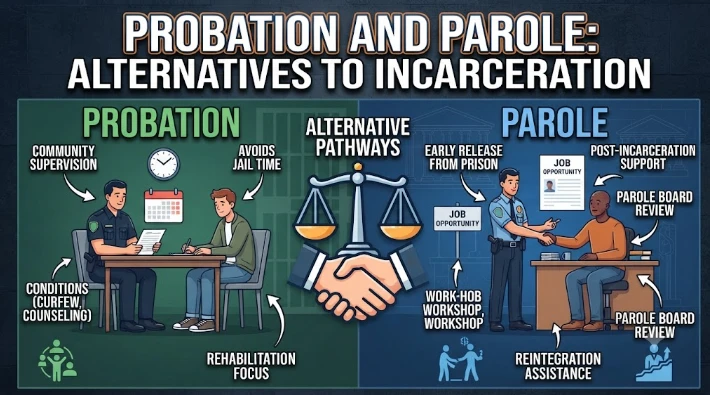
Probation and parole are presented as essential community-based alternatives to incarceration that combine supervision, accountability, and reintegration. Probation generally allows eligible offenders to remain in the community instead of serving a prison sentence, while parole provides conditional release after part of a custodial sentence has been completed. The article explains that both approaches can preserve employment, family ties, education, and housing, all of which reduce the risk of r
This article defines the ethical boundaries that protect volunteers who support visitor safety and law-enforcement-related functions in national parks. Although volunteers can assist with information, observation, traffic support, administrative work, backcountry roves, and reporting hazards, they must not exercise powers such as arrest, detention, search, citation, evidence handling, use of force, or other commissioned enforcement duties. The article emphasizes clear position descriptions, accu