White-collar crime is described as a hidden but highly damaging form of criminality committed through professional, corporate, financial, or governmental positions. Unlike visible street crime, these offenses often involve fraud, corruption, embezzlement, tax evasion, procurement misconduct, and technology-enabled deception, producing widespread economic and social consequences. The article emphasizes that such crimes can undermine institutions, destroy public trust, affect employment and pensions, and even contribute to physical harm when corporate misconduct compromises safety. It uses the Fraud Triangle, neutralization theory, and General Strain Theory to explain how pressure, opportunity, rationalization, organizational culture, and performance demands can encourage professional wrongdoing. The discussion also highlights the growing use of artificial intelligence and digital tools in sophisticated fraud schemes. Effective prevention therefore requires stronger internal controls, ethical leadership, whistleblower protection, regulatory technology, and real-time transaction monitoring. The article concludes that white-collar crime is not victimless; it threatens economic stability, social confidence, institutional integrity, and the fairness of modern society.
When creating the image of crime in the mind of the majority of the population, the image of dark streets, broken windows, or mugging cases come to mind. However, in the changing environment of , the most harmful offenses tend to be unseen, as they are carried out not by using weapons but by using keyboards, signatures, and sophisticated digital equipment. A concept that was initially coined by Edwin Sutherland in 1939, white-collar crime is a crime driven by money and is committed by corporate officials and governmental leaders. In the digitally-driven, hyper-connected economy of the world today, these types of crimes have evolved to become an international issue, capable of disrupting the entire economies of countries, corroding the institutions of governments, and wiping the life savings of thousands of people within only several hours. As opposed to the traditional street crime which directly affects individuals or neighborhoods, white-collar crime has systemic effects to the extent that it affects societies indirectly but significantly to millions of people. The magnitude of such crimes is astounding and the repercussions are far-reaching, leaving holes in financial, social and moral frames all over the planet.
Major events of Organizational exposure to economic crimes is being reported in a manner never experienced before. The Global Economic Crime and Fraud Survey revealed that over fifty-two percent of all organizations, or almost half, reported any type of fraud or financial misconduct within the last two years. The scale of these crimes can be determined by analyzing the prevalent types that form the modern reality. Financial fraud is now a sophisticated, billion-dollar threat that is driven by the development of generative artificial intelligence and has expanded to become cyber-enabled. AI-generated voice and video impersonations, also known as deepfakes, have allowed criminals to impersonate CEOs and executives with the authority to approve fraudulent deals that have cost certain multinational corporations hundreds of millions of dollars.
These offenses also take advantage of the technological development, taking advantage of the rapidity and anonymity of online communication to perform thefts at a fine degree of accuracy and with minimal tolerance. In the meantime, corruption is still imposing a massive burden on world economies. According to estimates given by World Economic Forum, corruption is consuming around 5 percent of the world GDP, which is more than four trillion dollars every year. Procurement fraud and bribery in the major infrastructure projects in South and Southeast Asia are continuing to pose a challenge to sustainable development as they undermine the confidence of the citizens and misused resources that are essential in the development of the society.
The estimated revenue in taxes that is siphoned through the use of complex networks of shell companies is estimated to be 480 billion every year in several governments around the world. This loss hamers down the finance of basic community services like healthcare, education and climate resiliency interventions on top of the socio-economic pressures on vulnerable groups. All these categories demonstrate the cost of the white-collar crime not only in monetary terms but in much broader terms of social equity, public trust and institutional integrity.
The white-collar crime is insidious because it is invisible and not noticed at a time. The consequences of corporate fraud or embezzlement, unlike with violent crimes, might not immediately result in loss or harm to the victim, but instead might take years before being noticed, the perpetrators might proceed with the activity of exploiting the systems without the knowledge of the citizens. Such crimes have a social implication that is enormous. The credibility of institutions is also at stake especially when top officials or the business executives are involved in financial frauds; the social contract is broken. The citizens can think that the system is unfair in its nature and develop cynicism and decrease in law and rules obedience.
Criminologists refer to it as social anomie, loss of moral codes that may spread in communities and institutions to provide good breeding grounds to other malpractices. In addition to trust, the white-collar crime institutional ripple effect can cause certain instability in whole organizations and industries. Environmental misreporting scandals, corporate greenwashing or financial misconduct do not only produce negative effects on ecological or financial goals, but also result in mass layoffs, loss of pension funds, and reduced investor trust. Such events can take decades to recover and the economic and social dislocations go ripple through the communities especially to people with less economic strength. Also, the myth according to which white-collar crime is victimless is getting more and more refuted by factual proof of linking corporate malpractice to physical damage.
The uncontrolled pharmaceutical firms, construction projects which have been affected by bribery or corruption and unsafe industrial operations, have contributed to avoidable injuries and deaths. Legal frameworks are becoming more and more aware of this fact, and the issue of corporate manslaughter and the responsibility of executives whose focus on profit over safety has real-life implications is being taken more seriously. The factual burden on these crimes reveals the fact that the issue of financial malfeasance is not a theoretical concept but a human one with direct consequences to health, safety and community wellbeing.
To explain the reasons behind white-collar crime by professionals, it is necessary to consider psychological and social dynamics by relying on the existing criminological theory. A practical framework that has been put forward by Donald Cressey is the Fraud Triangle which posits that people are motivated to commit fraud through the presence of pressure, opportunity and rationalization. Financial goals, personal financial strains or impractical organizational demands are stressful. Poor internal controls, absence of supervision and gaps in regulatory compliance create misconduct prospects. Rationalization helps criminals to explain to themselves why they acted the way they did and the actions committed by the criminals are seen as something temporary, warranted or nonviolent.
This school of thought is complemented by neutralization theory which focuses on the ways offenders reduce guilt or moral distress. People can overcome ethical limitations so that they can engage in illegal acts because criminal activities are normalized through cognitive mechanisms, like stating that nobody is harmed or that unethical actions are the norm. General Strain Theory also describes the phenomenon in a modern day setting, where economic pressures, market fluctuations and desire to achieve unending growth place strains that drive some professionals to find the easy way out usually at the expense of legality in order to hold status, performance indicators or company valuations. All these theories help to understand that white-collar crimes, on the one hand, are not incidental but are strongly bonded to organizational culture, institutional pressures, and personal morality, and there is a necessity to implement a complex approach to prevent them.
The solution to the white-collar crime in has to be global and based on accountability, prevention, and cultural change. The most important is technological vigilance; since artificial intelligence is being used by criminals to commit deception and fraud, regulators and financial institutions are progressively using AI-driven regulatory technology to track live transactions, identify anomalies and curb illicit money transfers. Millions of transactions can be processed by machine learning algorithms and any behavior that shows indicators of money laundering, embezzlement or fraudulent authorization can be detected. The protection of whistle blowers is also essential bearing in mind that the internal tips are the most used method of uncovering the white collar crimes.
Enhancing laws, maintaining confidentiality, and offering rewards to report wrongdoing are effective measures that make people report wrong acts without fear of reprisals. In addition, leadership ethics and corporate culture form base roles in prevention. Companies that uphold transparency, integrity, and the long-term interests of stakeholders in the name of short-term benefits have a low level of internal misconduct. By promoting ethical conduct among executives and managers and encouraging their deep-seated efforts to establish compliance, as well as, nurture responsibility, one can create the environments in which the chances of the wrongdoing being committed are less frequent and the likelihood of the wrongdoing being identified is higher. Integrating morality into strategic decision-making, performance assessment, and operational control not only lowers the chances of engaging into a criminal activity, but also enhances the resilience of the organization and the trustworthiness of the society.
The aggregate effect of white-collar crime proves that it is not a petty or abstract problem. The economic stability, the confidence of the community, and the physical damage against the communities are undermined in the financially motivated crimes committed by the professionals. The case of the and explains that the price is not only financial but social, moral, and human. With the world economies becoming more interdependent and interconnected on the basis of digital systems, the possibilities of advanced financial crime are growing, and it requires systemic, proactive interventions. That is why a comprehensive strategy that includes technological alertness, legislative protection, cultural change, and ethical leadership is necessary to reduce the impact of these crimes.
The identification of the magnitude and pervasiveness of white-collar crime enables communities to fight it in a developmental way, safeguard the vulnerable people and preserve the institutions of the society. Finally, the only way to combat this silent menace is not only the enforcement but instead the development of transparency, accountability, and ethics at every level of business and governance. Through strengthening the law enforcement system, empowering whistleblowers and responsible leadership practices, one can limit the scope of white-collar crimes, ensure the integrity of the economy, and make today's society trust the systems that it depends on again. The events of the last several years have triggered the understanding that it is high time not to turn a blind eye to such offenses anymore, as only the all-encompassing measure can help to secure the financial, social, and moral stability of the communities across the globe, as well as to make sure that the menacing shadow cast by white-collar criminals does not keep eroding progress, justice, and credibility.
CITE THIS ARTICLE
Das, B. C. (2025). White-Collar Crime: The Hidden Threat to Society Category. https://www.bikashchandra.com/article/27022f64-e05c-5567-89e4-0598e94f45cc
B. C. Das, “White-Collar Crime: The Hidden Threat to Society Category,” 2025. [Online]. Available: https://www.bikashchandra.com/article/27022f64-e05c-5567-89e4-0598e94f45cc
Das, B. C. (2025) ‘White-Collar Crime: The Hidden Threat to Society Category’. Available at: https://www.bikashchandra.com/article/27022f64-e05c-5567-89e4-0598e94f45cc
Das, Bikash Chandra. “White-Collar Crime: The Hidden Threat to Society Category.” 2025, https://www.bikashchandra.com/article/27022f64-e05c-5567-89e4-0598e94f45cc.
Bikash Chandra Das. “White-Collar Crime: The Hidden Threat to Society Category.” (2025). https://www.bikashchandra.com/article/27022f64-e05c-5567-89e4-0598e94f45cc.
Das BC. White-Collar Crime: The Hidden Threat to Society Category. 2025. https://www.bikashchandra.com/article/27022f64-e05c-5567-89e4-0598e94f45cc
@misc{article_27022f64e05c556789e40598e94f45cc,
  title = {White-Collar Crime: The Hidden Threat to Society Category},
  author = {Bikash Chandra Das},
  year = {2025},
  url = {https://www.bikashchandra.com/article/27022f64-e05c-5567-89e4-0598e94f45cc},
}
TY  - GEN
AU  - Bikash Chandra Das
TI  - White-Collar Crime: The Hidden Threat to Society Category
PY  - 2025-06-04
UR  - https://www.bikashchandra.com/article/27022f64-e05c-5567-89e4-0598e94f45cc
ER  -
This article explores why people volunteer in America’s national parks and how program design influences whether service remains meaningful. Volunteer motivations often overlap and include personal values, learning, social connection, career development, confidence, purpose, and attachment to place. The article uses motivational frameworks to show that volunteers are more likely to remain engaged when they experience autonomy, growing competence, respectful relationships, and a clear connection
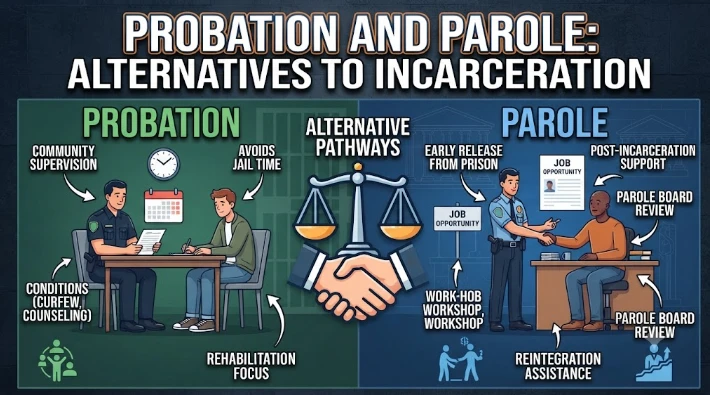
Probation and parole are presented as essential community-based alternatives to incarceration that combine supervision, accountability, and reintegration. Probation generally allows eligible offenders to remain in the community instead of serving a prison sentence, while parole provides conditional release after part of a custodial sentence has been completed. The article explains that both approaches can preserve employment, family ties, education, and housing, all of which reduce the risk of r
This article defines the ethical boundaries that protect volunteers who support visitor safety and law-enforcement-related functions in national parks. Although volunteers can assist with information, observation, traffic support, administrative work, backcountry roves, and reporting hazards, they must not exercise powers such as arrest, detention, search, citation, evidence handling, use of force, or other commissioned enforcement duties. The article emphasizes clear position descriptions, accu