Cyberbullying and online victimization are described as major risks of modern digital life because harassment can now occur continuously, across platforms, and far beyond physical school or community boundaries. The article discusses malicious comments, doxing, digital stalking, exclusion, coordinated bot attacks, platform abuse, and AI-generated deepfakes used for humiliation, intimidation, or extortion. Unlike traditional bullying, online abuse can remain visible, searchable, and shareable, creating a persistent record of harm. The psychological consequences include reduced self-esteem, anxiety, social withdrawal, disrupted sleep, physical stress symptoms, and problems with academic participation. The article also highlights the role of platform design and algorithms in amplifying harmful content. Responses include digital literacy, responsible citizenship education, parental communication, peer “upstander” programs, mental health support, stronger reporting tools, and platform accountability through safety-by-design principles. The central argument is that technology alone cannot solve cyberbullying. Safer digital environments require coordinated action by schools, families, peers, regulators, technology companies, and communities to protect dignity, wellbeing, and meaningful online participation.
By the year , a line between the physical and digital world will be almost erased, particularly among digital natives who have been raised in the world of constant connectivity. To them, internet is no longer a means but the major socializing, educating, self-disclosing and even identity making space. This immersion has come with a shadow truth, however, the constant and changing threat of online victimization. Having previously been viewed as a fringe phenomenon confined to school halls or chat rooms, cyberbullying has now emerged into a ubiquitous, multi-dimensional phenomenon with an immense influence on the social, emotional and psychological well-being of millions of youths across the globe. First quarter of statistics show that 58.2 percent of students have been exposed to cyberbullying at some time in their lives, representing an all time high in the occurrence of this crime of the digital age. Digital harassment does not have time or space limitations like bullying in past decades. It stalks victims into their privacy, and works 24 hours a day, and may create a permanent scar on the internet sites which act as permanent catalogs of humiliation or shame.
The structure of the contemporary online victimization is complex, as it takes advantage of both the technical aspect of the digital platforms, as well as the social processes that regulate the online communities. Algorithms have been used to cause greater harassment, with attackers using coordinated attacks of so-called bot-piling to flood the victim with notifications, restrict their accounts automatically, or abuse platform reporting systems to falsely target a person. The use of deepfakes has become rampant with the availability of easy-to-use artificial intelligence software, allowing images and videos to be created without the victim's consent to use them in extortion, harassment, or revenge-driven attacks, specifically women and other vulnerable populations. Especially pernicious kinds of harm have been the forms of digital stalking and doxing, when the private information, like the home address, telephone number, or other personal data, are posted on the internet to organize the threats in the real world. The problem of exclusionary bullying is still topical, and being isolated because of group chat or digital community is what results in social anxiety, persistent stress, and feelings of alienation, particularly in preteens who need peer networks to be socially validated and recognized.
Recent surveys and researches in not only discuss the prevalence of online victimization but also the types of platforms where the abuses are conducted and the forms assumed. YouTube is one of the main arenas, with its malicious comments and derogatory video compilations contributing to significant amounts of harassment, especially among teenagers who need to find their validation in video making. Snapchat has emerged as a platform of ephemeral threats and untraceable harassment, and Tik Tok spreads social shaming by means of viral duets and challenges that are meant to embarrass a person and are created to be shared on Instagram. Facebook, despite its age, is still perpetuating abuse by spreading fake rumors and shaming campaigns organized in the community. Demographically, although young adults (18-29) continue to be the most common targets of general harassment, middle-aged adults (40-59) are becoming more and more the victims of the malicious commentary and phishing efforts, which are usually complicated by a low level of digital literacy and, consequently, the inability to react to them effectively. This increased range of victims and the complexity of cybervictimization makes it clear that there should be adaptive strategies beyond the usual anti-bullying efforts.
The emotional cost of victimization on the Internet is immense and extensive. Social rejection on the internet is perceived in the same way that the brain perceives physical pain, i.e. the effects of cyberbullying are not confined to embarrassment but can result in quantifiable effects on mental health. A large fraction of the youth who have been subjected to recurrent digital bullying are affected by a so-called Master Status effect, in which the negative stigma, whether physical appearance, social status, or incompetence, is made an important component of their sense of self. As early as , clinical information reveals that 69 percent of victims report having a significant drop in self-esteem, which proves the strong internalization of an external judgment.
Somatic symptoms have been established as a typical clinical indicator of cyber-victimization, and disrupted sleep cycles, stomach aches, and chronic headaches indicate the physical impact of chronic stress and anxiety. Isolation is further worsened by the irony of greater connectivity since in most cases the victims have withdrawn socially, whether online or offline and report increased social withdrawal levels by 30 percent in the efforts to avoid further exposure or stigmatization. This mixture of mental and physical agony shows that cyberbullying is not something unimportant or transitional; it is a multidimensional and systemic problem that has a direct effect on developmental patterns and the quality of life.
As a counter to this changing menace, there have been major policy developments and legal interventions in to minimize victimization over the internet and hold platforms liable. The government and supranational organizations are incorporating the principles of Safety by Design which combines preventive, monitoring and quick response. The European Commission in February also launched a pioneering Action Plan Against Cyberbullying, which involved establishing a single EU-wide application that enabled minors to report to the country-level helplines and store digital evidence (screenshots and metadata) to be used in legal proceedings, as well as have access to immediate mental assistance. At the same time, the Digital Services Act has increased responsibility levels of large online services by requiring systemic risk assessment of their systems to make sure that the algorithms do not increase or promote harmful activity. The measures can be viewed as a recognition of the fact that regulatory control and accountability of the platforms are vital elements in the development of safer online spaces.
Technology however, is not enough to curb online victimization. The most effective way to prevent cyberbullying is to focus on the entire society, with particular focus on education, awareness, and community responsibility. Digital literacy has become a fundamental requirement, and has included the ethical knowledge of digital citizenship and the irreversible quality of online relationships, as well as technical competence. Schools are particularly important in providing students with the mechanisms to use safely and responsibly in the digital space. Parental involvement is also necessary because in , a study found that only 11 percent of teenagers discussed the cases of cyberbullying with their caregivers. This is because the key to early intervention is to break the shame barrier so that adults can offer guidance, emotional and practical solutions. The prevention is also increased by peer involvement, namely, the organization of the so-called upstander programs, when students trained to understand when to report and intervene when abused can disrupt the patterns of bullying and offer social support that hampers the strength of the bully.
Social and developmental impacts of cyberbullying go way beyond the emotional distress experienced in the short term. Recurring victimization through the internet may affect academic results, social interaction and mental health in the long run. The most common effects of persistent digital harassment on students include higher levels of absenteeism, decreased engagement in group learning, and increased anxiety which disrupts focus and mental activity. In the long-run, the effects may accumulate and create lifetime educational inequalities, career opportunities, and social assimilation. The combination of restorative practices, mentorship and emotional literacy programs was found to enhance resilience, offer coping strategies to lessen vulnerability and vulnerability to continued victimization.
Furthermore, cyberbullying is strictly intertwined with the larger trends in society, such as the popularity of social media as the main means of communication and the growth of the prevalence of personal digital tools. This is because when technology is omnipresent, there is no single instance of harassment that can be isolated but the effects take place in various contexts and at times interact in a cumulative fashion leading to stress that may overwhelm adaptive coping strategies. The identification of this cumulative effect in has compelled teachers, policymakers, and mental health workers to come up with holistic interventions that will not only counter the vectors of technological victimization but also the psychological mechanisms that lie behind the issue.
To sum up, it is possible to say that cyberbullying in is a multi-layered phenomenon, which can be attributed to the convergence of technology, social behavior, and human psychology. Its effects are far-reaching, as it has an impact on the emotional, cognitive, and social maturation of young people and its prevalence is compounded by algorithmic amplification and systemic ignorance and intervention loopholes. The solution to this problem must be a coordinated evidence-based plan, which includes education, parental intervention, peer support, mental health resources, and regulatory responsibility. Technological solutions do not bring true digital safety and it is a process that is nurtured by educated community, responsible governance of the platform and positive, active intervention.
By the year , the digital progress measure is no longer the connectivity or technological advancement, but a safe, inclusive, and supportive online environment in which individuals can freely interact, in which the social and emotional welfare of all the actors is preserved and in which the digital sphere is a part of society that supports and not harms. With a comprehensive strategy to online safety, we would be able to make the internet a place of opportunity, education, and a meaningful relationship instead of a stage of victimization, where the promise of digital life is enjoyed by all without the cost of their security, dignity and mental wellbeing.
CITE THIS ARTICLE
Das, B. C. (2025). Cyberbullying and Online Victimization in the Digital Age. https://www.bikashchandra.com/article/406dfeab-ee84-5744-9788-47498db28191
B. C. Das, “Cyberbullying and Online Victimization in the Digital Age,” 2025. [Online]. Available: https://www.bikashchandra.com/article/406dfeab-ee84-5744-9788-47498db28191
Das, B. C. (2025) ‘Cyberbullying and Online Victimization in the Digital Age’. Available at: https://www.bikashchandra.com/article/406dfeab-ee84-5744-9788-47498db28191
Das, Bikash Chandra. “Cyberbullying and Online Victimization in the Digital Age.” 2025, https://www.bikashchandra.com/article/406dfeab-ee84-5744-9788-47498db28191.
Bikash Chandra Das. “Cyberbullying and Online Victimization in the Digital Age.” (2025). https://www.bikashchandra.com/article/406dfeab-ee84-5744-9788-47498db28191.
Das BC. Cyberbullying and Online Victimization in the Digital Age. 2025. https://www.bikashchandra.com/article/406dfeab-ee84-5744-9788-47498db28191
@misc{article_406dfeabee845744978847498db28191,
  title = {Cyberbullying and Online Victimization in the Digital Age},
  author = {Bikash Chandra Das},
  year = {2025},
  url = {https://www.bikashchandra.com/article/406dfeab-ee84-5744-9788-47498db28191},
}
TY  - GEN
AU  - Bikash Chandra Das
TI  - Cyberbullying and Online Victimization in the Digital Age
PY  - 2025-12-03
UR  - https://www.bikashchandra.com/article/406dfeab-ee84-5744-9788-47498db28191
ER  -
This article explores why people volunteer in America’s national parks and how program design influences whether service remains meaningful. Volunteer motivations often overlap and include personal values, learning, social connection, career development, confidence, purpose, and attachment to place. The article uses motivational frameworks to show that volunteers are more likely to remain engaged when they experience autonomy, growing competence, respectful relationships, and a clear connection
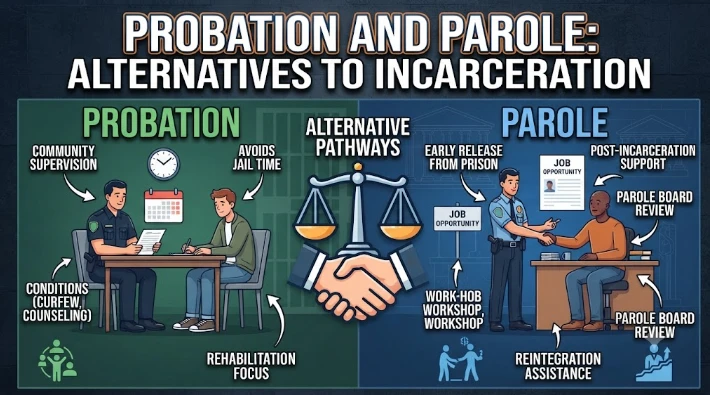
Probation and parole are presented as essential community-based alternatives to incarceration that combine supervision, accountability, and reintegration. Probation generally allows eligible offenders to remain in the community instead of serving a prison sentence, while parole provides conditional release after part of a custodial sentence has been completed. The article explains that both approaches can preserve employment, family ties, education, and housing, all of which reduce the risk of r
This article defines the ethical boundaries that protect volunteers who support visitor safety and law-enforcement-related functions in national parks. Although volunteers can assist with information, observation, traffic support, administrative work, backcountry roves, and reporting hazards, they must not exercise powers such as arrest, detention, search, citation, evidence handling, use of force, or other commissioned enforcement duties. The article emphasizes clear position descriptions, accu