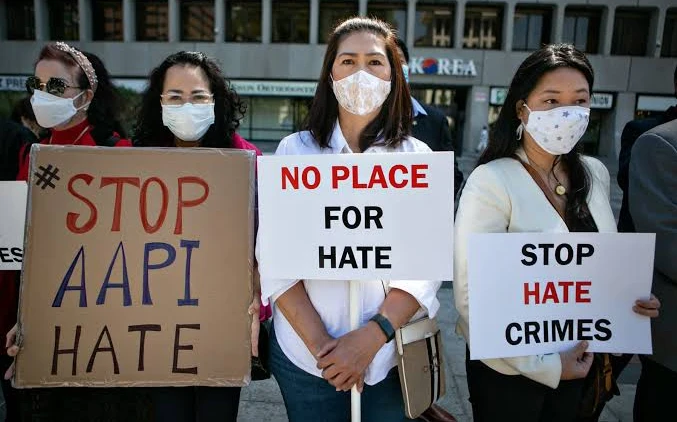
Hate crime is presented as a distinctive form of victimization because the offense targets not only an individual but also the identity and security of an entire community. Bias based on race, religion, ethnicity, gender, sexual orientation, or other protected characteristics can turn violence, harassment, property damage, and online abuse into broader messages of exclusion and intimidation. The article explains that hate crimes generate psychological and social effects beyond the direct victim, including fear, withdrawal from public life, reduced trust, and weakened community cohesion. Underreporting remains a major problem because victims may fear retaliation, distrust authorities, or believe that reporting will not lead to meaningful action. The article supports specialized hate-crime units, third-party reporting systems, digital protections, restorative responses for suitable nonviolent cases, cultural competency training, victim assistance, and community partnerships. It also stresses the growing role of online hate, doxing, automated harassment, and deepfake abuse. Overall, protecting vulnerable communities requires both legal accountability and visible institutional support for equality, dignity, safety, and participation.
With the spring of approaching, the world community is faced with a long-standing and poisonous problem of hate-based violence and harassment. Unlike typical crimes which are committed against a person, hate crimes are unique in nature and they affect the very identity of the person and send a clear message to the whole community that they are not part of it. Such crimes are not isolated but meant to intimidate, isolate, and oppress populations on the basis of race, religion, sexual orientation, gender, ethnicity, or other attributes of a kind that is not to be discriminated. They are social weapons which go way past the direct victim causing fear and panic which are felt in the family, neighborhood and society as a whole.
The statistics reflecting the situation at the beginning of demonstrate that, although the general rates of violent crimes in most major cities are stabilizing, the number of cases driven by bias is disturbingly high, and in some cases, the level of bias-motivated incidents is increasing. Hate crimes that have religious motives such as the one that occurred in the UK and North America have soared dramatically over the last two years after the world wars and the cases of anti-Jewish and anti-Muslim crimes have risen by more than twenty per cent annually. As with the United States and Europe, racial bias still remains the most powerful source of hate crimes, with about fifty to seventy percent of all reported cases.
Besides the usual forms of physical intimidation or property destruction, hate crimes are becoming a common occurrence in the digital world, which is the reality of the networked society. In , 14 percent of all the reported incidents are completely online, and they include doxing, when private information is published maliciously, and use of AI-generated deepfake content to embarrass, intimidate or coerce someone based on his or her identity. Such online attacks increase the scale of hate crimes and their destructive impact on the psyche of victims, as well as enable them to cross geographic limits and enter previously perceived secure areas.
The social consequences of hate crimes are far-reaching and far more than the individual to be targeted. Criminologists commonly call this category of crime a message crime since the damage is not only physical, but also symbolic. The act sends information to the broader group that they are unwanted, unsafe and that they may be victims of subsequent attacks. This spill over effect is quantifiable on the community cohesion and mental health. There is an immediate impact on the community: as soon as a place of worship is desecrated or someone is assaulted due to their identity, the whole group starts to feel more anxious, has depressive symptoms and a sense of vulnerability that shrouds it.
There is also loss of social trust. According to the data provided in 2025, in the neighborhoods where hate crime is high, the level of trust to neighbors and the local institutions can decrease by an average of thirty percent, which results in the disintegration of communities into segregated enclaves where no one wants to talk to the other out of fear. Such fear is also spreading into popular involvement. Victims tend to close themselves to society, disappear behind social media, avoid going to some public places, or express themselves in a cultural or religious manner. This chilling effect suppresses the voices, compromises the involvement of the community and the democracy that a healthy society needs.
Underreporting is one of the greatest problems related to the treatment of hate crimes. The projection in indicates that one out of every five incidences is not reported. The fear of retaliation, the absence of trust in the authorities, or normalization of abuse are the most common reasons given by victims who do not want to report. Most populations, especially those with past animosity with the law enforcement agencies, do not see the point of reporting because they are certain that the authorities will not do anything or worse the victim will be treated suspiciously. Online, frequent victims of online harassment have come to think that abuse is a collateral cost of online interaction, which encourages victimization cycles. To solve these gaps in reporting, there is a need to implement measures that restore confidence and enable victims to report incidents with the confidence that they will not be prosecuted or fired.
The reaction to that is that justice systems and policymakers in are enacting a multi-layered response to ensure that vulnerable communities are not the victims of hate-motivated violence. Specific laws have become a very important instrument, with various countries developing Digital Hate Acts that criminalize using AI, the usage of automated bot networks, and other technologies in assisting harassment. These regulations pass the burden onto the individual users and place the social media and digital service providers in charge of providing safe spaces. Special hate crime units in police departments are increasingly prevalent, offering expertise in the field of bias-motivated crimes identification, investigation, and prosecution. To promote reporting and address distrust, most law enforcement agencies have collaborated with local groups, such as religious groups, LGBTQ+ organizations, and local advocacy groups, to develop third-party reporting mechanisms. This will enable victims to report such cases to the community representatives they trust instead of the police which will reduce fear and chances of action will be enhanced.
Restorative Justice has also been popularised as an alternative approach, especially to non-violent hate crimes like graffiti, online bullying or verbal abuse. The aim of the restorative processes is to break the prevailing prejudice and build accountability, empathy, and reconciliation by organizing effective conversations between the offenders and the affected communities. Such programs acknowledge that hate crimes are not only crimes, but social wounds that need to be cured at the community level. Although debatable in certain jurisdictions, early preliminary evidence indicates that restorative practices may decrease recidivism of bias-motivated offenders and lessen the long-term harm of victims.
The third pillar of a successful response is education and active involvement of the community. Law enforcement, educator, and community leader bias-awareness training have become more of a priority that focuses on trauma-sensitive methods and cultural competency. The eighty percent of police departments in metropolitan regions have incorporated compulsory training modules that help to sensitize officers about the complexity of hate-driven conduct, teaching methods of de-escalation, facilitation of reporting, and support of victims. Meanwhile, laws are being debated in various EU member states that will permit the deletion or clean-slate of digital history of hate speech offenders under the age of majority, as a wider indication of rehabilitation and reintegration over life-long stigmatization. Immediate protective measures have been implemented through victim compensation schemes (such as early-release "safety grants" to secure personal property and improve residential security) to make people less vulnerable and make them feel that they still have some control.
These combined interventions not only create a change in the legal or procedural surroundings of hate crimes, but they completely change the social context of these crimes. These strategies minimize the psychological influence hate crimes have on whole groups of people by focusing on accountability, support and active involvement of the communities. The safety of vulnerable communities, in turn, will not only be a personal issue but a societal one at large, making the message of exclusion, which hate-motivated actions will convey, be negated by a noticeable and palpable support of both the institutions and the neighbor.
In , hate crime is much more than a violation of law, it is a personal assault on the concepts of equality, dignity, and mutual respect. These crimes endanger the social structure by causing division, instilling fear and bringing down trust in the institutions. In an increasingly interconnected world, there is a greater incentive to act: a single biased-motivated violence incident transcends the boundaries of one community and is heightened by the social media, the digital network, and the awareness of the world. The prevention of such crimes requires a comprehensive strategy that incorporates the enforcement of the law and the law reform, technology responsibility, restorative interventions, and community empowerment.
Finally, the effect of the victory in the fight against hate crimes is not only a decrease in the reported cases but also an enhanced confidence of the people, social cohesion and the strength of the vulnerable populations. It is inherent that safeguarding people against victimization due to their characteristics relates to safeguarding the welfare of the entire society. It is an understanding of the fact that justice is not merely about punishing an act, but about creating situations where people in society are all able to live and express themselves freely, without fear of intimidation, and engage in the full civic life.
Going forward in , it can be concluded that hate crime will continue to be an expanding and dynamic issue, influenced by world wars, social division, and unmonitored opportunities of the digital realm. It should be fought with vigilance, creativity and determination to govern with ethics. Policies and the law should also keep up with the technologies and changes in the society so that the violators can be prosecuted and the victims gain the power. It should be prevented by educating about cultural awareness, providing strong protective systems, and enhancing them with restorative practices that will resolve the causes of bias and prejudice. The campaign against hate-motivated crime is, essentially, a struggle of human dignity.
The more a society is effective in its protection of the most vulnerable, the more power is given to the rights and security of everyone and the society. Real security in the contemporary world is not attained with a mere surveillance but it requires aggressive protection of human rights, community cohesiveness, and absolute adherence to equality and respect to everybody. The ability to protect vulnerable societies is the end-game of how mature the society has become, not just how well we bring the laws into practice, but also how much we respect the lives, identities and dignity of each and every person. Hate crime should be tackled by all means, as only in this way we can make sure that the world that we create to be inclusive, resilient, and able to withstand the corrosive power of prejudice, fear, and discrimination, future generations will be able to inherit the societies where the sense of safety, respect, and justice will be universal.
CITE THIS ARTICLE
Das, B. C. (2025). Hate Crime and the Protection of Vulnerable Communities. https://www.bikashchandra.com/article/4be4a269-249d-540f-960a-9499cc60ba93
B. C. Das, “Hate Crime and the Protection of Vulnerable Communities,” 2025. [Online]. Available: https://www.bikashchandra.com/article/4be4a269-249d-540f-960a-9499cc60ba93
Das, B. C. (2025) ‘Hate Crime and the Protection of Vulnerable Communities’. Available at: https://www.bikashchandra.com/article/4be4a269-249d-540f-960a-9499cc60ba93
Das, Bikash Chandra. “Hate Crime and the Protection of Vulnerable Communities.” 2025, https://www.bikashchandra.com/article/4be4a269-249d-540f-960a-9499cc60ba93.
Bikash Chandra Das. “Hate Crime and the Protection of Vulnerable Communities.” (2025). https://www.bikashchandra.com/article/4be4a269-249d-540f-960a-9499cc60ba93.
Das BC. Hate Crime and the Protection of Vulnerable Communities. 2025. https://www.bikashchandra.com/article/4be4a269-249d-540f-960a-9499cc60ba93
@misc{article_4be4a269249d540f960a9499cc60ba93,
  title = {Hate Crime and the Protection of Vulnerable Communities},
  author = {Bikash Chandra Das},
  year = {2025},
  url = {https://www.bikashchandra.com/article/4be4a269-249d-540f-960a-9499cc60ba93},
}
TY  - GEN
AU  - Bikash Chandra Das
TI  - Hate Crime and the Protection of Vulnerable Communities
PY  - 2025-12-10
UR  - https://www.bikashchandra.com/article/4be4a269-249d-540f-960a-9499cc60ba93
ER  -
This article explores why people volunteer in America’s national parks and how program design influences whether service remains meaningful. Volunteer motivations often overlap and include personal values, learning, social connection, career development, confidence, purpose, and attachment to place. The article uses motivational frameworks to show that volunteers are more likely to remain engaged when they experience autonomy, growing competence, respectful relationships, and a clear connection
Probation and parole are presented as essential community-based alternatives to incarceration that combine supervision, accountability, and reintegration. Probation generally allows eligible offenders to remain in the community instead of serving a prison sentence, while parole provides conditional release after part of a custodial sentence has been completed. The article explains that both approaches can preserve employment, family ties, education, and housing, all of which reduce the risk of r
This article defines the ethical boundaries that protect volunteers who support visitor safety and law-enforcement-related functions in national parks. Although volunteers can assist with information, observation, traffic support, administrative work, backcountry roves, and reporting hazards, they must not exercise powers such as arrest, detention, search, citation, evidence handling, use of force, or other commissioned enforcement duties. The article emphasizes clear position descriptions, accu