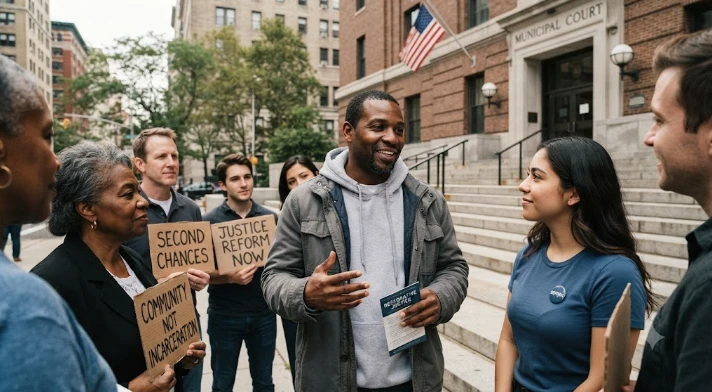
This article examines the need for criminal justice reform in Bangladesh from a practical, system-wide perspective. It identifies major weaknesses in the existing system, including long court delays, heavy case backlogs, inadequate police training, limited resources, corruption, misuse of authority, overcrowded prisons, and weak rehabilitation services. The post argues that meaningful reform must address the judiciary, law enforcement, and correctional institutions together rather than treating them as separate problems. Proposed improvements include increasing judicial efficiency, modernizing laws, strengthening fair-trial protections, improving police ethics and human-rights training, and creating stronger accountability mechanisms. The article also advocates prison reform that emphasizes education, vocational development, mental-health support, and reintegration instead of relying only on punishment. It acknowledges ongoing initiatives such as special courts, digital case-management systems, police training, and new correctional facilities, while noting that political resistance, limited funding, corruption, and public distrust can obstruct progress. The central message is that lasting reform requires institutional commitment, civil-society participation, transparency, and sustained investment.
Reform in criminal justice has taken center stage as a discussion issue in most countries in the world and Bangladesh has not been left out. Reform of the criminal justice system has been necessitated by the understanding that the criminal justice system in place, as much as it brings structure, is not always good at fulfilling its greatest mandate, which is the delivery of the much needed justice. It could be regarding fair trials, the removal of bias, the bettering of law enforcement practices, the rehabilitative over the punitive aspect of the correctional system, or all of the above, the outcry of reform is fueled by the necessity to make justice more accessible, efficient, and effective to everyone. As part of this post, we are going to have a real-life examination of the criminal justice system in Bangladesh, examine the burning issues, the reforms that are currently being implemented, and the measures that can be taken to better the system.
As is the case with most other criminal justice systems, the criminal justice system in Bangladesh aims at keeping law and order, safeguarding the rights of people, and making the culprits answer to their deeds. Nonetheless, over the years, this system has been experiencing serious challenges. Slowness of the court process has been one of the problems. The number of cases pending in the Bangladesh courts is astounding, and it is not an exception to have cases of crimes require years to be solved. Such injustice is not only detrimental to the victims and their families, but also weaken people in their faith in the justice system.
The absence of proper police training and resources is another very important problem. Although law enforcement agencies in Bangladesh have the responsibility to ensure the safety of the people, most of them are not trained and underworked. This causes efficiencies in crime prevention and investigation. Moreover, the absence of accountability and, consequently, police corruption is also a matter of concern. Police brutality and abuse of power has been a topic of rampant cases as well, carrying over to the distrust that the public has towards the police.
Moreover, the prison system in Bangladesh has been lamented as being crowded, atrocious in living standards and access to rehabilitation programmes is minimal. Although the aim of prison is to reform criminals and make them fit into the society, most of the prisons in Bangladesh are marked with bleak environments which do not help in curbing the causes of crime. On the contrary, they tend to create a crime cycle and the criminals are released without having the tools required to revert back to the society.
To handle these among other challenges in the system, criminal justice reform should be implemented. The fundamental idea behind this reform will be making sure that the system is fair, transparent and effective. The reform should see various parts of the system, such as law enforcement, judicial and corrections. All these areas are of paramount importance to the operation of the criminal justice system, and they all are important to reform in order to establish a more efficient system in general.
The court system is one of the initial spheres, which should be reformed. The government of Bangladesh needs to invest in the efficiency of the judicial process to deal with the backlog of cases. This may involve adding more judges, enhancing the systems of handling cases, and putting in place measures to accelerate the speed of conducting trials. Also, the law itself should be reformed to provide the legal framework that is current and in accordance with the international human rights standards. Another action that Bangladesh needs to undertake is to make sure that the trials are fair and just and that the accused have reasonable chance to deliver their case.
Another area, which needs immediate attention, is police reform. Law enforcement agencies in Bangladesh are associated with many challenges such as corruption, absence of training and insufficient resources. It is essential to reform the police force so that people could feel safe and trustful in the law enforcers. The police officers should go through more training programs focusing on ethics, community policing, and human rights. Moreover, corruption within the police force should also be eliminated more through the development of independent checks to ensure that officers are held responsible in their activities.
Prison system reform is also a part of criminal justice reform. Bangladesh needs to strive to reform the state of its prisons and concentrate on reforming instead of punishing. The prisons are expected to be a source where the prisoners receive educational and vocational programs preparing them to live in the outside world. Overcrowding is also to be considered and minimized as it usually results in inhuman situations. Bangladesh can improve the recidivism rates and enhance the overall safety of people in the long-run through better rehabilitation programs and emphasis on reintegration.
Bangladesh government already has started taking some steps in the direction of criminal justice reform. The formation of special courts is one such move, namely, the Anti-Corruption Commission (ACC) and the Speedy Trial Tribunals that are designed to streamline the trial procedure. These courts specialize in certain parts of the law and have played a major role in accelerating the prosecution process of certain crimes. Some sectors of the judicial system have also been made more efficient with the introduction of digital platforms to manage cases with the judicial system being able to access legal documents with more speed and it also takes up less time due to paperwork.
On the issue of police reform, the Bangladesh police have tried to improve its capacity by training officers on issues like human rights, methods of investigation and community participation. The government has also been striving to make law enforcement agencies increase their budget to enhance infrastructure and arm police force with superior technology and equipment.
Prison reforms are also being implemented with the government making an effort to ensure that overcrowded prisons are reformed. The government of Bangladesh began constructing new prison facilities in 2017 to ease overcrowding, new attempts have been made to implement vocational and rehabilitation programs in prison. The government has also realized that it needs to tackle the problem of mental health among the prisoners and has made efforts in offering improved mental health care to the incarcerated.
Even though there have been commendable measures made to change the scenario, there have been hiccups in the implementation of criminal justice reforms in Bangladesh. Lack of political will is one of the key hindrances. Even though the necessity to reform is generally acknowledged, it is frequently opposed by the members of the system who enjoy the status quo. This resistance is able to bring down the pace and can bring about changes that are not meaningful.
The other challenge is the lack of finances to conduct the reform. Reform in criminal justice needs substantial investment in facilities, training and technology. Although the government has tried to set funds aside to fund these activities, the necessity to carry out reforms usually conflicts with other urgent matters, including healthcare and education. As well, the system can be corrupt such that the money is misappropriated or squandered, which will further undermine development.
The perception of the criminal justice system by the society contributes to the implementation of reform, as well. In Bangladesh, the system is disillusioned with many people, and it does not trust law enforcement and the judicial system. This suspicion towards the system may result in the inability to find public support to the reform efforts. The government and the civil society need to collaborate to instill confidence in the criminal justice system so that all reforms are perceived as an effort to deliver justice to every citizen.
In order to attain a significant criminal justice change, Bangladesh should adopt a holistic strategy that will focus on the problems on all levels of the system. This involves judicial, law enforcement and correctional reforms. The training and professionalization of the law enforcement officials should be given priority by the government besides the problem of corruption in the police force. Prisons need to be converted into centers of rehabilitation and not punishment as priority should be on decongesting them and provide better living standards. Moreover, the judicial system needs to undergo reform to shorten the time taken and make sure that trials are just and fair.
Moreover, civil society organizations should be more involved in the process of the reform. The NGOs and other advocacy groups can be very useful in keeping a check on the advancement of the reforms, supporting the marginalized communities, and keeping the government in check. Through collaboration the government, law enforcing agencies and civil society can establish a criminal justice system that meets the needs of every citizen of the country and the delivery of justice in fair and effective manner.
To sum up, criminal justice reform is a process that needs commitment, resources, and political will. The obstacles to the solution of the criminal justice system in Bangladesh are rather overwhelming, but the prospects of change are enormous. Through holistic approach and focusing on the causes of crimes, Bangladesh can construct a more efficient, fair and just criminal justice system in the future.
CITE THIS ARTICLE
Das, B. C. (2026). Criminal Justice Reform: A Real-World Perspective. https://www.bikashchandra.com/article/88ffe39c-d7e7-5fb5-abf1-c1b09c98d718
B. C. Das, “Criminal Justice Reform: A Real-World Perspective,” 2026. [Online]. Available: https://www.bikashchandra.com/article/88ffe39c-d7e7-5fb5-abf1-c1b09c98d718
Das, B. C. (2026) ‘Criminal Justice Reform: A Real-World Perspective’. Available at: https://www.bikashchandra.com/article/88ffe39c-d7e7-5fb5-abf1-c1b09c98d718
Das BC. Criminal Justice Reform: A Real-World Perspective. 2026. https://www.bikashchandra.com/article/88ffe39c-d7e7-5fb5-abf1-c1b09c98d718
@misc{article_88ffe39cd7e75fb5abf1c1b09c98d718,
  title = {Criminal Justice Reform: A Real-World Perspective},
  author = {Bikash Chandra Das},
  year = {2026},
  url = {https://www.bikashchandra.com/article/88ffe39c-d7e7-5fb5-abf1-c1b09c98d718},
}
TY  - GEN
AU  - Bikash Chandra Das
TI  - Criminal Justice Reform: A Real-World Perspective
PY  - 2026-03-07
UR  - https://www.bikashchandra.com/article/88ffe39c-d7e7-5fb5-abf1-c1b09c98d718
ER  -
This article explores why people volunteer in America’s national parks and how program design influences whether service remains meaningful. Volunteer motivations often overlap and include personal values, learning, social connection, career development, confidence, purpose, and attachment to place. The article uses motivational frameworks to show that volunteers are more likely to remain engaged when they experience autonomy, growing competence, respectful relationships, and a clear connection
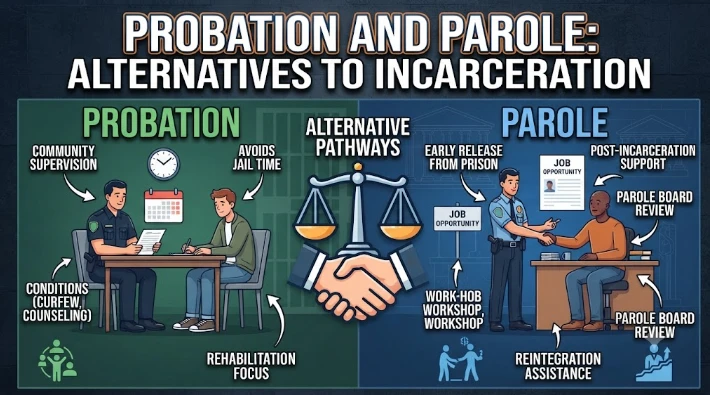
Probation and parole are presented as essential community-based alternatives to incarceration that combine supervision, accountability, and reintegration. Probation generally allows eligible offenders to remain in the community instead of serving a prison sentence, while parole provides conditional release after part of a custodial sentence has been completed. The article explains that both approaches can preserve employment, family ties, education, and housing, all of which reduce the risk of r
This article defines the ethical boundaries that protect volunteers who support visitor safety and law-enforcement-related functions in national parks. Although volunteers can assist with information, observation, traffic support, administrative work, backcountry roves, and reporting hazards, they must not exercise powers such as arrest, detention, search, citation, evidence handling, use of force, or other commissioned enforcement duties. The article emphasizes clear position descriptions, accu