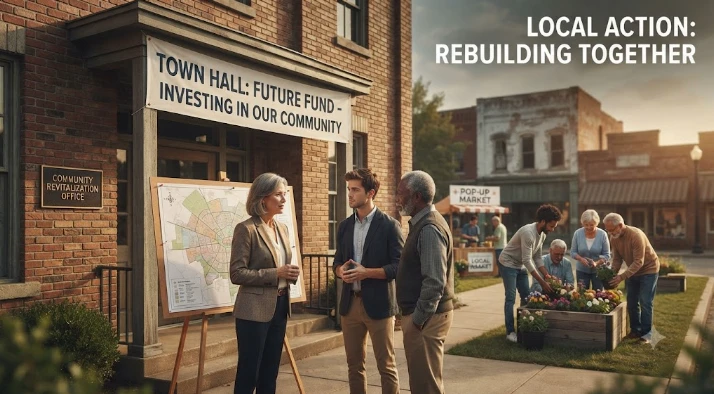
This article analyzes how local governments can respond to emigration, population decline, ageing, and declining civic participation without treating shrinking communities as failures. Effective response begins with careful diagnosis of demographic causes, service demand, local economic conditions, housing, skills, and neighborhood differences. Because infrastructure and public services often remain costly even as population falls, municipalities need transparent discussions about service rightsizing, regional cooperation, digital and physical access, and realistic economic strategies. The article highlights youth retention, return migration, diaspora engagement, remittances, housing reuse, care services, public spaces, local media, environmental opportunities, and meaningful citizen participation in difficult choices. Growth alone is rejected as the main measure of success; better indicators include income, service access, housing quality, participation, environmental conditions, and resident satisfaction. Scenario planning can help governments compare different demographic pathways and adapt over time. The article concludes that successful adaptation combines dignity, honest planning, reciprocal diaspora ties, reused assets, multilevel support, and genuine local influence rather than unrealistic promises of restoring past population levels.
When a municipality starts to see population decline, it's a big shift well before the census comes out. Classrooms are smaller, stores are empty, buses have fewer passengers, homes are empty and older people take greater responsibility in their community. The pattern is exacerbated by emigration of the working-age population and skilled migrants. Local government needs to react, without labeling the rest of the population as people who live in a failing place.
The first step is in making a correct diagnosis. Causes of decline may be due to low levels of birth, ageing, internal migration, international migration, housing costs, poor employment opportunity, poor transport or a combination of these. Municipal means can obscure neighborhoods that are expanding in parallel to the rapid population declines of other neighborhoods. Specific information on age and skill, household and location, and service use can aid in improved planning.
Migration statistics must be regarded with caution as official statistics are usually slow and may not account for circular movements. Other indicators include school enrollment, utilities accounts, health registration, cellphone patterns, building vacancy, and local surveys. Protection of privacy and legal protection continue to be critical. There should be numbers tested with families, employers, schools and community organisations.
Even when a community's population is declining, public expenditures don't necessarily fall. Roads, water, fire, schools, clinics and administrative buildings will need to cater to larger areas with fewer taxpayers. As the demand for a product decreases, the per person cost may increase. Educators and community members must communicate this financial reality before community service adjustments become an unanticipated crisis.
Place-based policy provides a helpful framework as it means that one-size-fits-all 'national' solutions are likely to be an inadequate fit for many of these shrinking places. A key point of OECD research about public goods in depopulating areas is that there is a need for a clear, explicit adaptation locally, which is connected to territorial equity and economic sustainability. Adaptation should not be sneaking it in through annual reductions. There is still responsibility of the national government to ensure a level playing field among regions.
It is politically challenging to do service rightsizing. If a school, clinic or a bus route is closed, there's also an opportunity to save money while decreasing the attractiveness of a community that remains. Criteria must address factors of access time, quality, equity, future demand and alternatives. Maintaining all buildings as they were originally constructed is not essential to preserving access; regional service hubs, mobile teams, shared facilities, and flexible transport can all help to maintain access.
There is a possibility to share cost and expertise through intermunicipal cooperation. Waste services, planning staff, emergency response, procurement, digital platforms or special social care services can be shared with neighbouring councils. Agreements must incorporate democratic checks and balances in their form of cost calculation. The larger municipality should not necessarily take all decisions as it is the smallest.
Digital government can shorten distances to obtain permits, pay and record, and consult. However, the aging population, poor internet connectivity, disability and low levels of digital literacy can make online transformation an exclusion. Preserving access in assisted service points in libraries can maintain access in post offices and community centers. Physical routes still are required for complex and sensitive cases.
The need of the hour is a realistic approach in economic strategy. Trying to build up an industrial base again with one investor can be a drain on resources and increase disappointment. Resources available in the area—including food, care services, renewable energy, tourism, crafts, telecommuting, cultural heritage or a particular enterprise—must be carefully examined. Diversity can help small firms and social enterprises to be resilient.
The issue of labour shortage is invariably found alongside unemployment or inactivity. Employers may not have the necessary skills, residents may have barriers in their way of getting to work, receiving care, or maintaining good health, or may not have the necessary credentials. Training should relate to existing job opportunities and to local business plans. Course content is not as important as child care, mobility support, and adult education.
Loyalty is not the only slogan that can help keep youth. Young adults require training, a place to live, social interaction, job opportunities, access to technology and the ability to impact their communities. A more dynamic civic role is achieved through youth Councils, paid internships, enterprise support, cultural space, participatory budgeting. There will be some people who still move on and policy should not be about betraying mobility.
Return migration can potentially include skills, savings, networks and new expectations. Local authorities are able to offer good registration, school, housing, business permit and credential recognition information. There is a need for coordination between local and national agencies with regard to reintegration services. Even if a family is a citizen or has family ties to the country, there may be cultural and administrative barriers to re-entering the country.
Diaspora engagement is about connection beyond permanent return. Entrepreneurship education can be provided by persons residing abroad by mentoring entrepreneurs, supporting cultural projects, providing investment, transferring technical knowledge, or giving input to the local planning process. Migration in Europe and Central Asia (ECA) is a topic of particular interest for World Bank operations, and the development potential of diaspora finance and networks is a theme that has been explored. Engagement ought not to see emigrants just as a source of funds.
Remittances will help households, but not necessarily help them to develop locally. However, these funds can be used to enhance housing, education, health and business capital, and weak institutions and restricted investment options can decrease the potential for a greater impact. Municipalities have the opportunity to make project opportunities transparent and develop trustworthy means for collective contribution. No public services shall rely upon the lack of citizens in private goodness.
There is a need for a housing policy which deals with both vacancy and quality. Vacant structures can live with inappropriate and inefficient and (un)lawful housing. Returning property to use through inventories, grant support for renovations, land banking, adaptive reuse, and title support. Decisions must be made with community consultation and heritage review and demolition may be required in unsafe areas.
Service demand changes as a result of ageing. As younger members of the family move out, home care, accessible transportation, primary health, socialization and appropriate housing increase in importance. Companionship and practical assistance may be provided by volunteers but professional care is not delegated to neighbours. Care workforce planning needs to be a core topic for discussion.
After multiple decline stories, there may be community disengagement. When each meeting focuses on loss or decisions seem to have been made, residents are disinclined to continue attending. Local government must be engaged and have real decision-making power. Tiny projects that they can see, quick turnaround, and open financial data will help restore the faith that civic action can help.
Public places can be used as a low-cost civic infrastructure. Libraries, parks, markets, cultural centers and common workspaces facilitate age and background interaction. Enabling the concentration of services by a multifunctional centre can maintain activity when multiple buildings will not continue to be sustainable. There is a need to incorporate accessibility and local character in design.
The local media and communication play a role in the situation of demographic change. Does gossip transform a service review to a notion of abandonment? Before decisions are final, officials should make public information about numbers, options, schedules, and the consequences of distribution. Independent media and public records enable citizens to check the official claims.
There is an opportunity for the environment to happen on unused land and on land where the development pressure has been relaxed. Municipalities can rehabilitate floodplains, develop green corridors, foster community cultivation or enhance biodiversity. These types of initiatives require caretaking and need to be owned. Don't use green plans in place of employment, care, and other services that are necessary.
When measuring, it is important not to include population growth as a measure of success. Residents of a shrinking municipality can see better incomes and access to services, improved housing quality, increased participation, better environmental conditions and satisfaction. There needs to be some level of adaptation and some level of dignity in indicators. Honest targets safeguard leaders from attempting to achieve unrealistic growth, at the expense of current citizens.
Different scenarios can be compared that describe a variety of demographic pathways. For officials that can model service demand, revenue, infrastructure cost, workforce and housing under a gradual decline, under a rapid decline or under a stabilized decline. If the situation is discussed in public, the trade-offs will be apparent. It is important to have review points in the plan, as things can change when it comes to migration and economics.
Structural emigration is not going to be solved by local government. Local prospects are influenced by national tax policy, universities, transport, health care system, labor market, housing finance, and regional investment. Multilevel agreements must be accompanied by responsibilities and a secure and stable financial commitment. Demand to a small municipality to go against country trends – blame without capacity.
A language of adaptation is needed in leadership to avoid denial and fatalism. Residents need to be recognized for their loss, and clear options for quality-of-life protection. It is good to celebrate local assets, but if this is based on sound plans. The false optimism and lack of budget and power can lead to further cynicism after another failed promise.
Adaptation and possibility go hand in hand to make a strong response to population decline. Services must be redesigned, assets must be reused, and residents must have a real influence on hard choices and diaspora ties must be made to be reciprocal. Often it isn't necessary to restore a former population peak to achieve success. It calls for a municipality that can offer dignity, a sense of community, and a viable way to stay involved for those who stay on, come back or stay away.
CITE THIS ARTICLE
Das, B. C. (2025). Local Government Responses to Emigration, Population Decline, and Community Disengagement. https://www.bikashchandra.com/article/c3bdbdde-6fbf-57bf-8742-d3c3b2471602
B. C. Das, “Local Government Responses to Emigration, Population Decline, and Community Disengagement,” 2025. [Online]. Available: https://www.bikashchandra.com/article/c3bdbdde-6fbf-57bf-8742-d3c3b2471602
Das, B. C. (2025) ‘Local Government Responses to Emigration, Population Decline, and Community Disengagement’. Available at: https://www.bikashchandra.com/article/c3bdbdde-6fbf-57bf-8742-d3c3b2471602
Das, Bikash Chandra. “Local Government Responses to Emigration, Population Decline, and Community Disengagement.” 2025, https://www.bikashchandra.com/article/c3bdbdde-6fbf-57bf-8742-d3c3b2471602.
Bikash Chandra Das. “Local Government Responses to Emigration, Population Decline, and Community Disengagement.” (2025). https://www.bikashchandra.com/article/c3bdbdde-6fbf-57bf-8742-d3c3b2471602.
Das BC. Local Government Responses to Emigration, Population Decline, and Community Disengagement. 2025. https://www.bikashchandra.com/article/c3bdbdde-6fbf-57bf-8742-d3c3b2471602
@misc{article_c3bdbdde6fbf57bf8742d3c3b2471602,
  title = {Local Government Responses to Emigration, Population Decline, and Community Disengagement},
  author = {Bikash Chandra Das},
  year = {2025},
  url = {https://www.bikashchandra.com/article/c3bdbdde-6fbf-57bf-8742-d3c3b2471602},
}
TY  - GEN
AU  - Bikash Chandra Das
TI  - Local Government Responses to Emigration, Population Decline, and Community Disengagement
PY  - 2025-04-30
UR  - https://www.bikashchandra.com/article/c3bdbdde-6fbf-57bf-8742-d3c3b2471602
ER  -
This article explores why people volunteer in America’s national parks and how program design influences whether service remains meaningful. Volunteer motivations often overlap and include personal values, learning, social connection, career development, confidence, purpose, and attachment to place. The article uses motivational frameworks to show that volunteers are more likely to remain engaged when they experience autonomy, growing competence, respectful relationships, and a clear connection
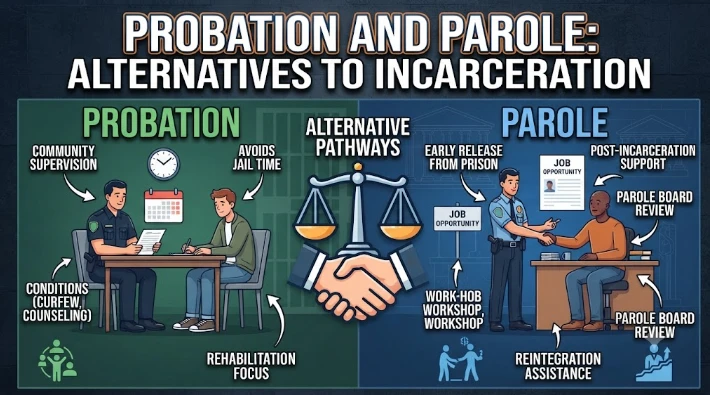
Probation and parole are presented as essential community-based alternatives to incarceration that combine supervision, accountability, and reintegration. Probation generally allows eligible offenders to remain in the community instead of serving a prison sentence, while parole provides conditional release after part of a custodial sentence has been completed. The article explains that both approaches can preserve employment, family ties, education, and housing, all of which reduce the risk of r
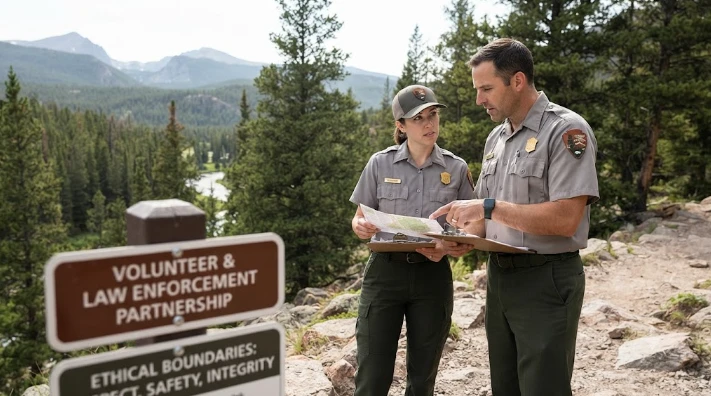
This article defines the ethical boundaries that protect volunteers who support visitor safety and law-enforcement-related functions in national parks. Although volunteers can assist with information, observation, traffic support, administrative work, backcountry roves, and reporting hazards, they must not exercise powers such as arrest, detention, search, citation, evidence handling, use of force, or other commissioned enforcement duties. The article emphasizes clear position descriptions, accu