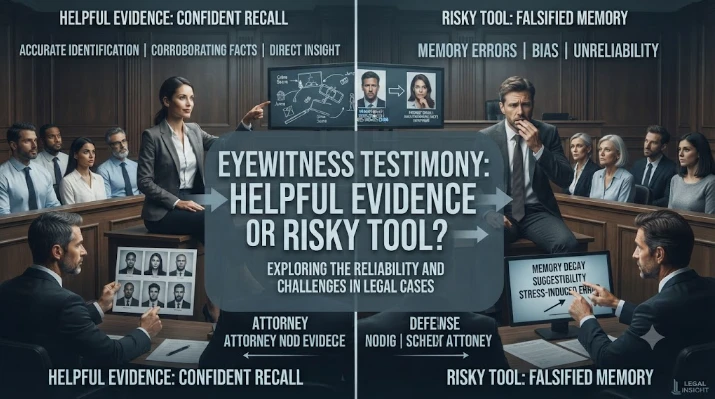
Eyewitness testimony remains powerful in criminal trials, but the article explains why human memory is far less reliable than a perfect recording. Memory is reconstructive and can be changed by stress, suggestion, repeated questioning, media exposure, and the way identification procedures are conducted. The article distinguishes estimator variables, such as weapon focus, cross-racial identification difficulty, trauma, and poor viewing conditions, from system variables that law enforcement can control, including lineup design and interviewing practices. A confident witness can still be mistaken, especially when confidence grows after repeated feedback rather than during the first identification. To reduce error, the article supports double-blind lineups, careful documentation of initial confidence, standardized instructions, expert testimony, and jury education about memory limitations. Eyewitness evidence is therefore treated as valuable but fragile rather than automatically conclusive. The central message is that identification evidence should be preserved and tested with the same care as other forms of forensic evidence, particularly because misidentification can contribute to wrongful convictions.
The single action of holding a shaking finger up at a defendant in the court and saying That is the one is one of the most dramatic moments in a trial, but this centuries-old tradition is being questioned as never before. Over the centuries, eyewitness testimony has been regarded as the gold standard of evidence, an almost tangible connection of crime to consequence, a bit of human vision that jurors find hard to disregard. It has been regarded as the smoking gun of the trial court because of its power to influence the verdicts in high stakes cases. Nevertheless, in the deeper years of , there is an accumulating amount of both cognitive and legal studies that are questioning the belief that human memory is flawless.
It is, as it happens, not a recording of events and certainly not an exact one, but a dynamic and constructive process that is prone to distortion, suggestion and error. Recent publications of the Innocence Project and current 2025 cognitive research indicate that what a witness recalls may be more of a mosaic than a photograph with fragments formed by perception, emotion and external force. With the increased stakes of judicial decisions, courts are now asking an important question of how can we trust the testimony of eyewitnesses and insure against a great risk of wrongful conviction?
Eyewitness misidentification is still the single biggest source of false convictions and the consequences are deep and disheartening. In real-time statistics in early , it is reported that of the hundred percent of the DNA exonerations that the Innocence Project has been dealing with, more than sixty percent of these cases included those in which an erroneous eyewitness testimony was the main factor in the initial conviction. This grim figure highlights the instability of making use of human memory in itself to ascertain guilt. Making the situation worse, there is the confidence trap. It is a natural human tendency to equate certainty with accuracy but research studies on psychology in find out that a witness may be totally sure and still totally wrong.
Certainty when it is inflated due to the state of stress or constant exposure to crime-related information tends to distort the human mind and cause the hazardous illusion of the accuracy in the courtroom. To make the situation even worse, there is the time lag between the trial and the crime. According to a research conducted by the Eyewitness Identification Research Project, the confidence of a witness is only most predictive when making an accurate identification in the first occasion of seeing the suspect, be it in a photo lineup or on the scene. With time, the repetitive questioning, media coverage, and reactions of law enforcement may reconstruct memory inadvertently giving a false impression of clarity.
The probability of error is influenced by two categories of variables, namely estimator variables which are inherent to a crime event and which are beyond control and system variables which pertain to law enforcement processes and which may be reduced. Estimator variables are such factors as the weapon focus effect when a witness is disproportionately drawn to a weapon, and he/she cannot remember key facial features. Cross-race bias is also a major issue and research indicates that the capacity to accurately identify people of different race is approximately fifty percent lower when used by witnesses. Stress or trauma, which are usually elevated in the cases of violent events, provoke what neuroscientists term an amygdala hijack that puts survival mechanisms on the front burner at the expense of proper memory encoding. The knowledge of these physiological and cognitive effects is much more developed in , but they cannot be controlled once the crime is committed.
System variables, in their turn, include the factors of the investigative process that directly affect memory. Practices in enforcing the law such as questioning may unintentionally inject fabricated information. Even minor changes of phrasing, a single word can remake the memory of events in a witness. The layout of lineups too influences significantly. The occurrence of a suspect standing out among fillers because of distinctive dress, facial hair, and other characteristics also increases the chances that the witness will use relative judgment instead of actual recognition, resulting in false identifications. These system variables are being addressed in using standardized protocols, although their past misuse has already helped to generate a large number of injustices.
The high-stakes nature of eyewitness testimony is making courts and other legal systems eventually integrate scientific advice in procedural reforms. In February , a number of Supreme Courts such as the Massachusetts Supreme Judicial Court published new jury instructions stating the natural constraints of human memory. Juries now clearly understand that memory is not videotape, that high confidence does not mean accuracy, and that stress, trauma and time that has passed can seriously impair recall. These developments represent a significant breakthrough in terms of making the cognitive science more approachable to the art of law so that the jurors are more prepared to examine eyewitness evidence more critically.
Procedural changes have been directed at strengthening lineup integrity and witness confidence documentation, as well. Also now adopted by around sixty five percent of law enforcement agencies in the United States, double-blind lineups ensure that the administering officer is not aware of the suspect identity, and removes any unconscious cues that would have prejudiced a witness. Notation of initial assurance of a witness has developed as a practice and thus, the courts are able to compare the initial certitude and the inflated assertions which arose later. The expert testimony has become popular, allowing psychologists to demonstrate to the juries how memory works and what traps they should avoid, which is a context previously missing in the discussion of the case in court.
Though there have been improvements, the basic tension is there eyewitness testimony is invaluable and also at the same time fragile. Under specific circumstances, human perception has an amazing ability to record ephemera with extreme accuracy, although there are high risks when there is reconstruction of memory and suggestibility. A solution is to handle eyewitness testimonies as forensic evidence, which must be preserved and validated as such, and not accepted blindly. This is aimed at preserving the evidentiary aspect of a live witness and reducing the chances of making a mistake that can ruin innocent lives.
In the future, the combination of neuroscience, cognitive psychology, and evidence-based policing practices is likely to transform the application of eyewitness testimony. Relevant measures to a more reliable justice system include training the law enforcement to know the estimator and system variables, providing procedural protection, and informing the jurors of the peculiarities of memory. The courts are starting to realize that eyewitness testimony can no longer be independent and needs to be supported with physical evidence, digital records or expert analysis where feasible. It focuses on developing a multi-layered strategy of fact-finding, which would strike the right balance between the immediacy of the human observation and the rigor of scientific validation.
The extended implication is not limited to wrongful convictions. Misidentification of an eyewitness may make people lose faith in the legal system, will play the mistrust game, and may help to create endemic discrimination, especially in a community that has been targeted by the law-enforcement system. The justice system ensures that the defendants are not only safe but also enhances trust by the society in the courts as a fair and unbiased institution by recognizing the constraints of human memory and putting up measures to prevent the drawbacks associated with a defective human memory. The trend in is not to be dogmatized anymore but rather to take the critical assessment of the case, since to be a responsible justice system, the human cognition can be fragile and yet aiming to be accurate.
Summing up, eyewitness testimony has continued to be a pillar of the courtroom process but it is no longer viewed as an inerrate source of truth. The events of and reveal the necessity of paying attention to the design of the procedures, extensive training, and combining the knowledge of science with the practice of law. Using double-blind lineups, recording baseline confidence and informing jurors of the cognitive biases influencing memory are the efforts that courts are undertaking to maintain the utility of eyewitness testimony and reduce chances of wrongful convictions. In , the legal community is being educated to handle a witness recollection as delicate and dynamic and to treat it with the same care and attention that it would treat any physical evidence.
The end result is to preserve the power of human observation in the courtroom but at the same time protect justice so that the pointing of a finger does not become a sentence of the innocent. Through the application of memory as trace evidence, the integration of traditional testimony and expert opinion and the incorporation of scientific precautions into the legal processes, we would be able to negotiate the subjective dangers of eyewitness accounts without disregarding their crucial importance to the process of seeking justice and provide a way to a more viable, fair and humane judicial system to everybody.
CITE THIS ARTICLE
Das, B. C. (2026). Eyewitness Testimony: Helpful Evidence or Risky Tool?. https://www.bikashchandra.com/article/f0a19bf4-7eed-5941-93dd-d5576f54153b
B. C. Das, “Eyewitness Testimony: Helpful Evidence or Risky Tool?,” 2026. [Online]. Available: https://www.bikashchandra.com/article/f0a19bf4-7eed-5941-93dd-d5576f54153b
Das, B. C. (2026) ‘Eyewitness Testimony: Helpful Evidence or Risky Tool?’. Available at: https://www.bikashchandra.com/article/f0a19bf4-7eed-5941-93dd-d5576f54153b
Das BC. Eyewitness Testimony: Helpful Evidence or Risky Tool?. 2026. https://www.bikashchandra.com/article/f0a19bf4-7eed-5941-93dd-d5576f54153b
@misc{article_f0a19bf47eed594193ddd5576f54153b,
  title = {Eyewitness Testimony: Helpful Evidence or Risky Tool?},
  author = {Bikash Chandra Das},
  year = {2026},
  url = {https://www.bikashchandra.com/article/f0a19bf4-7eed-5941-93dd-d5576f54153b},
}
TY  - GEN
AU  - Bikash Chandra Das
TI  - Eyewitness Testimony: Helpful Evidence or Risky Tool?
PY  - 2026-01-28
UR  - https://www.bikashchandra.com/article/f0a19bf4-7eed-5941-93dd-d5576f54153b
ER  -
This article explores why people volunteer in America’s national parks and how program design influences whether service remains meaningful. Volunteer motivations often overlap and include personal values, learning, social connection, career development, confidence, purpose, and attachment to place. The article uses motivational frameworks to show that volunteers are more likely to remain engaged when they experience autonomy, growing competence, respectful relationships, and a clear connection
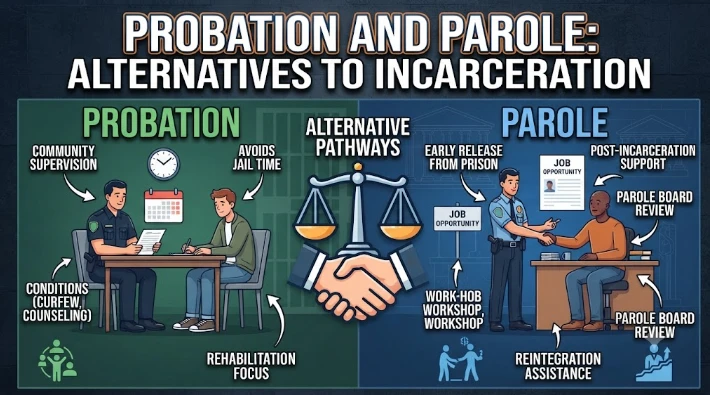
Probation and parole are presented as essential community-based alternatives to incarceration that combine supervision, accountability, and reintegration. Probation generally allows eligible offenders to remain in the community instead of serving a prison sentence, while parole provides conditional release after part of a custodial sentence has been completed. The article explains that both approaches can preserve employment, family ties, education, and housing, all of which reduce the risk of r
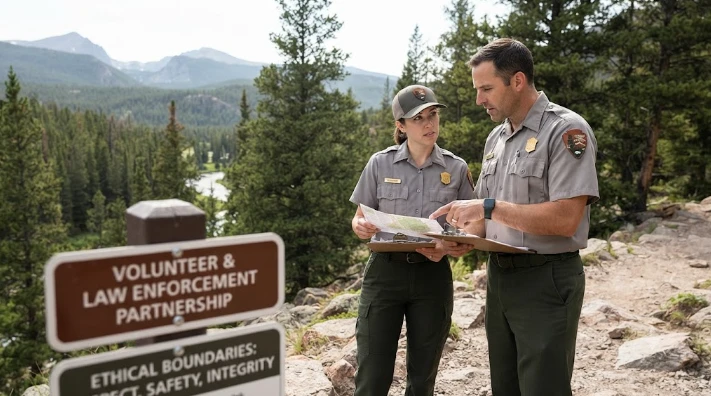
This article defines the ethical boundaries that protect volunteers who support visitor safety and law-enforcement-related functions in national parks. Although volunteers can assist with information, observation, traffic support, administrative work, backcountry roves, and reporting hazards, they must not exercise powers such as arrest, detention, search, citation, evidence handling, use of force, or other commissioned enforcement duties. The article emphasizes clear position descriptions, accu