Experienced government official and researcher committed to public safety, community security, disaster response, and national development. Bringing practical leadership and academic insight to human security, governance, counter-extremism, and community resilience.
This article explains academic diplomacy as the use of education, research, innovation, and scholarly exchange to build trust among universities, governments, and communities across political and cultural boundaries. It distinguishes reciprocal academic cooperation from one-sided soft-power approaches and emphasizes dignity, mutual benefit, and shared decision-making. Examples such as the Fulbright Program and international student mobility illustrate how long-term relationships can continue bey
This article presents engaged scholarship as a reciprocal approach to university research in which communities help shape the questions, methods, interpretation, and use of findings. Rather than treating communities as research sites or service recipients, the model recognizes them as sources of expertise and partners in knowledge production. The discussion emphasizes relationship-building before data collection, shared problem definition, appropriate research methods, fair compensation, clear d
This article explores how professors can contribute to civic leadership by volunteering their knowledge, time, and professional skills for community causes. It distinguishes voluntary public service from routine university committee work and shows how faculty expertise in areas such as evaluation, law, planning, curriculum, research, and communication can strengthen organizations that cannot afford commercial support. Effective service begins with listening, understanding local needs, and select
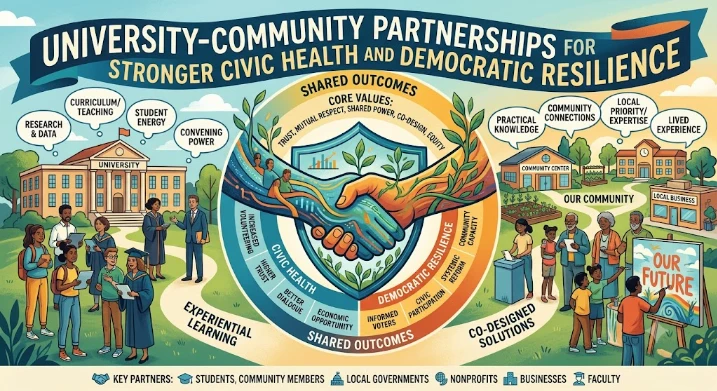
This article examines how university–community partnerships can strengthen civic health and democratic resilience by building trust, participation, information access, social connection, and collective problem-solving capacity. Universities are presented as long-term civic institutions with knowledge, facilities, networks, and convening power, while communities contribute lived experience, legitimacy, and practical judgment. Strong partnerships therefore depend on reciprocity, shared governance,
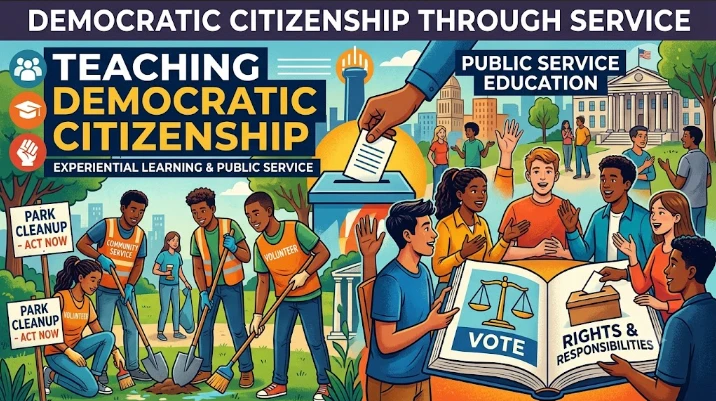
This article argues that democratic citizenship is learned most effectively through experience, not through definitions alone. Public service education can help students practice listening, deliberation, ethical reasoning, shared authority, and responsible decision-making in situations that resemble real public problems. The article reviews experiential approaches including service learning, simulations, public deliberation, community research, participatory mapping, policy labs, and field place
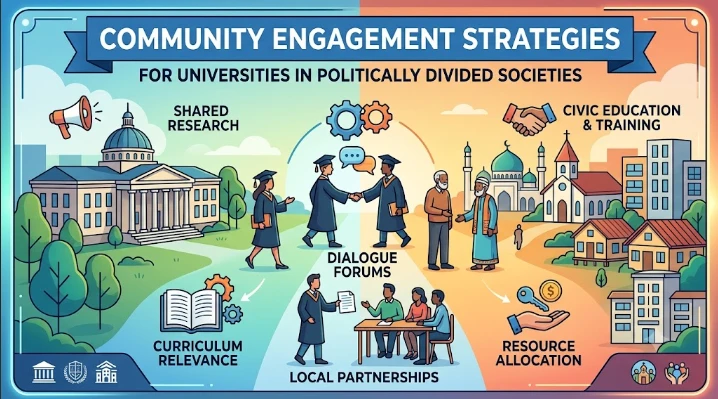
This article outlines practical strategies for university engagement in politically divided societies, where campus activities can become symbols in wider conflicts over identity, power, history, and belonging. It recommends beginning with structured listening across neighborhoods, faith groups, schools, unions, businesses, media, and advocacy networks before designing programs. Reciprocity, trusted intermediaries, transparent political boundaries, skilled facilitation, and action-oriented quest
This article presents citizen-centered public administration as a model in which everyday encounters with government are treated as part of democratic legitimacy. Responsiveness begins with understanding how people actually experience services, including confusing procedures, delays, documentation requirements, accessibility barriers, and frontline discretion. The article emphasizes clear eligibility rules, plain language, multiple service channels, procedural fairness, privacy protection, meani
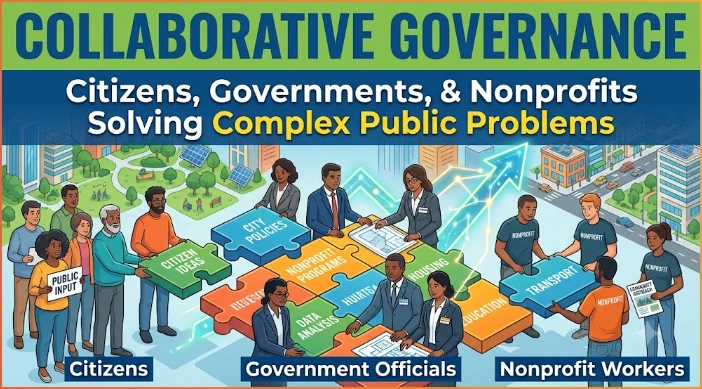
This article explains collaborative governance as a structured way for governments, citizens, nonprofits, and other actors to solve complex public problems that cross institutional boundaries. Issues such as homelessness, watershed restoration, health, and public safety require coordination because authority, knowledge, resources, and implementation capacity are distributed across different organizations. Successful collaboration begins with a shared understanding of the problem, careful stakeho
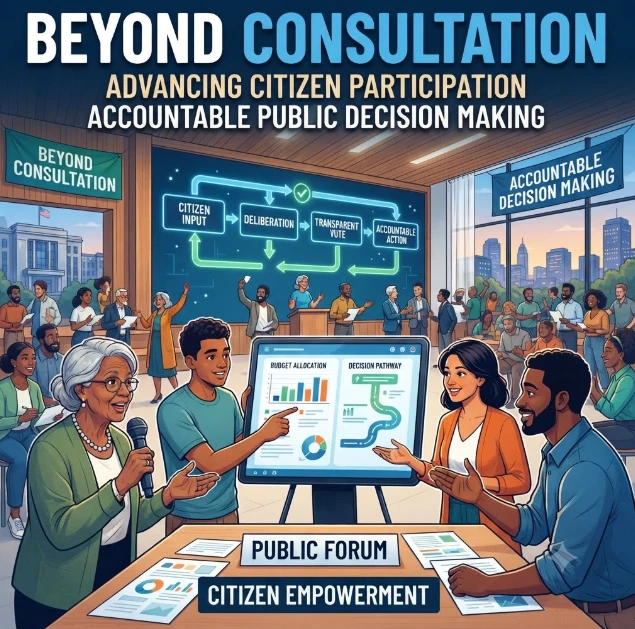
This article argues that meaningful citizen participation must go beyond consultation conducted after major decisions have already been shaped. Genuine participation requires a real decision space, clear information about who holds authority, and an honest explanation of how public input can influence outcomes. The article reviews participatory tools such as surveys, public meetings, citizen assemblies, civic monitoring, participatory budgeting, citizen science, and representative deliberation,
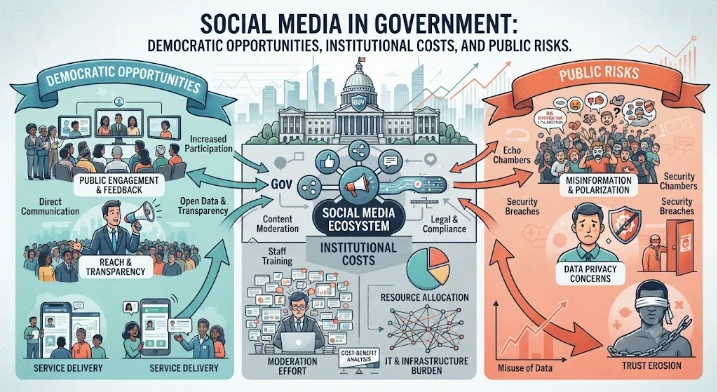
This article examines the democratic opportunities and institutional risks created when government communicates through social media. Platforms allow agencies to distribute service updates, emergency information, meeting notices, public explanations, and responses quickly, while also reaching people who rarely use traditional government channels. At the same time, public institutions face higher obligations concerning accuracy, records management, privacy, security, accessibility, moderation, an
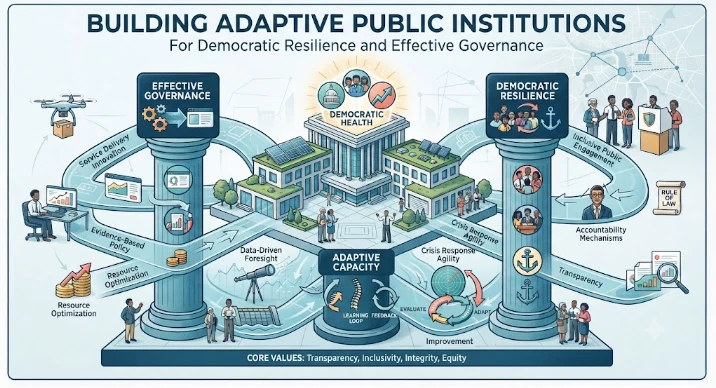
This article describes adaptive public institutions as organizations capable of responding to shocks while protecting democratic values, legal accountability, and public trust. Pandemics, cyberattacks, floods, financial crises, migration pressures, energy disruption, and misinformation require more than emergency continuity; they require learning and adjustment under uncertainty. The article highlights horizon scanning, scenario planning, risk registers, frontline reporting, redundancy, local in
This article portrays National Park Service volunteers as a civic workforce that supports conservation, interpretation, visitor services, cultural preservation, science, maintenance, and public connection across America’s national parks. Volunteers contribute millions of hours in visitor centers, archives, trails, museums, monitoring programs, historic sites, and administrative settings. The article stresses that volunteering should complement rather than replace paid staff and that role boundar
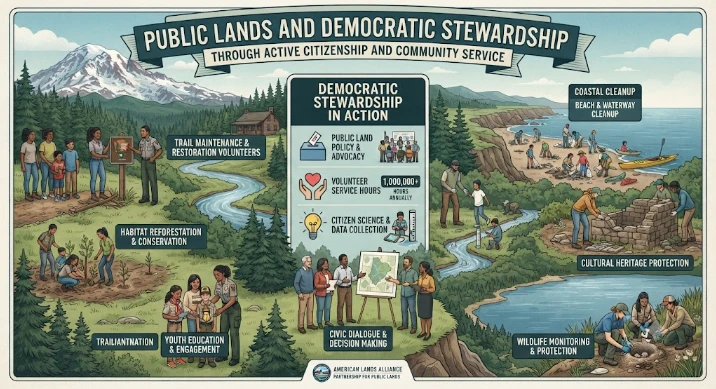
This article frames public lands as democratic goods that require both lawful public management and active civic stewardship. Parks, forests, refuges, monuments, conservation areas, and local open spaces provide ecological, cultural, recreational, scientific, spiritual, and economic value, but decisions about access, risk, cost, and protection are shared across generations. Democratic stewardship includes participation in planning, environmental review, public comment, volunteer service, communi
This article explores why people volunteer in America’s national parks and how program design influences whether service remains meaningful. Volunteer motivations often overlap and include personal values, learning, social connection, career development, confidence, purpose, and attachment to place. The article uses motivational frameworks to show that volunteers are more likely to remain engaged when they experience autonomy, growing competence, respectful relationships, and a clear connection
This article defines the ethical boundaries that protect volunteers who support visitor safety and law-enforcement-related functions in national parks. Although volunteers can assist with information, observation, traffic support, administrative work, backcountry roves, and reporting hazards, they must not exercise powers such as arrest, detention, search, citation, evidence handling, use of force, or other commissioned enforcement duties. The article emphasizes clear position descriptions, accu
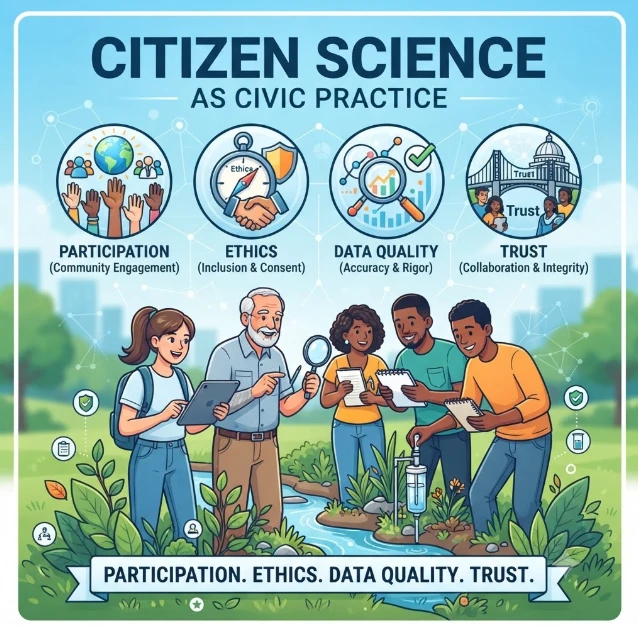
This article presents citizen science as both a research practice and a form of civic participation in which members of the public contribute to questions, observations, classification, interpretation, and the use of findings. Projects vary from simple data submission to deep community involvement in research design and decision-making, and quality depends on whether participant roles fit the project’s purpose. The article emphasizes protocol design, training, metadata, calibration, validation,
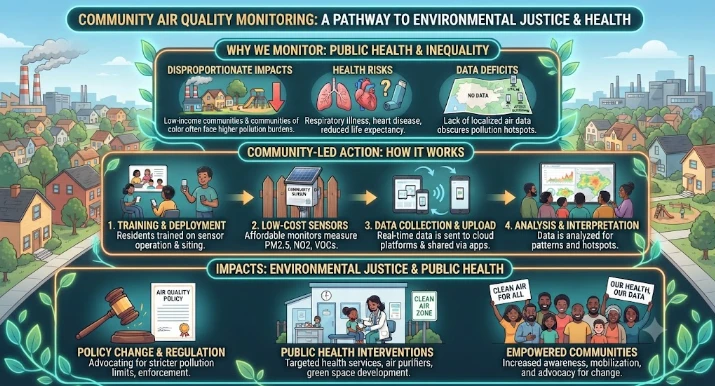
This article examines community air-quality monitoring as a tool for environmental justice, public health learning, and more responsive institutional decision-making. Low-cost sensors make it possible to observe local pollution patterns that may not be captured by sparse regulatory networks, but the article stresses that inexpensive devices still require clear research questions, careful placement, calibration, maintenance, metadata, and appropriate interpretation. Pollutant choice, collocation
This article analyzes how local governments can respond to emigration, population decline, ageing, and declining civic participation without treating shrinking communities as failures. Effective response begins with careful diagnosis of demographic causes, service demand, local economic conditions, housing, skills, and neighborhood differences. Because infrastructure and public services often remain costly even as population falls, municipalities need transparent discussions about service rights
This article explains how poverty creates unequal civic voice even when formal political rights are equal. Participation requires resources such as time, transport, stable housing, childcare, information, digital access, confidence, and social networks, all of which can be constrained by financial hardship. The article links poverty with lower participation through administrative burden, housing instability, transport barriers, digital inequality, weak organizational connections, stigma, and rep
This article examines how Fulbright collaboration can turn international academic exchange into sustainable local community impact. The central argument is that lasting value depends not simply on travel or prestige but on project design, reciprocity, host priorities, institutional ownership, student involvement, and continuity after the grant ends. Strong collaborations begin with dialogue about local needs, political sensitivities, language, data, capacity, and realistic goals. Visiting schola
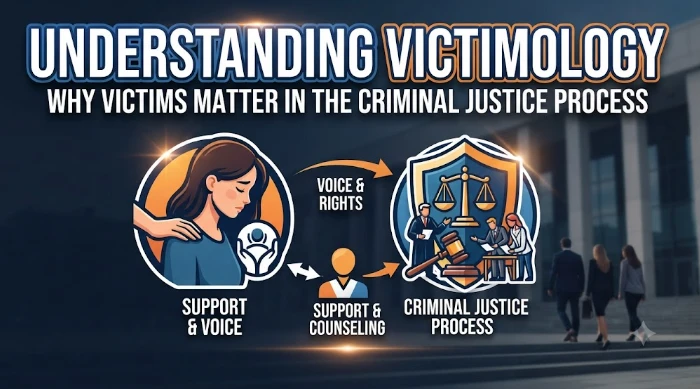
Victimology places the experiences, needs, and rights of victims at the center of criminal justice rather than treating them only as sources of evidence. The article explains that victimization can produce economic, psychological, social, and physical harm, while many offenses remain hidden because victims fear stigma, disbelief, retaliation, or secondary victimization by institutions. It also highlights how gender, social marginalization, cybercrime, and financial fraud shape different victim e
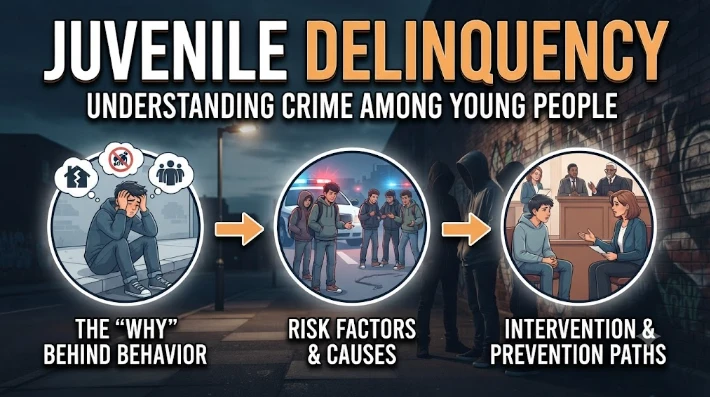
Juvenile delinquency is presented as a complex social problem shaped by family instability, peer influence, poverty, school disengagement, trauma, mental health challenges, and digital exposure. The article argues that young offenders should not be understood simply as “bad children,” because many are responding to unstable environments, weak support systems, exclusion, or unmet developmental needs. It also explains that modern youth crime increasingly includes cyber-delinquency such as fraud, h
White-collar crime is described as a hidden but highly damaging form of criminality committed through professional, corporate, financial, or governmental positions. Unlike visible street crime, these offenses often involve fraud, corruption, embezzlement, tax evasion, procurement misconduct, and technology-enabled deception, producing widespread economic and social consequences. The article emphasizes that such crimes can undermine institutions, destroy public trust, affect employment and pensio
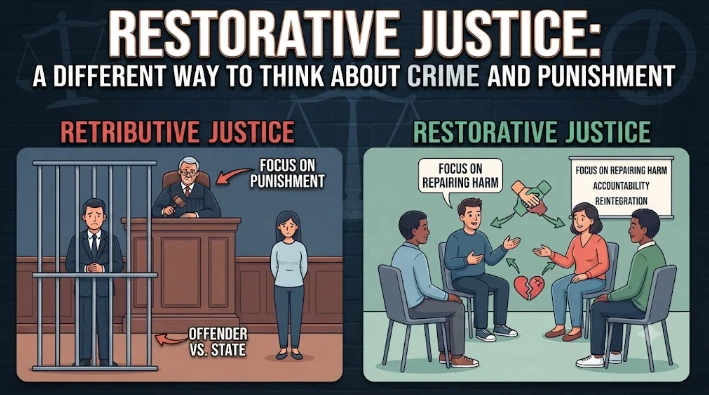
Restorative justice offers an alternative way of responding to crime by focusing on harm, accountability, dialogue, and repair rather than punishment alone. The article explains that traditional retributive systems often center on the violation of law and the sanction imposed on the offender, while victims may remain unheard and communities may gain little opportunity for healing. Restorative processes such as victim-offender mediation, conferencing, and circles bring together those harmed, thos
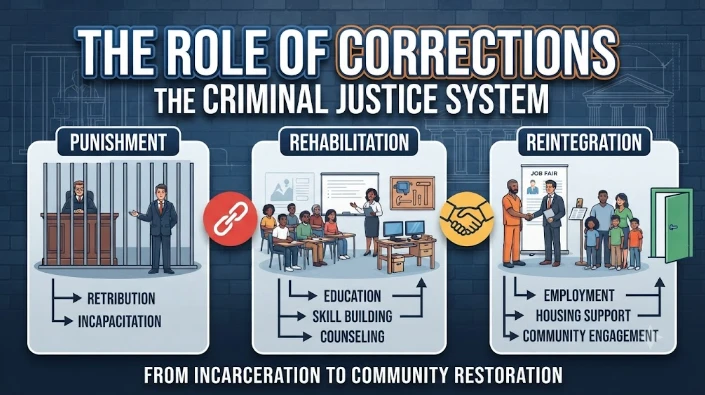
Corrections is presented as a major but often misunderstood part of the criminal justice system, extending far beyond imprisonment. The article distinguishes institutional corrections, such as jails and prisons, from community corrections, including probation and parole. It explains that modern correctional systems face serious pressures from overcrowding, staff shortages, high costs, violence, and persistent recidivism. When prisons focus mainly on containment, people may leave with disrupted e
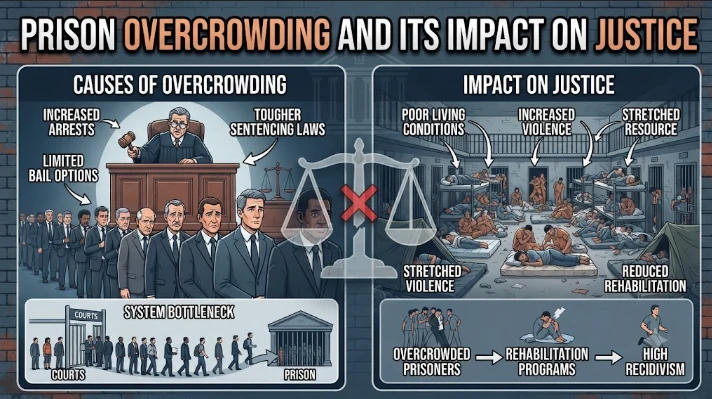
Prison overcrowding is described as a systemic justice problem that affects inmates, correctional staff, rehabilitation, and long-term public safety. The article explains that many prison systems operate beyond their intended capacity, producing cramped living conditions, poor hygiene, greater disease transmission, mental distress, violence, staff burnout, and reduced access to education or treatment. It identifies excessive pretrial detention, restrictive bail practices, drug policies, mandator
Probation and parole are presented as essential community-based alternatives to incarceration that combine supervision, accountability, and reintegration. Probation generally allows eligible offenders to remain in the community instead of serving a prison sentence, while parole provides conditional release after part of a custodial sentence has been completed. The article explains that both approaches can preserve employment, family ties, education, and housing, all of which reduce the risk of r
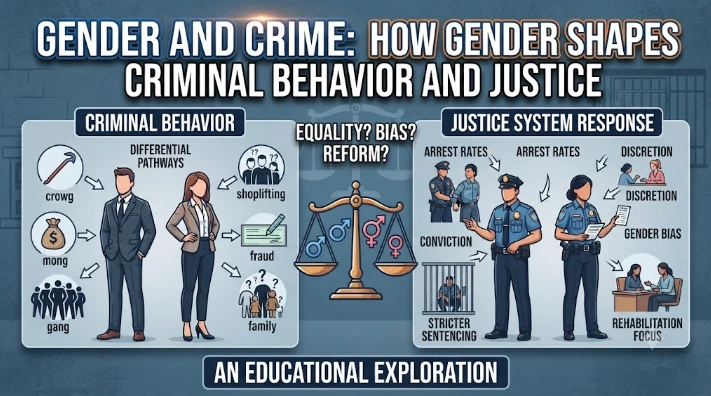
The article examines how gender influences patterns of offending, victimization, policing, sentencing, imprisonment, and professional experiences within criminal justice. Men remain far more represented in prison populations and are more commonly linked with violent and street-based offending, while women are more frequently involved in property or drug offenses connected with poverty, trauma, abuse, or survival. Women also face distinctive victimization risks, particularly intimate partner and
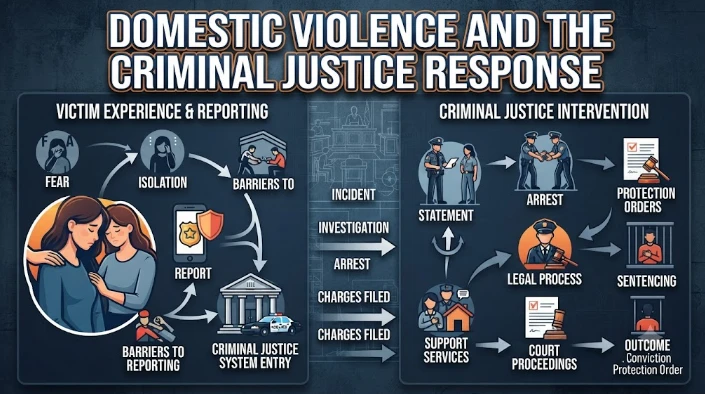
Domestic violence is presented as a widespread but heavily underreported form of crime rooted in power, control, social inequality, and intimate relationships. The article explains that victims often hesitate to seek help because of fear, shame, economic dependence, social pressure, distrust of authorities, and the heightened danger that can occur when leaving an abusive relationship. It also highlights emerging technology-facilitated abuse through stalkerware, smart devices, and manipulated dig
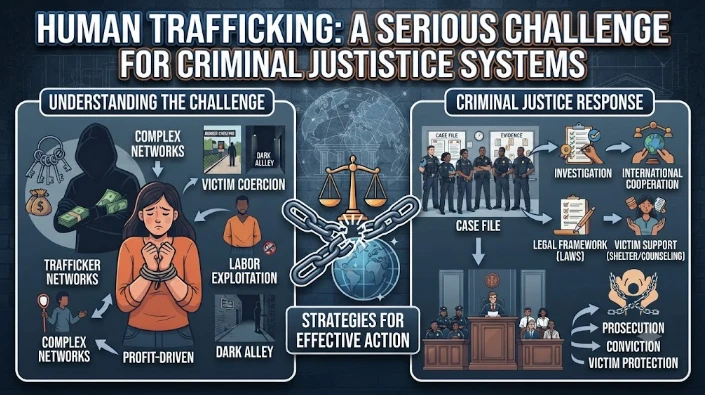
Human trafficking is described as a highly profitable, transnational form of modern slavery involving forced labor, sexual exploitation, forced marriage, debt bondage, and increasingly forced criminality in cyber-scam operations. The article emphasizes that traffickers exploit poverty, conflict, migration vulnerabilities, weak institutions, digital platforms, and cross-border jurisdictional gaps. Women, girls, children, migrant workers, and economically marginalized people face particular risks.
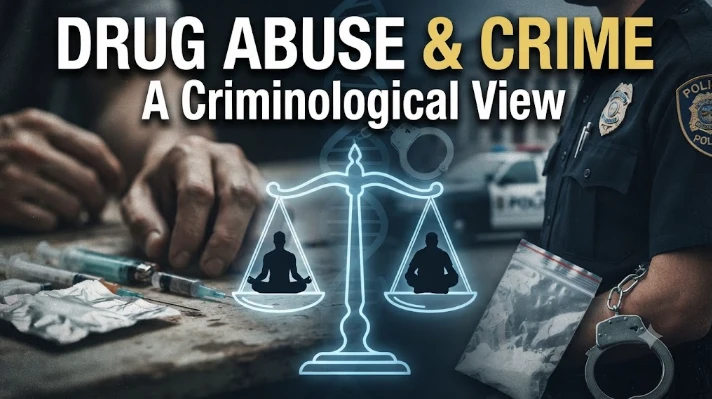
Drug abuse and drug-related crime are examined through the interaction of addiction, criminal behavior, illicit markets, and social disadvantage. The article presents three criminological explanations: the psychopharmacological model, where substances can influence aggression or impaired judgment; the economic-compulsive model, where people commit property crime to finance dependence; and the systemic model, where violence emerges from illegal drug markets and organized trafficking. It also disc
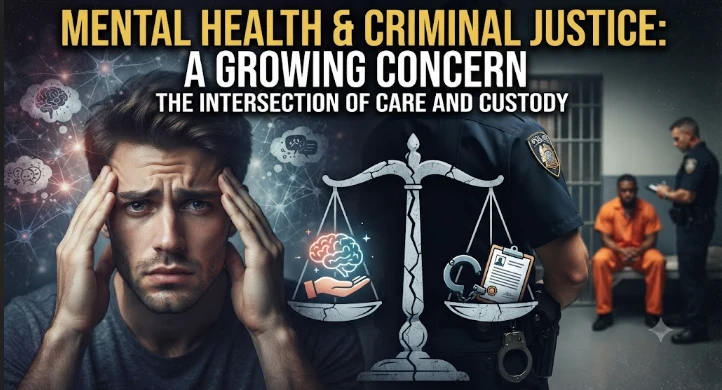
Mental health has become a central criminal justice concern because many people with psychiatric conditions enter police, court, and correctional systems without receiving appropriate clinical care. The article explains that prisons often function as de facto mental health institutions despite being designed primarily for custody rather than treatment. Mental illness frequently overlaps with substance-use disorders, homelessness, trauma, and social marginalization, creating complex pathways into
Forensic science is described as a central bridge between crime scenes, investigations, and courtroom decision-making. The article covers DNA analysis, next-generation sequencing, rapid DNA technology, fingerprints, biometrics, trace evidence, ballistics, digital forensics, and techniques for identifying manipulated media. These methods allow investigators to connect people, objects, locations, and digital activity with greater speed and precision than traditional investigation alone. Mobile dev
False confessions and wrongful convictions are presented as serious failures of justice because they punish innocent people while allowing the actual offender to remain free. The article explains that wrongful convictions usually result from multiple interacting weaknesses rather than a single mistake. False confessions can arise from lengthy, accusatorial, or coercive interrogations, particularly when suspects are exhausted, frightened, young, or psychologically vulnerable. Eyewitness misidenti
Organized crime is portrayed as a technologically sophisticated, globally connected business that operates across borders, industries, and illegal markets. Modern criminal networks engage simultaneously in money laundering, drug trafficking, human trafficking, cyber fraud, extortion, illegal resource extraction, and other profitable activities, a pattern described as polycriminality. The article explains that these groups increasingly resemble multinational corporations in their ability to diver
Money laundering is described as the financial process that allows criminal proceeds to enter and circulate through legitimate economic systems. The article explains the traditional stages of placement, layering, and integration, showing how illicit funds are first introduced into financial channels, then moved through complex transactions to hide their origin, and finally converted into apparently legitimate assets. Modern laundering increasingly uses cryptocurrencies, stablecoins, shell compan
Environmental crime is presented as a major and increasingly organized area of criminality involving illegal logging, mining, wildlife trafficking, hazardous waste disposal, pollution, and exploitation of natural resources. The article argues that these offenses are often wrongly treated as minor regulatory violations even though they generate enormous illicit profits and cause long-term ecological, economic, and human harm. Organized criminal groups use shell companies, document fraud, corrupti
Ethics is presented as the foundation of legitimate criminal justice decision-making, especially as policing, prosecution, courts, and corrections become more technologically complex. The article identifies professional integrity, accountability, transparency, and respect for human dignity as central ethical principles. Police discretion, prosecutorial choices, plea bargaining, sentencing, correctional treatment, surveillance, and the use of artificial intelligence all create situations where la
Criminal profiling is described as a structured investigative tool based on behavioral science, psychology, crime patterns, and empirical analysis rather than intuition or dramatic guesswork. The article explains how profiling has evolved from early organized-versus-disorganized classifications toward investigative psychology, statistical databases, geographic analysis, and algorithm-assisted pattern recognition. Modern profiling can help narrow suspect pools, identify behavioral consistency, co
Public fear of crime often differs sharply from measured crime patterns, and the article explores why perception can remain high even when some forms of crime are stable or declining. Media coverage, social media algorithms, emotionally powerful “signal crimes,” neighborhood alerts, and repeated exposure to sensational incidents can make rare events feel common. Psychological processes such as the availability heuristic also cause people to judge risk based on vivid examples rather than statisti
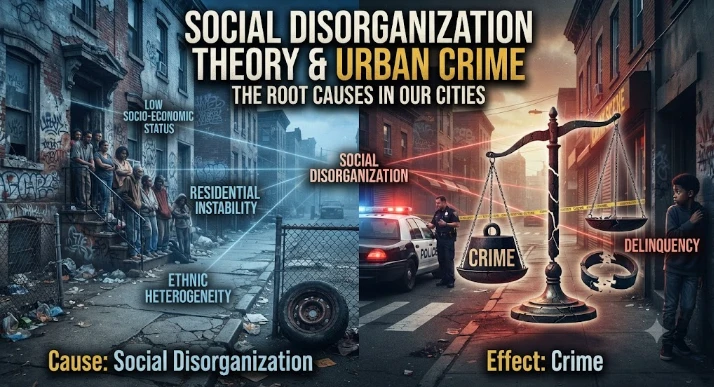
Social Disorganization Theory explains why crime tends to cluster in particular urban neighborhoods by focusing on weakened community structures rather than individual moral failure. The article identifies concentrated poverty, residential instability, and rapid social or cultural change as conditions that can weaken informal social control and make collective problem-solving more difficult. It also highlights collective efficacy, meaning shared trust and willingness among residents to intervene
Strain Theory explains crime as a possible response to the gap between socially valued goals and the legitimate opportunities available to achieve them. The article begins with Robert Merton’s model, describing conformity, innovation, ritualism, retreatism, and rebellion as different adaptations to social pressure. Criminal behavior becomes most relevant where individuals accept goals such as wealth or status but feel blocked from lawful routes to success. The discussion then expands through Gen
Labeling Theory examines how society’s reaction to deviance can shape a person’s identity, opportunities, and future behavior long after the original offense. The article distinguishes primary deviance from secondary deviance, explaining that an isolated act can become a lasting identity once institutions and communities repeatedly define someone as a criminal, felon, delinquent, or offender. In the digital age, this process is intensified through searchable records, automated background checks,
Rational Choice Theory views many crimes as decisions in which offenders weigh expected rewards against perceived risks, effort, and possible consequences. The article explains that this does not mean offenders are perfect calculators. Instead, they operate with bounded rationality, using incomplete information, limited time, emotional pressure, and imperfect judgment. The theory is especially useful for instrumental crimes such as burglary, fraud, cybercrime, theft, drug distribution, organized
Routine Activity Theory explains everyday crime by focusing on the situations in which opportunities emerge rather than on the deeper motivations of offenders. The article states that crime becomes more likely when three elements converge: a motivated offender, a suitable target, and the absence of a capable guardian. Suitable targets can include physical objects, people, digital accounts, information, packages, vehicles, or devices, while guardians can include neighbors, staff, police, cameras,
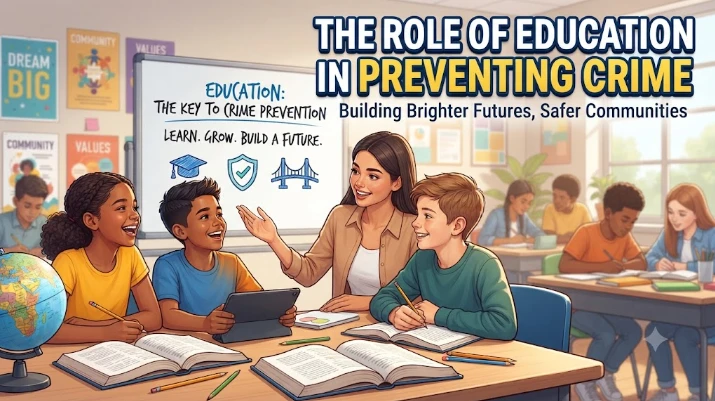
Education is presented as one of the strongest long-term crime prevention tools because it changes the conditions that make offending more or less likely. The article argues that schools do far more than teach academic subjects. They provide routine, supervision, social connection, emotional development, future orientation, and legitimate pathways to employment and status. Educational exclusion, dropout, weak literacy, and limited digital skills can narrow lawful opportunities and increase expos
Family influence is described as one of the earliest and most powerful forces shaping crime and delinquency because children first learn trust, discipline, conflict management, empathy, and responsibility at home. The article rejects simplistic ideas about “broken families” and instead focuses on the quality of relationships, supervision, emotional security, communication, and adult behavior. Strong attachment to caregivers, consistent monitoring, fair discipline, and moral modeling can protect
School violence is presented as a multidimensional threat to youth development that includes physical fights, bullying, cyberbullying, gang influence, intimidation, and relational aggression. The article emphasizes that violence now extends beyond school grounds through digital platforms, creating persistent stress that can follow students into their homes. Repeated exposure to threat can affect emotional regulation, concentration, memory, academic performance, and long-term mental health. The d
Cyberbullying and online victimization are described as major risks of modern digital life because harassment can now occur continuously, across platforms, and far beyond physical school or community boundaries. The article discusses malicious comments, doxing, digital stalking, exclusion, coordinated bot attacks, platform abuse, and AI-generated deepfakes used for humiliation, intimidation, or extortion. Unlike traditional bullying, online abuse can remain visible, searchable, and shareable, cr
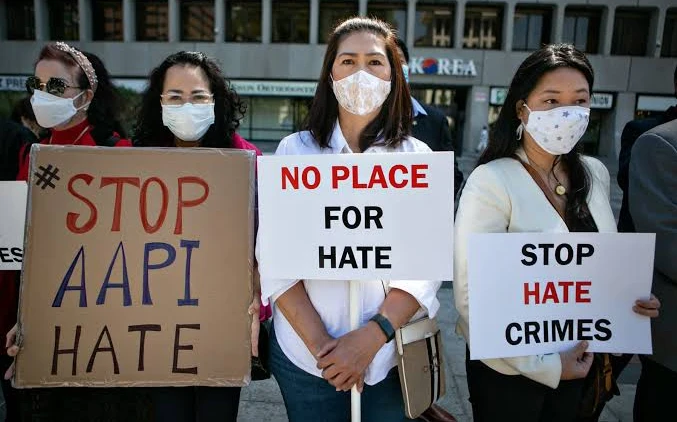
Hate crime is presented as a distinctive form of victimization because the offense targets not only an individual but also the identity and security of an entire community. Bias based on race, religion, ethnicity, gender, sexual orientation, or other protected characteristics can turn violence, harassment, property damage, and online abuse into broader messages of exclusion and intimidation. The article explains that hate crimes generate psychological and social effects beyond the direct victim,
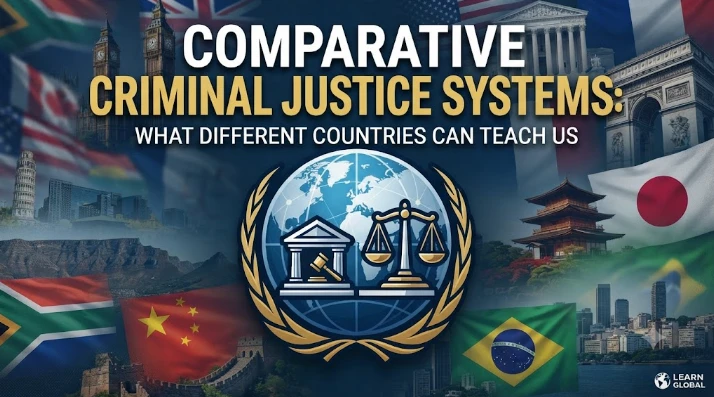
Comparative criminal justice examines how different countries organize policing, sentencing, imprisonment, rehabilitation, and reintegration, allowing policymakers to learn from contrasting approaches. The article compares highly punitive systems with lower-incarceration models and argues that imprisonment rates alone do not determine public safety. Scandinavian systems, especially Norway and Denmark, emphasize normalization, professional correctional staff, education, open-prison approaches, an
The death penalty is examined through the competing ideas of justice, deterrence, retribution, human rights, and the risk of irreversible error. The article notes that some countries continue or expand executions while others move toward restriction or abolition, creating a sharply divided global picture. Supporters often argue that capital punishment provides moral retribution and deters severe crime, but the article emphasizes research questioning whether executions deter homicide more effecti
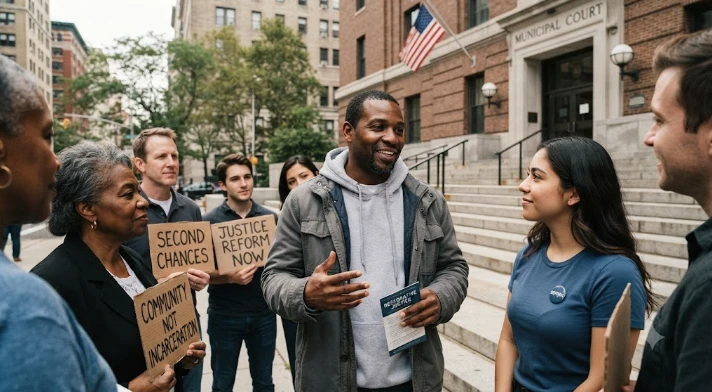
The stigma of a criminal record is described as a “paper prison” that can continue restricting a person long after a formal sentence has ended. The article explains that digital records, automated background checks, and screening systems can block access to employment, housing, education, and professional opportunities. These barriers are especially serious because stable work and housing are among the strongest protective factors against reoffending. When people repeatedly face rejection despit
Recidivism is presented as a measure not only of individual behavior but of how effectively society supports people after release from prison. The article emphasizes the vulnerable first six to twelve months of reentry, when housing instability, unemployment, untreated mental health or substance-use problems, weak social networks, and supervision demands can combine into overwhelming stress. Stable housing is identified as a foundation for employment, treatment, and compliance, while meaningful
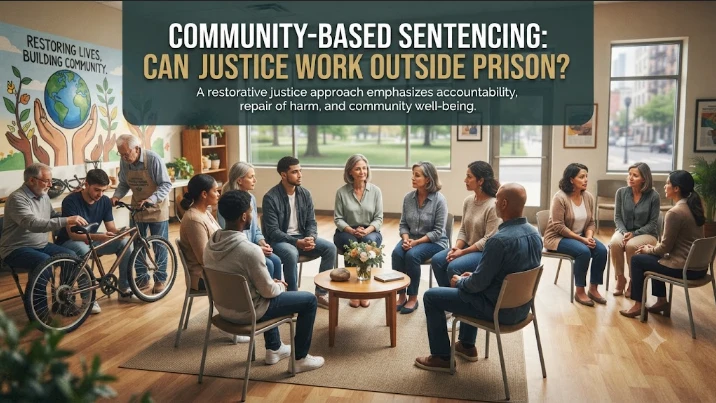
Community-based sentencing is presented as a practical alternative to incarceration for many nonviolent offenses, combining accountability with rehabilitation and continued participation in society. The article explains that prison overcrowding, high costs, and persistent recidivism have encouraged greater use of probation, community service, treatment requirements, electronic monitoring, and restorative justice. These approaches allow individuals to maintain employment, family relationships, ho
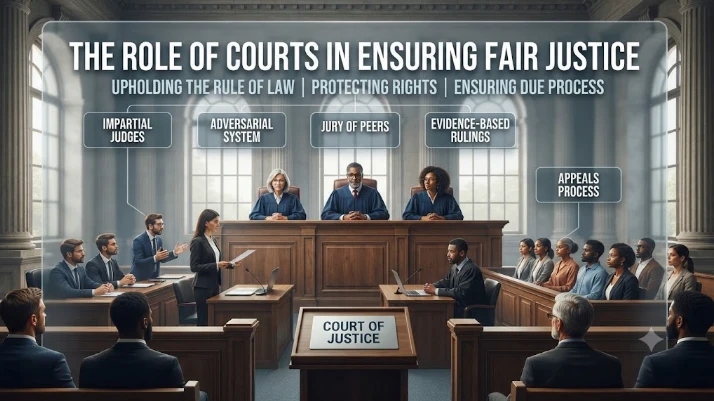
Courts are presented as the central institutions that transform legal rules into practical justice by protecting rights, evaluating evidence, ensuring due process, and issuing reasoned decisions. The article explains that modern courts face growing pressure from case backlogs, high legal costs, limited access to representation, political interference, and rapid technological change. Delays can weaken evidence, extend uncertainty for victims and defendants, and reduce public confidence. Unequal a
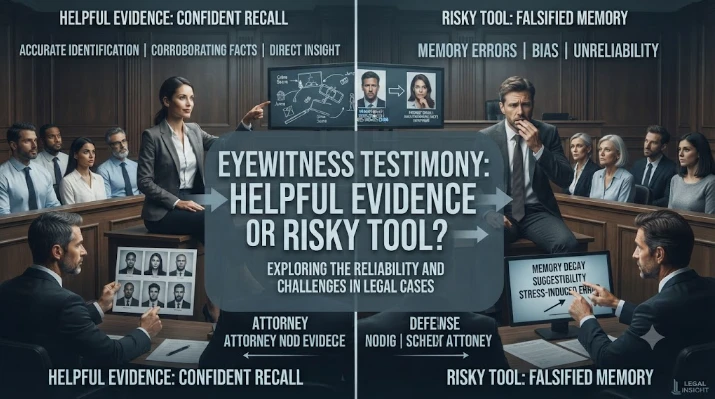
Eyewitness testimony remains powerful in criminal trials, but the article explains why human memory is far less reliable than a perfect recording. Memory is reconstructive and can be changed by stress, suggestion, repeated questioning, media exposure, and the way identification procedures are conducted. The article distinguishes estimator variables, such as weapon focus, cross-racial identification difficulty, trauma, and poor viewing conditions, from system variables that law enforcement can co
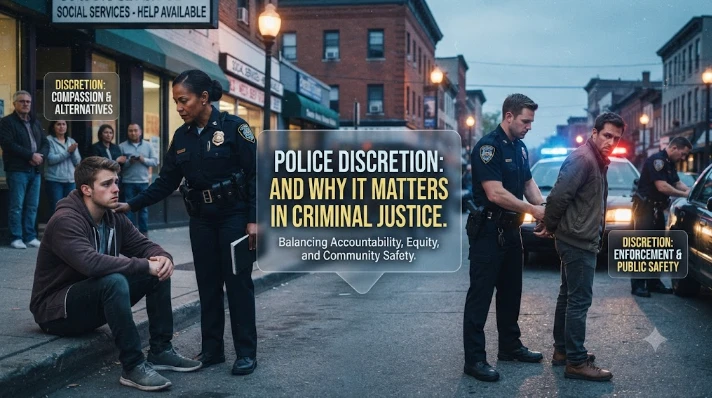
Police discretion refers to the judgment officers use when deciding how to respond to real-world situations that cannot be fully controlled by rigid rules. The article explains that discretion affects whether an officer gives a warning, makes an arrest, refers someone to services, uses force, or chooses de-escalation. Properly exercised, discretion allows policing to account for context, proportionality, vulnerability, and community needs. It can prevent unnecessary arrests and direct people exp
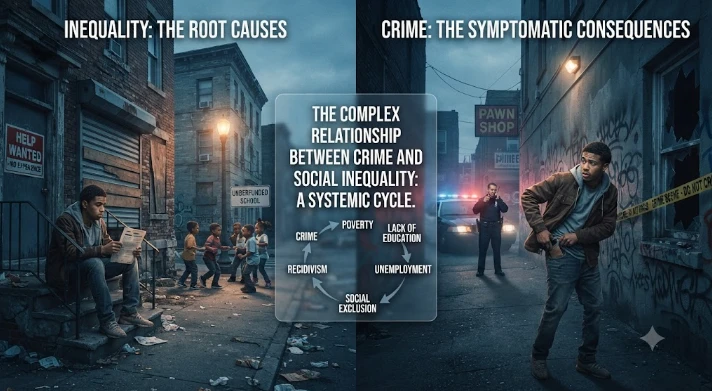
The article examines the relationship between crime and social inequality, arguing that public safety cannot be separated from access to opportunity, housing, education, employment, and social resources. Relative inequality is emphasized as particularly important because large gaps between groups can intensify frustration, exclusion, and perceptions that legitimate success is unavailable. Crime also tends to concentrate in neighborhoods marked by unemployment, underfunded institutions, unstable
The final article presents a future-oriented vision of criminal justice built around prevention, proportionality, evidence, technology, rehabilitation, and human dignity. It argues that traditional tough-on-crime approaches are increasingly giving way to models that evaluate success through reduced harm and successful reintegration rather than imprisonment alone. Evidence-based practices such as hot-spot policing, targeted supervision, restorative justice, and structured reentry are highlighted
This article explains crime prevention as a proactive responsibility of law enforcement rather than a response that begins only after an offence occurs. Using Bangladesh as the main context, it discusses how rapid urbanization, poverty, unemployment, weak education, and social instability can create conditions in which crime becomes more difficult to control. The post emphasizes visible police presence, regular patrols, community engagement, intelligence-led operations, and rapid response as imp
This article presents community policing as a collaborative model that strengthens public safety by building closer relationships between law enforcement officers and the people they serve. In Bangladesh, where police agencies often face limited resources, dense populations, social tensions, and public distrust, the approach is described as especially valuable. The post explains that community policing shifts attention from purely reactive enforcement toward prevention, problem-solving, and loca
This article examines the need for criminal justice reform in Bangladesh from a practical, system-wide perspective. It identifies major weaknesses in the existing system, including long court delays, heavy case backlogs, inadequate police training, limited resources, corruption, misuse of authority, overcrowded prisons, and weak rehabilitation services. The post argues that meaningful reform must address the judiciary, law enforcement, and correctional institutions together rather than treating
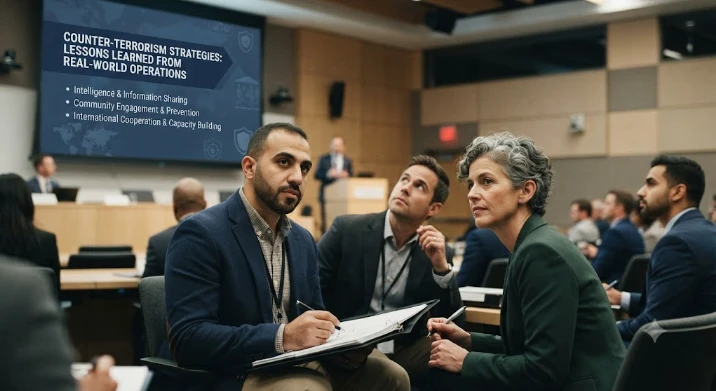
This article reviews practical lessons from counter-terrorism operations and applies them to Bangladesh’s security environment. It argues that effective counter-terrorism requires more than force, emphasizing intelligence sharing, inter-agency coordination, community engagement, cybersecurity, human-rights protection, and international cooperation. The post describes timely intelligence exchange among police, military, specialized units, and international partners as essential for identifying te
This article explores why leadership is fundamental to effective law enforcement, especially in a demanding environment such as Bangladesh. It explains that police leaders shape organizational direction, operational discipline, ethical standards, officer morale, accountability, and the public’s perception of the entire force. Strong leadership is particularly important during high-pressure situations, where officers must make rapid decisions, coordinate resources, protect civilians, and remain f
This article explains the close relationship between criminology and national security, showing how the study of crime can help governments understand and prevent modern security threats. National security is presented as broader than military defense, now encompassing terrorism, organized crime, cybercrime, trafficking, extremism, and other cross-border risks. Criminology contributes by examining why individuals and groups engage in criminal behavior, how criminal networks operate, and which so
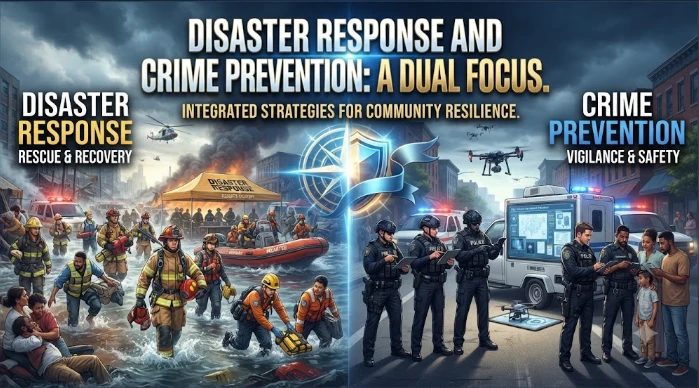
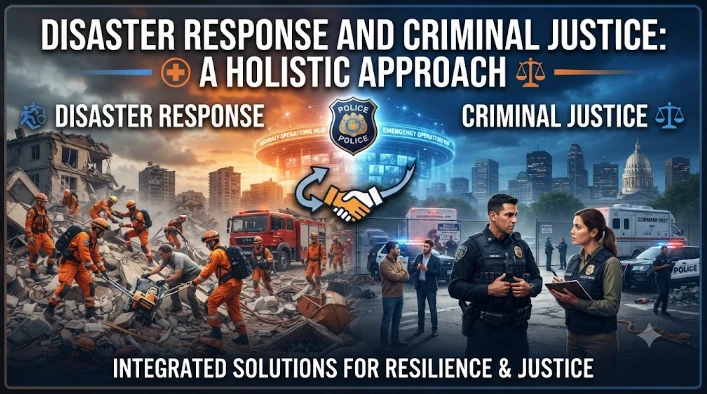
This article examines the connection between disaster response and crime prevention, arguing that public safety risks often increase when disasters disrupt normal social and institutional systems. Using Bangladesh’s exposure to floods, cyclones, displacement, and infrastructure damage as the main context, the post explains how disasters can create opportunities for looting, theft, fraud, trafficking, domestic violence, drug abuse, and other forms of exploitation. Law enforcement is therefore pre
This article focuses on trust as the foundation of community safety and effective cooperation between citizens and law enforcement. It explains that people are more likely to report crimes, share information, and participate in prevention efforts when they believe police officers are fair, accessible, accountable, and committed to public service. In Bangladesh, where concerns about corruption, excessive force, and weak accountability can damage public confidence, rebuilding this relationship is
This article explores how technology is changing modern crime prevention and expanding the tools available to law enforcement agencies. In the Bangladesh context, it discusses surveillance cameras, facial recognition, predictive analytics, cybersecurity systems, digital forensics, mobile reporting applications, emergency notifications, and drones. CCTV and real-time monitoring are presented as useful for deterring crime, collecting evidence, and improving response, while data-driven policing can
This article explains why specialized training is essential for law enforcement officers and first responders who may encounter explosive materials. It describes explosive threats as arising from terrorism, organized crime, industrial activities, accidents, and improvised explosive devices, all of which can cause mass casualties, infrastructure damage, fires, toxic releases, and widespread panic. The post emphasizes that responders must understand different explosive materials, triggering mechan
This article traces the transformation of crime in Bangladesh from primarily physical offences to increasingly complex forms of cybercrime. Traditional crimes such as theft, robbery, murder, and corruption are described as having been shaped by economic hardship, political instability, and social inequality, while the expansion of internet access, mobile technology, social media, and digital finance created new opportunities for remote offending. The post discusses hacking, identity theft, phish
Although the title refers to criminal justice and human rights, the article’s main discussion focuses on the expansion of cybercrime in Bangladesh and the challenges this creates for law enforcement and digital security. It describes the transition from physical crimes such as theft, robbery, and violence toward hacking, online fraud, identity theft, phishing, cyberbullying, misinformation, and mobile-banking scams. The post explains how increasing internet penetration and digital payment system
This article examines how law enforcement can contribute to preventing extremism through a broad strategy that extends beyond arrests and enforcement. It identifies social exclusion, poverty, political instability, weak governance, limited opportunities, and feelings of marginalization as conditions that can make individuals more vulnerable to radicalization. The post emphasizes early identification through intelligence gathering while warning that surveillance must remain lawful, proportionate,
This article explores the psychological and social consequences of crime on individuals, families, and communities in Bangladesh. It explains that crime affects more than direct victims because repeated exposure to violence, theft, insecurity, or disorder can weaken an entire community’s sense of safety. Fear, anxiety, stress, hypervigilance, mistrust, and social withdrawal are described as common consequences, particularly in high-crime neighborhoods. The post also discusses how crime can reduc
This article argues that disaster response and criminal justice must be planned together because emergencies can create new security risks while weakening normal law-enforcement and judicial capacity. Bangladesh’s recurring floods, cyclones, displacement, and infrastructure damage provide the central context. The post explains that disasters can increase theft, looting, assault, trafficking, domestic violence, and exploitation, particularly when police resources are overstretched and large popul
This article examines why armed security forces are essential to diplomatic protection, particularly when diplomats and embassies operate in unstable or high-risk environments. It explains that protection extends beyond guarding buildings and personnel to include intelligence collection, threat assessment, crisis response, secure transportation, and evacuation planning. Armed units may protect diplomatic facilities, accompany officials during travel, monitor political and security developments,
This article explores how national security has expanded beyond conventional military threats to include cyberattacks, terrorism, climate change, economic instability, and geopolitical competition. Focusing on Bangladesh, it explains how rapid digitalization creates cybersecurity risks, while extremist violence continues to require intelligence sharing, counter-radicalization, and stronger domestic security capacity. Climate change is presented as another security concern because floods, cyclone
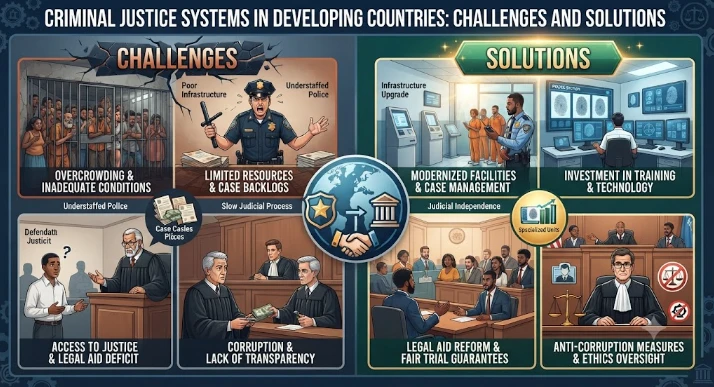
This article analyzes the major difficulties facing criminal justice systems in developing countries, using Bangladesh as a central example. It identifies limited resources, overcrowded prisons, understaffed police agencies, slow courts, corruption, political interference, outdated laws, and weak public trust as major barriers to fair and effective justice. The discussion also emphasizes how marginalized groups, including women, children, minorities, and economically disadvantaged citizens, ofte
This article examines the importance of leadership and teamwork when law enforcement officers operate under intense pressure. It explains that high-stress situations such as hostage incidents, counterterrorism operations, violent disorder, and other fast-moving emergencies require leaders who remain calm, decisive, adaptable, and clear in their communication. Strong leadership helps officers understand priorities, allocate resources, and adjust tactics as conditions change. The article also emph
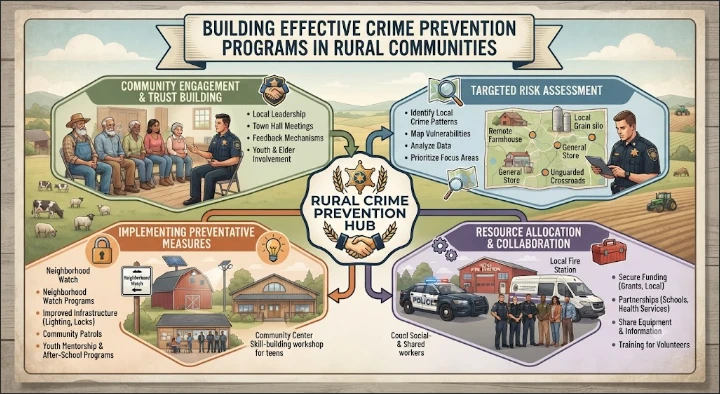
This article focuses on how crime prevention programs should be designed for rural communities, where social conditions, policing capacity, and available services often differ from urban areas. Using Bangladesh as the main context, it identifies poverty, unemployment, limited education, weak infrastructure, scarce police presence, domestic violence, substance abuse, trafficking, and land-related disputes as important rural safety concerns. The article argues that effective programs must address
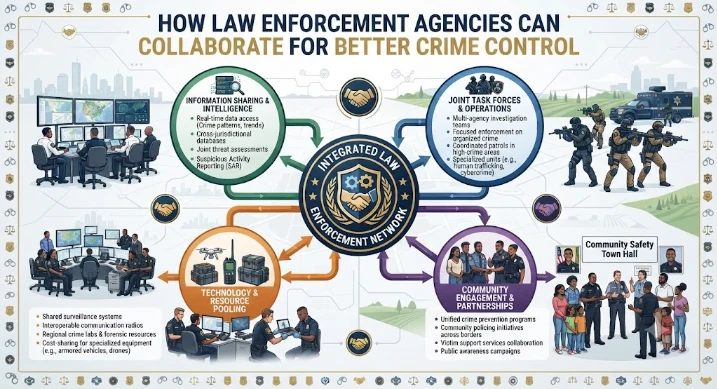
This article explains why cooperation among law enforcement agencies is increasingly important for controlling complex and organized forms of crime. It highlights intelligence sharing as a foundation for identifying criminal patterns, tracking suspects, and disrupting networks involved in terrorism, trafficking, smuggling, cybercrime, and organized crime. In Bangladesh, coordination among the police, Rapid Action Battalion, Border Guard Bangladesh, specialized units, and international organizati
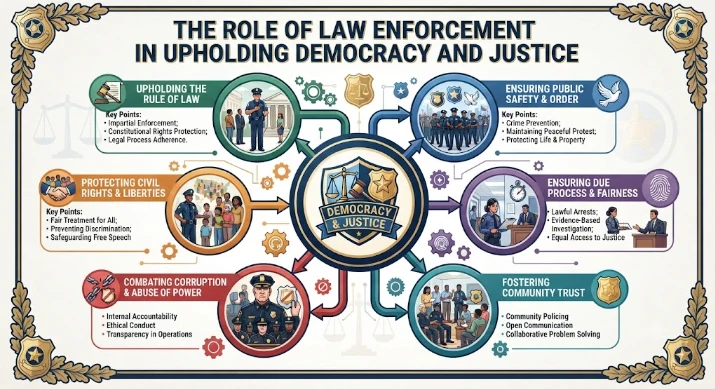
This article examines the responsibility of law enforcement agencies to protect democracy, justice, and the rule of law. It argues that policing in a democratic society extends beyond controlling crime and maintaining order; officers must also protect individual rights, ensure equal treatment, respect due process, and remain accountable to the public. Using Bangladesh as the main context, the article discusses concerns such as corruption, political influence, excessive force, discrimination, and
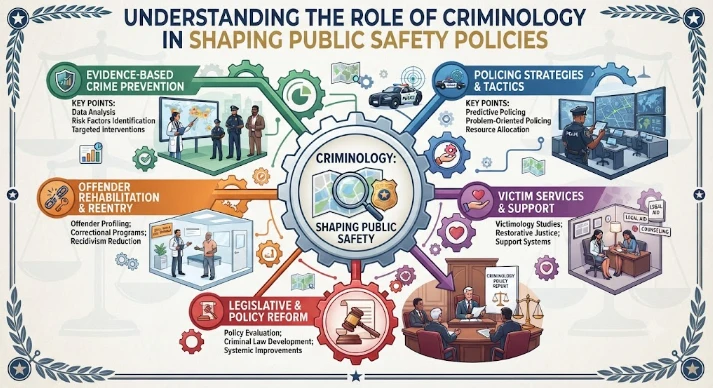
This article explains how criminology contributes to the development of evidence-based public safety policy. Rather than focusing only on criminal acts, criminology examines the social, economic, psychological, and environmental factors associated with crime, including poverty, inequality, unemployment, limited education, and social exclusion. The article shows how criminologists use crime patterns and statistical trends to identify emerging risks, high-risk locations, and populations requiring
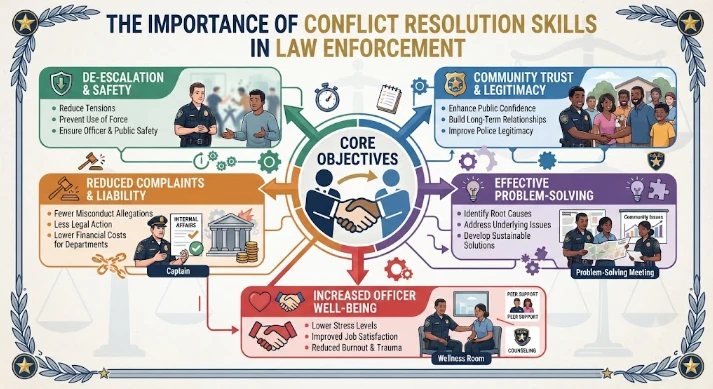
This article discusses why conflict resolution is a core professional skill for law enforcement officers. Police frequently encounter tense situations involving domestic disputes, public demonstrations, arrests, mental health crises, and other circumstances where poor communication can quickly escalate into violence. The article explains that training in de-escalation, active listening, empathy, negotiation, and problem solving can reduce unnecessary use of force while improving safety for both
This article examines how social media has transformed both criminal activity and crime prevention. Digital platforms provide criminals with new opportunities for fraud, identity theft, phishing, cyberbullying, harassment, hate speech, misinformation, and extremist recruitment, often benefiting from anonymity and rapid information sharing. In Bangladesh, growing internet and mobile-phone use has increased exposure to these risks while digital literacy remains uneven. At the same time, the articl
This article explores the ethical balance between the authority given to law enforcement officers and their responsibility to remain accountable for how that authority is used. Police have significant powers, including arrest, investigation, and the lawful use of force, but those powers must be exercised within legal and ethical limits. Using Bangladesh as its principal context, the article discusses corruption, political interference, excessive force, discrimination, and weak accountability as
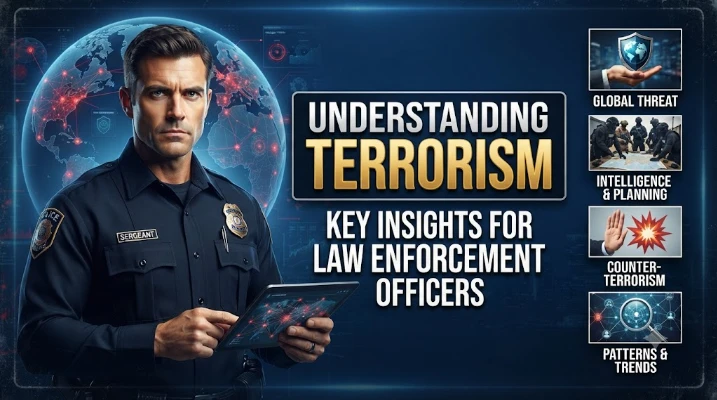
This article provides law enforcement officers with a broad understanding of terrorism, its drivers, operational methods, and prevention requirements. It describes terrorism as a complex phenomenon shaped by political, ideological, religious, social, economic, psychological, and cultural influences. In Bangladesh, the article highlights religious extremism as a significant concern while also acknowledging politically and ideologically motivated violence. It explains how radicalization can develo
This article explores how artificial intelligence and data science are changing the future of policing. It discusses predictive policing, automated analysis, facial recognition, digital evidence processing, and data-driven accountability as technologies that could improve crime prevention and investigative efficiency. In Bangladesh, where police agencies often operate with limited resources and growing workloads, AI could help identify crime hotspots, analyze large datasets, automate administrat
This article presents practical lessons drawn from counter-insurgency experience and emphasizes that insurgencies cannot be addressed through military action alone. Effective counter-insurgency requires coordinated political, social, economic, humanitarian, and security measures that respond to the grievances allowing insurgent movements to gain support. The article stresses the importance of protecting civilians, improving basic services, expanding economic opportunity, and strengthening trust
This article examines how criminal justice systems can reduce recidivism by addressing the conditions that lead people back into crime after release. In Bangladesh, poverty, unemployment, limited education, substance abuse, mental health problems, family instability, prison overcrowding, and weak reintegration support are identified as major drivers of reoffending. The article argues that punishment alone is insufficient and that rehabilitation should become a central part of criminal justice po
Author: Bikash Chandra Das
Affiliation: Director, Ministry of Home Affairs, Dhaka, Bangladesh
Accepted: July 2025
Scheduled Publication: Volume 4, Issue 1, 2026
ISSN: 3005-3463
DOI: 10.61424/issej
This research examines the role of Bangladesh's national security forces in preventing extremism and countering terrorism. It focuses on intelligence-led policing, specialized counterterrorism units, inter-agency coordination, legal frameworks, community engagement, terrorism trends, and institutional effectiveness. The study identifies substantial progress in reducing terrorism-related activity while emphasizing the continuing need for improved intelligence sharing, public trust, community-based prevention, legal accountability, and adaptation to emerging extremist threats.
International Social Sciences and Education Journal (ISSEJ)
Author: Bikash Chandra Das
Affiliation: Director, Ministry of Home Affairs, Dhaka, Bangladesh
This mixed-method study evaluates the effectiveness of Bangladesh Ansar & VDP in community-based crime prevention. Based on questionnaire data from 200 community members and semi-structured interviews with Ansar & VDP personnel and local stakeholders, the study examines community trust, preventive visibility, coordination with formal law enforcement, perceived safety, and operational limitations. Findings indicate strong community awareness and generally positive perceptions of Ansar & VDP, particularly in preventive patrols and support to police. The study also identifies limitations related to authority, training, resources, and role clarity and recommends stronger institutional coordination and capacity development.
Author: Bikash Chandra Das
Affiliation: Director, Ministry of Home Affairs, Dhaka, Bangladesh
Accepted: June 2025
Scheduled Publication: Volume 3, Issue 1, 2026
ISSN: 3079-2614
DOI: 10.61424/ijlss
This study examines law enforcement-led counter-insurgency operations in Bangladesh, emphasizing intelligence-sharing, inter-agency coordination, specialized counterterrorism units, legal frameworks, operational effectiveness, and national security outcomes. The analysis covers developments in counter-insurgency practices and evaluates reductions in terrorism-related incidents and fatalities alongside increases in arrests and weapons seizures. It also addresses accountability and human-rights challenges, arguing that sustainable national security requires stronger oversight, legal safeguards, institutional coordination, intelligence-led operations, and protection of civil liberties.
International Journal of Law and Societal Studies (IJLSS)
Jun 2025
Accepted
Showing 3 of 3 publications
Education & Experience
2025
Bangladesh VDP Medal
Bangladesh Ansar & VDP, Government of the People’s Republic of Bangladesh
Received the Bangladesh VDP Medal in recognition of distinguished leadership, professional discipline, operational commitment, and dedicated service to community safety and public security.
2024
President VDP Medal
Bangladesh Ansar & VDP, Government of the People’s Republic of Bangladesh (Awarded in 2024)
Awarded the prestigious President VDP Medal in recognition of outstanding professional performance, dedicated public service, leadership, discipline, and contribution to community security and the welfare of the people.
2026
Director, Ansar & VDP
Ministry of Home Affairs, Government of the People’s Republic of Bangladesh (Present)
Senior government official with extensive command and operational experience in law and order, community security, public safety, disaster response, counter-insurgency support, and national security. Responsible for supervising Ansar Battalion personnel, supporting Police, Armed Forces, BGB and other security agencies, coordinating emergency response and evacuation activities, protecting key installations and diplomatic areas, and conducting training to strengthen operational readiness and community security.
2013
Master’s in Human Security
University of Dhaka (Completed 2013)
Completed the Master’s in Human Security at the University of Dhaka through the Bangladesh Ansar & VDP Academy. Achieved a CGPA of 3.83 out of 4.00, with academic emphasis on human security, development, governance, public policy, national security, and sustainable development.
2011
Master of Business Administration (MBA) in Marketing
University of Dhaka (Completed 2011)
Completed a Master of Business Administration (MBA) in Marketing from the University of Dhaka. Achieved a CGPA of 3.44 out of 4.00, developing advanced knowledge in marketing, management, strategic decision-making, organizational practice, and business administration.
2005
Master of Arts in Applied Linguistics and ELT
University of Dhaka (Held in 2007)
Completed the Master of Arts in Applied Linguistics and ELT from the University of Dhaka. Coursework included Phonetics and Phonology, Morphology and Syntax, Discourse Analysis and Pragmatics, Testing, Curriculum and Materials Design, and Teacher Education and Research Methodology. Achieved Second Class, 35th Position.
2004
Bachelor of Arts (Honours) in English
University of Dhaka (Completed 2004)
Completed the Four-Year Integrated Bachelor of Arts with Honours in English from the University of Dhaka. Graduated with Second Class.
1999
Higher Secondary Certificate (HSC)
Govt. Bangabandhu College (Completed 1999)
Completed Higher Secondary Certificate under the Board of Intermediate and Secondary Education, Dhaka, in the Humanities group. Achieved First Division with a total score of 672.
1997
Secondary School Certificate (SSC)
Hashan Kandi United High School (Completed 1997)
Completed Secondary School Certificate under the Board of Intermediate and Secondary Education, Dhaka, in the Social Science group. Achieved First Division.
Let's Connect
Available for research collaborations, speaking engagements, and consulting on AI ethics frameworks.